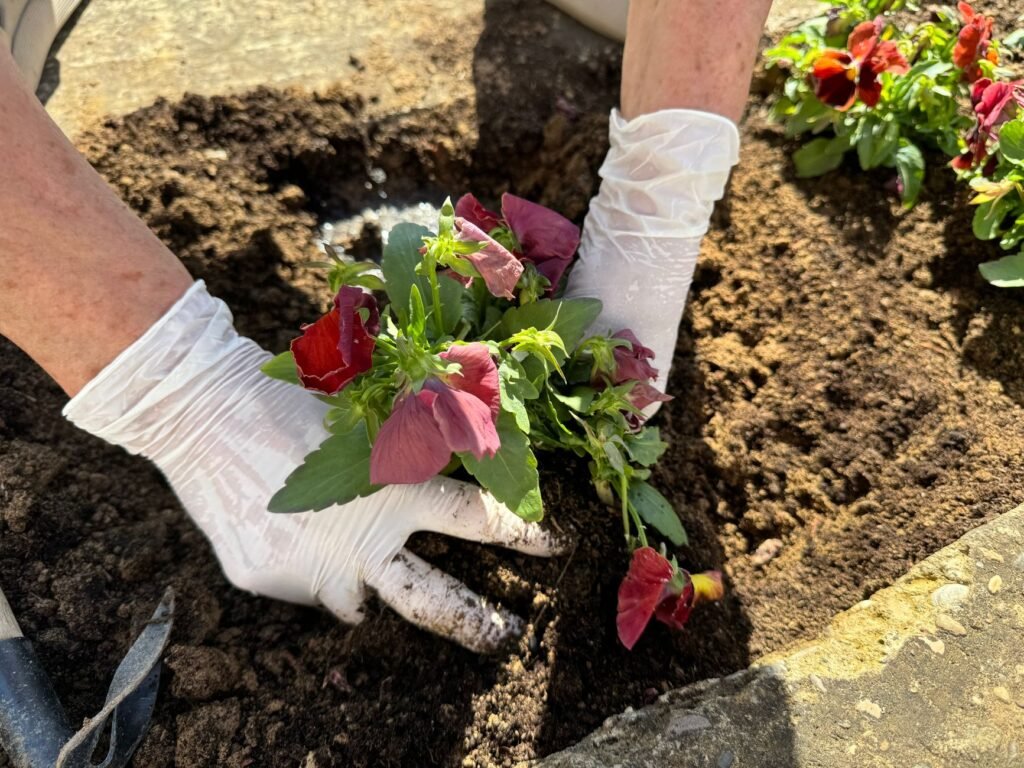
No. Scabies is caused by a mite that lives on people and spreads through prolonged skin to skin contact with someone who already has it. It does not live in soil, compost, mulch or plants. An itchy rash after a day in the yard is far more likely to be chiggers or a plant reaction.
Why gardening cannot give you scabies
The human scabies mite burrows into the top layer of human skin and depends on a person to complete its life cycle. Off a host it survives only a short time, and it has no reason to be in garden soil in the first place. Transmission in practice means sustained contact with another person, which is why it moves through households, shared beds and close care settings rather than through outdoor hobbies.
There is one adjacent case worth knowing. Mange mites from dogs, foxes and other animals can get onto human skin and cause temporary irritation, but they cannot complete their life cycle on people and the reaction fades. That is a possibility if you handled a stray animal in the yard, not a consequence of digging.
What gardeners usually have instead
| Cause | Where it shows up | Timing |
|---|---|---|
| Chiggers | Ankles, sock line, waistband, anywhere clothing is tight | Within a day |
| Poison ivy, oak or sumac | Streaky lines where the plant brushed skin | One to three days |
| Oak itch mites | Neck, shoulders, upper body, from mites dropping off trees | Within a day |
| Irritant sap or plant hairs | Hands and forearms, wherever you handled the plant | Minutes to hours |
| Fire ants or stinging insects | Feet and ankles, in a tight cluster | Immediate |
Sensible precautions that actually work
- Cover the gaps. Long trousers tucked into socks removes the exact entry points chiggers use.
- Shower soon after. Washing promptly removes chiggers that have not attached and plant oils that have not bound to skin yet.
- Wash the clothes you wore rather than leaving them in a pile, since plant oils transfer from fabric back to skin days later.
- Wear gloves for anything with sap. Euphorbias, figs and several common ornamentals cause real skin reactions.
- Learn the three leaf plants in your region before the season, not after the rash.
When to get it looked at
See a clinician if the itching is worse at night and has been building for more than a week or two, if other people in your household start itching as well, if the rash is spreading rather than settling, or if the skin becomes hot, swollen or starts weeping, which can signal an infection in the scratched areas. Those are the signals that something needs a proper look rather than patience.
The point of the distinction
This matters because the two situations lead to completely different actions. A plant or chigger reaction is a you problem that settles on its own. Scabies is a household problem, because by the time one person notices it, the people they live with have usually been exposed. Nothing here is a diagnosis, and identifying a rash from a description is not something an article can do responsibly. A clinician looking at the actual skin can.