

A sudden increase in meowing almost always traces back to something that changed in the cat’s environment or routine, not to the cat itself changing personality. Check food, water, the litter box and any closed door first, then look at schedule changes at home. Persistent new vocalizing in an older cat deserves a vet visit.
Start with what changed in the last week
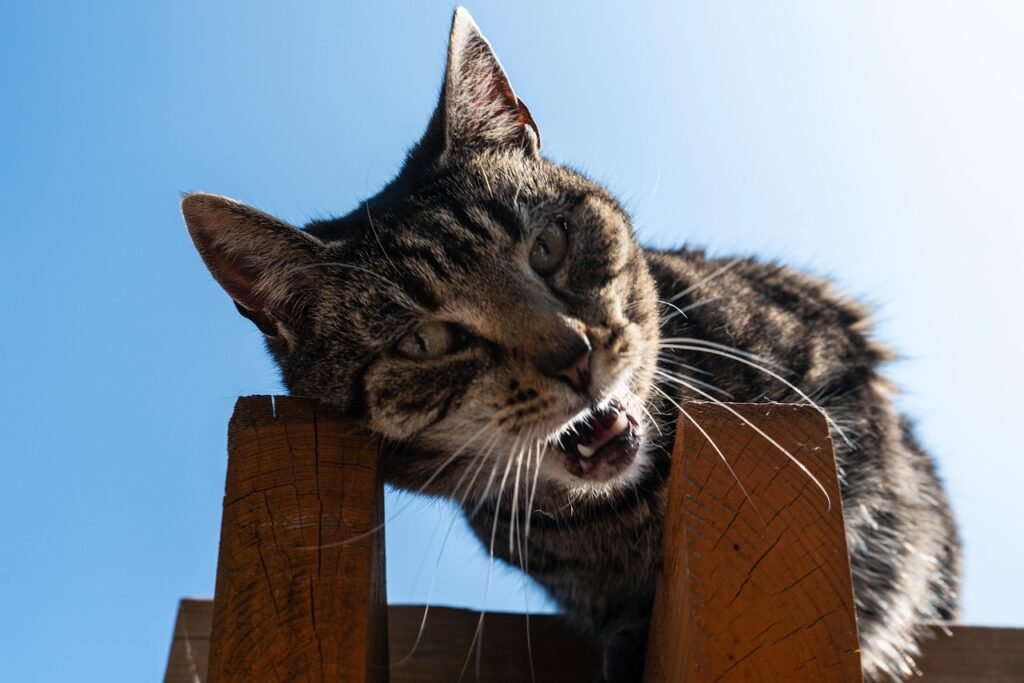
Cats mostly reserve meowing for humans, so a louder cat is usually a cat with a request. The useful question is not why cats meow in general, it is what is different now compared with a week ago.
Work outward from the cat. Bowls, box, doors, then people’s schedules, then the house, then the world outside the window. Most cases resolve in the first two categories, and the ones that do not are the ones worth watching closely.
The order to check, most likely first
- Food and water. An empty bowl, a bowl someone moved, or a new food the cat dislikes. Dry food bowls that look full but are empty in the middle fool people constantly.
- The litter box. Too dirty, moved to a new spot, a new litter, or a lid added. Some cats announce the problem loudly instead of going elsewhere.
- A door or route that closed. A bedroom kept shut, a basket moved, a window perch blocked by new furniture.
- Your schedule. A new shift, someone home all day who was not before, a household member away. Cats read the daily rhythm closely and object when it shifts.
- Attention that worked. If meowing has been getting a response, even an annoyed one, it becomes a habit quickly.
- Something outside. Another cat visiting the yard, birds, or construction noise. Look out of the window at cat height before dismissing this.
- An unspayed or unneutered cat. Calling behavior is loud, repetitive and unmistakable once you know what it is.
- Age and health. When everything above checks out and the meowing continues, this is where the answer lives.
What the timing and the sound point to
| What you notice | What it usually points to |
|---|---|
| Loud right before your usual feeding time | Routine and anticipation, often reinforced by you |
| Meowing at or near the litter box | A box problem, or a reason to call the vet |
| Yowling at night in an older cat | Disorientation or a health issue, book an appointment |
| Meowing at a closed door only | Access, not distress |
| Chirping or chattering at a window | Wildlife outside, normal hunting excitement |
| Constant, with hiding or appetite changes | Vet, sooner rather than later |
When the meowing is a reason to call a vet
Stop troubleshooting at home and phone a veterinarian if the cat is crying in or near the litter box, straining with little or nothing coming out, or making repeated trips. In male cats especially this can be an emergency and hours matter.
Also call if the new vocalizing arrives alongside any of these: eating or drinking noticeably more or less, weight loss, vomiting, hiding, limping, a change in how the cat is groomed, or a senior cat who has started calling out at night. A cat who is simply asking for dinner sounds demanding. A cat who is unwell usually changes something else at the same time, so watch the rest of the picture rather than only the noise.
Answering without teaching the cat to shout
Once you are confident nothing is wrong, the fix is consistency rather than volume. Feed on a fixed schedule so the cat is not negotiating one, and consider a timed feeder if breakfast demands start before dawn. Give attention during the quiet stretches instead of the loud ones.
Tire the cat out on purpose in the evening with a proper play session, add a window perch or a puzzle feeder if the days are dull, and keep the litter box cleaner than you think it needs to be. Shouting back or spraying water teaches fear rather than quiet, and it usually makes an anxious cat louder.