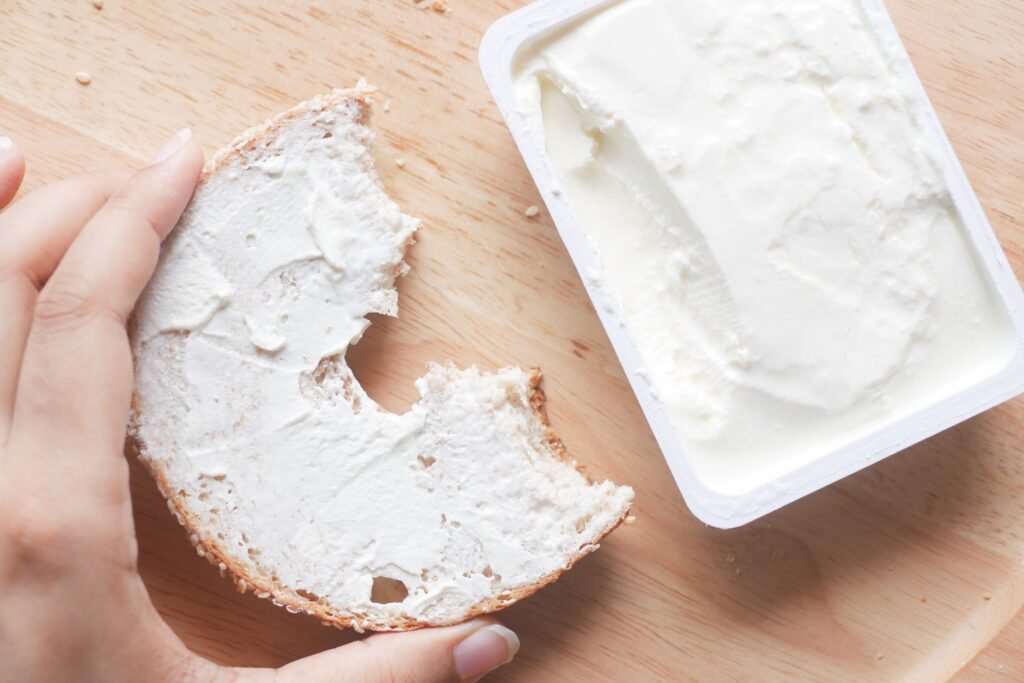
Cut the block into small cubes and spread them on a plate, and the same cheese that needs most of an hour whole will be workable in a fraction of that time. For a faster route, seal the block in a bag and rest it in warm tap water. Use the microwave only in very short bursts at reduced power.
Why the microwave splits cream cheese into curds and liquid
Cream cheese is an emulsion. Milkfat sits suspended in water, held in place by milk proteins and usually a stabilizing gum. That structure is stable at refrigerator temperature and stays stable as it drifts up toward room temperature, which is why a counter rest works so reliably.
Microwave energy does not arrive evenly. It concentrates where moisture and salt are highest, so the corners and edges of a block race ahead while the middle is still cold. Once a spot gets hot enough, the fat there melts and pulls free of the protein network, and the water it was bound to has nowhere to go. You end up with a glossy puddle around a set of tight white curds, and that is a chemical change rather than a mixing problem. No amount of stirring rebuilds it.
If you do reach for the microwave, unwrap the block first, because many are sold in foil lined paper. Drop the power down, run it for a handful of seconds, then turn the block and feel it. Stop while the center is still cool to the touch.
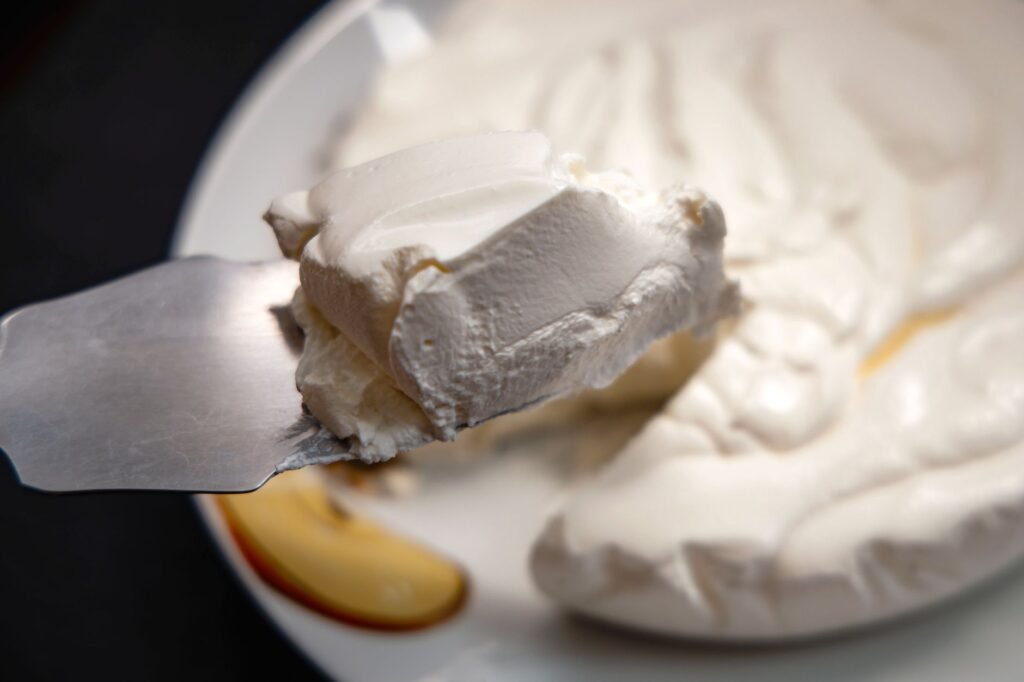
Cubing the block is the safest speed trick
Softening is limited by how far warmth has to travel inward. A block presents very little surface for its volume, so the outside turns greasy long before the core gives way. Slice the block into cubes and that distance collapses, and every piece warms at close to the same rate.
- Unwrap the cold block and set it on a cutting board.
- Slice it lengthwise, then across, into pieces roughly the size of a die.
- Spread the cubes across a plate in one layer so none of them touch.
- Leave them in a warm spot in the kitchen, away from a hot oven vent.
- Press one cube. When a fingertip sinks in with no resistance, they are ready.
A stand mixer shortens this further. Cold cubes beaten on low with the paddle warm through friction, and the pieces smear against the bowl instead of jamming into a single lump the way a whole block does.
A sealed bag in warm water, and why the water should not be hot
The water bath is the quickest method that still respects the emulsion. Warm water carries heat into the block far faster than air, and because water cannot climb past its own temperature, it gives you a ceiling that a microwave never offers.
Put the unwrapped block in a zip top bag and seal it with most of the air squeezed out. Run the tap until the water feels pleasantly warm on the inside of your wrist, not hot, and sink the bag so the block is covered. Swap the water out once it cools. How long this takes depends on the starting temperature of the cheese and the size of the block, so check by feel rather than by a timer.
How soft is soft enough for frosting, dip and cheesecake
Different recipes want different end points, and going further than the recipe needs is what causes soupy results later.
| Use | Target feel | What goes wrong past that point |
|---|---|---|
| Frosting | Yields to a finger but holds its shape, cool to the touch | Too warm and the frosting will not hold a pipe or a swirl |
| Cold dip | Stirs smoothly with a spatula | Overly soft cheese thins once sour cream or mayonnaise goes in |
| Baked cheesecake | Blends with no lumps at low mixer speed | Beating warm cheese hard whips in air, which cracks the top |
| Spreading on a bagel | Any softness at all | Nothing, this is the forgiving case |
The reliable test is pressure rather than appearance. Softened cream cheese looks almost the same as cold cream cheese, so push a finger into the middle of a piece and judge from how much it fights back.
Frequently asked questions
Can I soften cream cheese that has been frozen?
You can thaw it, but expect a grainy texture. Freezing forms ice crystals that tear the emulsion apart, and warming does not put it back together. Thawed blocks are fine stirred into baked dips, casseroles and sauces where the texture disappears. Keep unfrozen cheese for frosting and no bake fillings.
My frosting went lumpy. Can I still rescue it?
If the lumps are firm and pale, the cheese was simply still cold, so beat it on low with no sugar added until it smooths out. If the mixture looks curdled with a greasy sheen and weeping liquid, it was overheated at some point, and more beating will thin it further rather than fix it.
Does softening the block affect how long it keeps?
Time at room temperature counts against a perishable dairy product whether or not you use it, so soften only what the recipe calls for and return the rest to the refrigerator. If your prep stalls halfway, chill the softened cheese again instead of leaving it on the counter to wait.