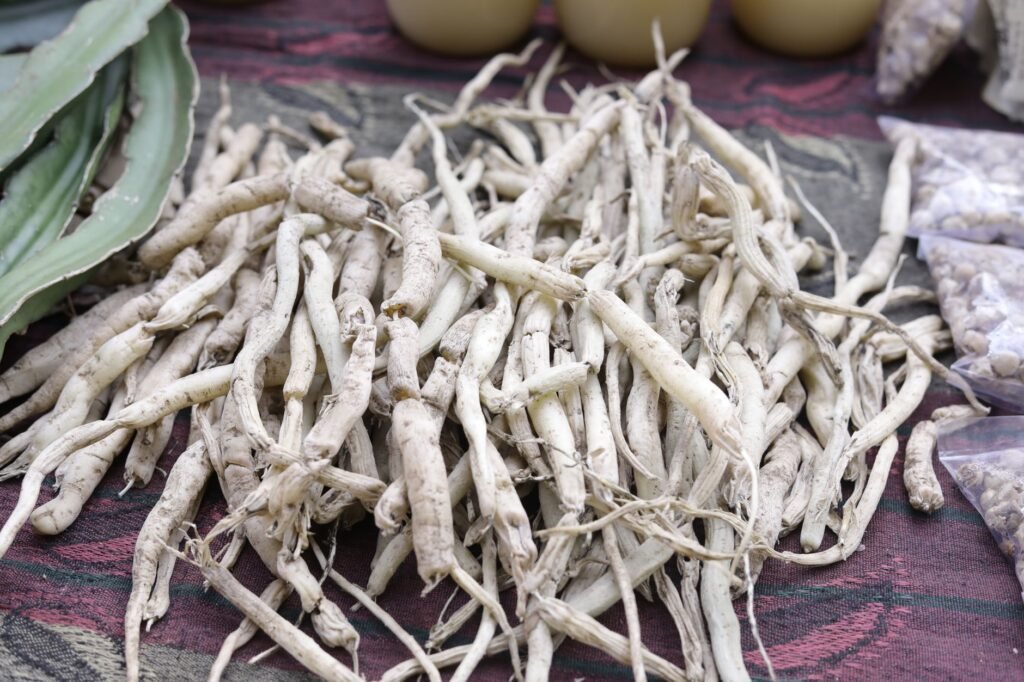
Lift horseradish in late fall, after hard frosts have flattened the leaves, or in very early spring before new shoots break the surface. Frost is not simply a date on the calendar. Cold weather is when the root finishes filling out and when the sharpness people grow the plant for actually arrives.
Frost is the signal, not the calendar date
Horseradish keeps working long after the rest of the vegetable garden has quit. Once nights turn cold the leaves stop building new growth and the plant shifts what it has down into storage, so the root gains bulk during exactly the weeks most gardeners assume the season is over. Digging before that shift costs you size for no reason.
Flavor follows a similar curve. An intact root is surprisingly mild, because the compound responsible for the burn only forms when cells are ruptured by grating or crushing. What cold weather changes is how much raw material is stored in the root in the first place, which is why the same plant tastes flat in August and fierce in November.
Spring digging works on the same logic from the other end. The root sat through winter loaded, and it stays that way until the plant starts spending reserves on new leaves. Once you see fresh growth pushing up, that window has closed for the year.
Reading the foliage before you dig
The leaves tell you where the plant is in its cycle, and they are the only free information you get without disturbing anything.
| What the top looks like | What it means |
|---|---|
| Large coarse leaves, still upright and green | The root is still filling. Hold off unless you need a small piece now. |
| Leaves yellowing and flopping outward | The plant is winding down. This is the front edge of the harvest window. |
| Tops blackened and collapsed after a hard freeze | Prime digging condition. Mark the spot before the foliage disappears entirely. |
| Bare soil in late winter, no shoots yet | Still fine to dig. Work fast once the weather warms. |
Mark the crowns with a stake while you can still see them. After a few weeks of freezing weather the foliage rots away to nothing, and hunting for a buried crown with a fork usually means slicing through the root you came for.
Lifting the root without snapping off the bottom half
Horseradish grows deeper than most people expect, and the lower portion is often the best part. Pulling on the crown will simply break the taproot and leave the rest behind.
- Water the bed a day ahead if the ground is dry and hard.
- Dig a trench alongside the plant, a spade width away from the crown.
- Work a spading fork in from the trench side and lever the soil toward the open gap.
- Repeat around the plant, loosening rather than prying, until the crown lifts free.
- Follow any broken pieces down with your hands and pull them out.
Trim the leaves off close to the crown and brush away loose soil. Roots store best unwashed and slightly damp, wrapped loosely and kept cold, and they hold that way far longer than the grated product does.
Whatever you leave behind becomes next year’s crop
Every side root you miss is a new plant. Gardeners treat this either as a free perpetual supply or as the reason horseradish escapes its bed, and which one you get depends on how deliberate you are at harvest time.
The traditional approach is to save the straight pencil thick side roots, called sets, and replant them where you want the row. Set them at a slant with the thicker end up so you remember which way is which, and put the fat central root in the kitchen. If you would rather the patch stayed put, sink a bottomless container or a barrier around the bed before planting, because chasing fragments afterward is a losing game.
One more timing note that has nothing to do with the garden. Grated horseradish loses its punch quickly once it is exposed to air, and vinegar stops that reaction wherever it happens to be. Add vinegar right away for a mild result, or wait a short while first if you want the finished jar to fight back.
Frequently asked questions
Can I dig horseradish in the middle of summer?
You can, and the plant will survive it, but the root will be slim and the bite will be muted. Midsummer is the stretch when leaves are still pulling their weight and the root is a work in progress. Take a small side root if you need some, and leave the crown to finish the season.
Do I have to replant horseradish after harvesting?
Rarely. Any fragment of root left in the soil will send up leaves the following spring, which is why the plant spreads so readily. If you actually want the bed cleared, you have to sift the soil for pieces rather than simply lifting the main root and calling it done.
How do I know the root is big enough to bother with?
Judge by the crown rather than by guessing at what is underground. A plant that has thrown large, coarse leaves all season and built a thick cluster at soil level has a root worth digging. Thin, pale foliage usually means a thin root, so give that plant another season.