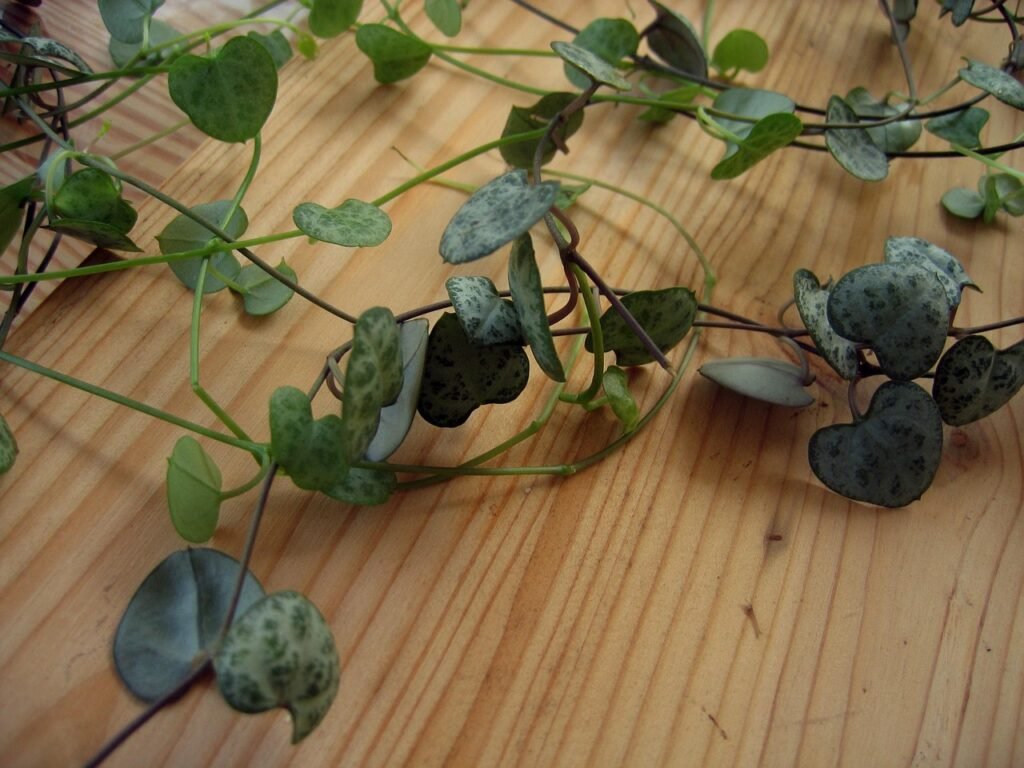
String of hearts gives you two separate routes: pin the small tubers that form along the vine onto damp mix and let them root while still attached, or take node cuttings and lay them flat on the surface. Both beat standing a bare strand in a jar, which is the slowest option of the three.
The beads along the vine are tubers, and they root on their own
Run a finger along an established vine and you will feel hard round lumps sitting at some of the nodes. Those are aerial tubers, and they are storage organs the plant makes on purpose. Each one already contains everything needed to start a new plant, which puts this species in a different category from the average trailing houseplant.
The easiest use of them requires no cutting at all. Set a small pot of gritty mix next to the mother plant, drape a length of vine across it so a tuber rests against the surface, and hold it down with a bent paperclip or a pebble. Keep that surface lightly damp. The mother vine keeps feeding the tuber the whole time, so there is no wilting stage and no window where the piece can fail from thirst.
Once you can tug gently and feel resistance, roots have gripped. Sever the vine on the mother side, leave a short tail of stem attached to the new plant, and move the pot wherever you like.
Butterfly cuttings turn one node into one plant
If a vine has no tubers on it, you can still slice it into single node pieces. Cut midway between two nodes on each side, so you end up with a short stem bar carrying one pair of leaves. Growers call these butterflies because of the shape.
- Cut the strand into segments, each holding one leaf pair and a stub of stem either side.
- Leave them on a dry surface for an hour or two so the cut ends seal.
- Lay each piece flat on damp, free draining mix with the node touching the surface.
- Press the stem down lightly, leaving the leaves uncovered.
- Mist the surface when it dries, and keep the tray in bright indirect light.
Rooting takes longer than it does with a tuber, and the visible sign of success is a fresh shoot rather than anything happening underground. Resist the urge to lift pieces and check, because disturbing new roots at this stage is what usually ends the attempt.
Laying a whole strand flat gives you a full pot at once
A single plant grown from one cutting looks sparse for a long time. Coiling an entire strand across the surface of a pot solves that, because every node in contact with the mix becomes a rooting point and the pot fills in from several places simultaneously.
Take a long healthy strand, coil it loosely so it does not overlap itself, and weigh down a few spots. Some growers strip the leaves off nodes that sit against the soil, which makes contact easier and removes tissue that would otherwise rot under damp mix. Both approaches work.
Bare vine with no node will never do anything
The single most common failure is a long piece of stem in a glass with the lower leaves stripped off and no node submerged. Stems on this plant do not root along their length. Nodes root. If the section under water contains none, it will stay green for a while, then turn to mush.
The second failure is moisture. This is a semi succulent with thin, water storing leaves, and the same conditions that speed up a pothos cutting will rot a string of hearts. Use a mix with real grit in it, water the surface rather than soaking the pot, and let the top dry between waterings once shoots appear.
Speed is also worth setting expectations on. Growth is slow in cool, dim conditions and much faster in bright light through the warm months, so a batch started in fall may do almost nothing visible until the days lengthen.
Frequently asked questions
Can I grow a new plant from a single heart shaped leaf?
No. A detached leaf has no node and no bud, so it may sit green for weeks and then shrivel without ever producing a shoot. Every method that works depends on including a node, which is the point on the vine where a pair of leaves attaches.
Why do my cuttings root in water and then collapse in soil?
Water grown roots are soft and built for a medium that holds no air pockets. Moving them straight into dry mix tends to kill them. Pot them while the roots are still short, keep the mix evenly damp for the first couple of weeks, and let it dry out gradually from there.
Should I remove the aerial tubers from the mother plant?
There is no need. They sit on the vine indefinitely and cost the plant very little. Leave them until you actually want more plants, then either pin them onto soil while attached or snip a section of vine with a tuber on it and start from there.