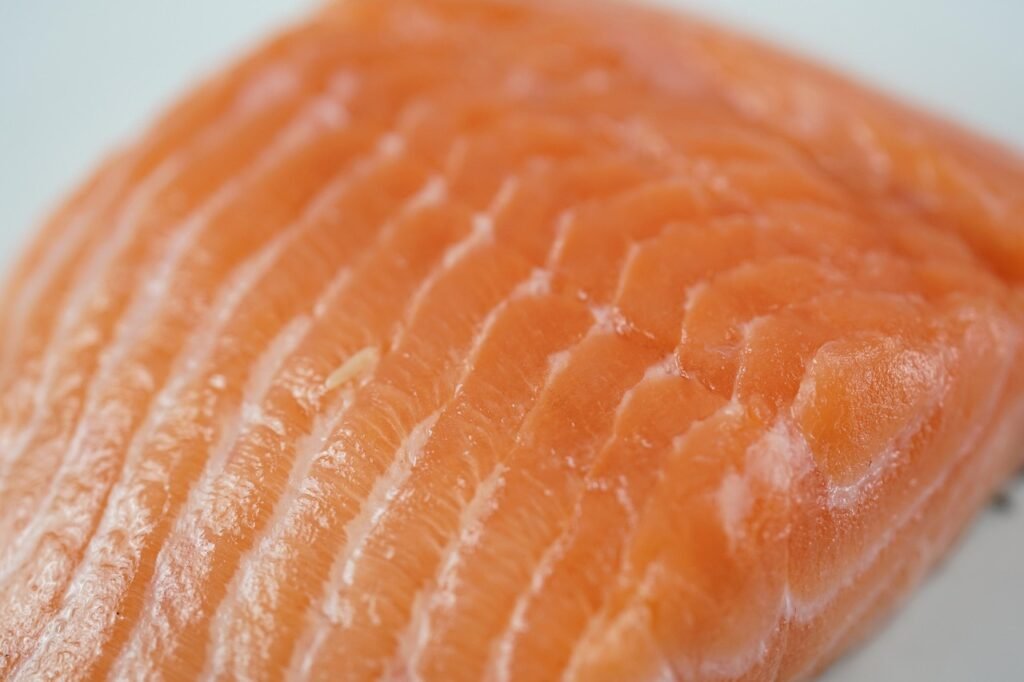
The fastest safe way to defrost salmon is to take it out of any vacuum sealed package, put it in a leak proof bag and submerge it in cold water, or skip thawing and cook it from frozen. Opening the vacuum pack first is the step most people miss, and it’s the one tied to botulism risk.
Open the vacuum pack before salmon starts thawing
Much frozen salmon is sold vacuum sealed, which fisheries and food safety agencies call reduced oxygen packaging. Fish can carry Clostridium botulinum type E, and Wisconsin’s food safety agency notes that this bacterium can grow above 38 degrees Fahrenheit without oxygen, which describes a vacuum bag thawing on the counter or in water.
The FDA Food Code requires stores and restaurants to take frozen fish out of reduced oxygen packaging before thawing it under refrigeration, or before or right as thawing finishes by other methods. Many packages say the same on the label. Read yours and follow it. At home, the easy habit is to cut the vacuum bag open or remove the fish before any thawing starts, then rewrap it in a regular zip top bag if you’re using water.
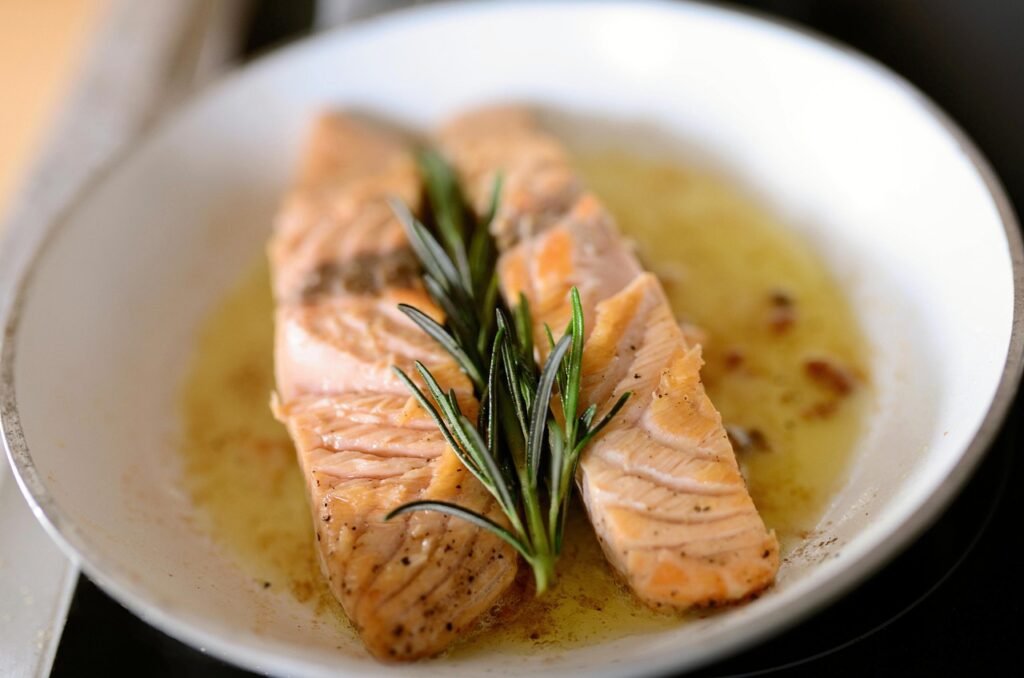
Quick thawing routes for a salmon fillet
The FDA’s seafood safety guidance lists these options for when you can’t wait for the fridge.
| Method | How to do it | Texture result |
|---|---|---|
| Cold water | Out of the vacuum pack, sealed in a plastic bag, submerged in cold water | Closest to fridge thawed |
| Microwave defrost | Defrost setting, stopping while the fish is still icy but pliable, then cook right away | Thin edges can start to cook |
| Cook from frozen | Rinse off ice, pat dry, cook longer than a thawed fillet | Good for baking and poaching |
| Refrigerator | Overnight, out of the vacuum pack | Best, but not quick |
A single fillet thaws much faster in water than a thick center cut piece, so separate portions before submerging if they’re frozen together.
Cooking salmon directly from the freezer
Salmon is one of the easier proteins to cook without thawing, because fillets are thin and even. Rinse off any frost or ice glaze under cold water, pat the surface dry, and brush on a little oil. Baking or roasting works well; cover the pan with foil for the first stretch so the outside doesn’t dry out while the center catches up, then uncover to finish.
Expect the cook time to run noticeably longer than for a thawed fillet, and add seasoning partway through, once the surface has thawed enough for salt and spices to stick. Pan searing from frozen is harder because moisture fights the crust. The FDA says most seafood should be cooked to an internal temperature of 145 degrees Fahrenheit, and the flesh should separate easily with a fork. An instant read thermometer in the thickest part removes the guesswork.
Texture problems from rushed thawing
Salmon is delicate, so shortcuts show up on the plate. Microwave defrosting often cooks the thin tail end while the thick part is still frozen. Stopping while the fish is still icy, as the FDA advises, limits that. Cook it immediately afterward, never set it aside.
Water thawing goes wrong when the bag leaks. Fish that sits in water gets soft and watery and loses flavor, so check the seal before submerging and use a bag with a zipper you trust. Stick with cold water, as the FDA specifies; warm water starts cooking the thin edges while the center is still frozen.
Whatever the method, dry the fillet well with paper towels before cooking. A dry surface browns, and a wet one steams.
Choosing frozen salmon that thaws well
The way the fish was frozen affects how it thaws. The FDA suggests skipping frozen seafood in packages that are open, torn or crushed on the edges, and avoiding packages with frost or ice crystals, which can mean long storage or thawing and refreezing along the way. The fish should be hard, not bendable. Individually wrapped portions give you the most control, since you can thaw one fillet in a bowl of water without committing the whole bag.
Frequently asked questions
Is it safe to thaw salmon in its vacuum sealed package?
It's safer to open it first. Fish can carry botulism bacteria that grow without oxygen above 38 degrees Fahrenheit. The FDA Food Code has businesses remove frozen fish from reduced oxygen packaging around thawing, and many labels tell home cooks to do the same. Follow your package label.
Can I season salmon while it is still frozen?
You can, but most seasoning slides off an icy surface. Rinse off the ice glaze, pat the fillet dry, brush on oil, and add salt and spices once the surface has thawed during cooking. Marinades work better on fully thawed fish, since frozen flesh absorbs very little.
How do I know frozen salmon is cooked through?
Check the thickest part with an instant read thermometer. The FDA says most seafood should reach 145 degrees Fahrenheit, and the flesh should separate easily with a fork. Salmon cooked from frozen needs extra time, so test the center rather than trusting the recipe's timing.