Keep blueberries unwashed and cold in a shallow, vented container lined with a paper towel, and rinse only what you are about to eat. Handled dry, a fresh batch typically holds one to two weeks in the refrigerator. For anything longer, freeze them spread out on a tray first.
That Dusty Coating Is Doing a Job
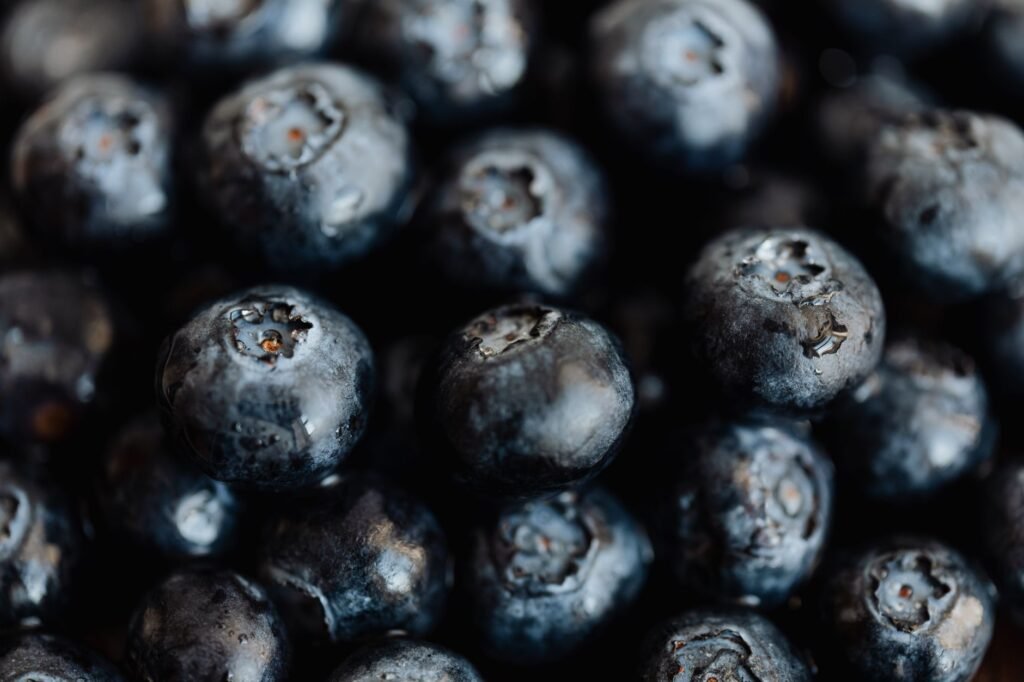
The silvery haze on a fresh blueberry is not dirt or pesticide residue. It is a natural waxy layer the fruit produces, often called the bloom, and it functions as the berry’s own raincoat. It slows water loss from inside the fruit and makes it harder for mold spores to get a foothold on the skin.
Running the whole container under the tap takes most of that layer off at once. Worse, it leaves droplets sitting in the small star-shaped dimple at the blossom end, where water lingers longest and rot tends to begin. Berries you buy already look clean enough, and a rinse at eating time handles the rest.
Cold, Dry, and Not Sealed Tight
Blueberries want refrigerator temperatures and they want air movement. Those two goals conflict with the airtight container instinct, because a sealed box traps the humidity the berries give off and condensation forms on the lid, then drips back down. The vented plastic clamshell they came in is genuinely well designed for this, so there is no shame in leaving them in it.
If you decant them, use something shallow and wide rather than deep. Berries at the bottom of a tall container carry the weight of everything above, and a crushed berry leaks juice that speeds spoilage through the whole batch. Line the base with a paper towel to catch whatever moisture does collect, and skip the refrigerator door, where the temperature swings every time someone reaches for milk.
Comparing the Options
| Approach | What it does | Rough window |
|---|---|---|
| Unwashed in the original vented clamshell | Keeps the bloom intact with airflow | One to two weeks refrigerated |
| Unwashed in a shallow paper-lined container | Same idea, less crushing at the bottom | One to two weeks refrigerated |
| Dilute vinegar rinse, dried completely, refrigerated | Reduces surface spores, demands thorough drying | Can extend the window when done right |
| Left on the counter | Softening and mold accelerate | A day or two at most |
| Frozen on a tray, then bagged | Individual berries, texture softens on thaw | Months |
The Habits That Cost You Half the Box
Washing everything the moment you get home is the headline mistake, and it is usually done in the name of being organized. The second is leaving the box on the counter because it looks nice there. Warmth roughly doubles the pace of everything working against the fruit.
Sealing damp berries in an airtight container combines both errors and is the fastest route to a fuzzy container. Leaving one moldy berry in the batch is quieter but just as costly, since mold spreads readily between touching fruit, so pull the soft ones out whenever you notice them. Stacking a carton of eggs or a jar on top of the clamshell bruises the berries underneath, and bruised fruit leaks. Freezing berries while still wet from a rinse fuses them into one solid brick you have to hack apart.
Which Berries to Pull and Which Are Fine
A good blueberry is firm, round, and still carries that dusty finish. Gently shake the container and look for three things. Visible fuzz, white or gray, means that berry and anything touching it goes. Any berry that has collapsed and is leaking juice goes too, since that liquid is what spoils its neighbors.
Shriveled, wrinkled berries are a softer call. They have lost water rather than gone bad, and they are perfectly usable in oatmeal, muffins, or a compote even if they are no longer pleasant to snack on. A sour, fermented, or alcoholic smell when you open the container means the batch has turned as a whole and is worth abandoning rather than sorting.