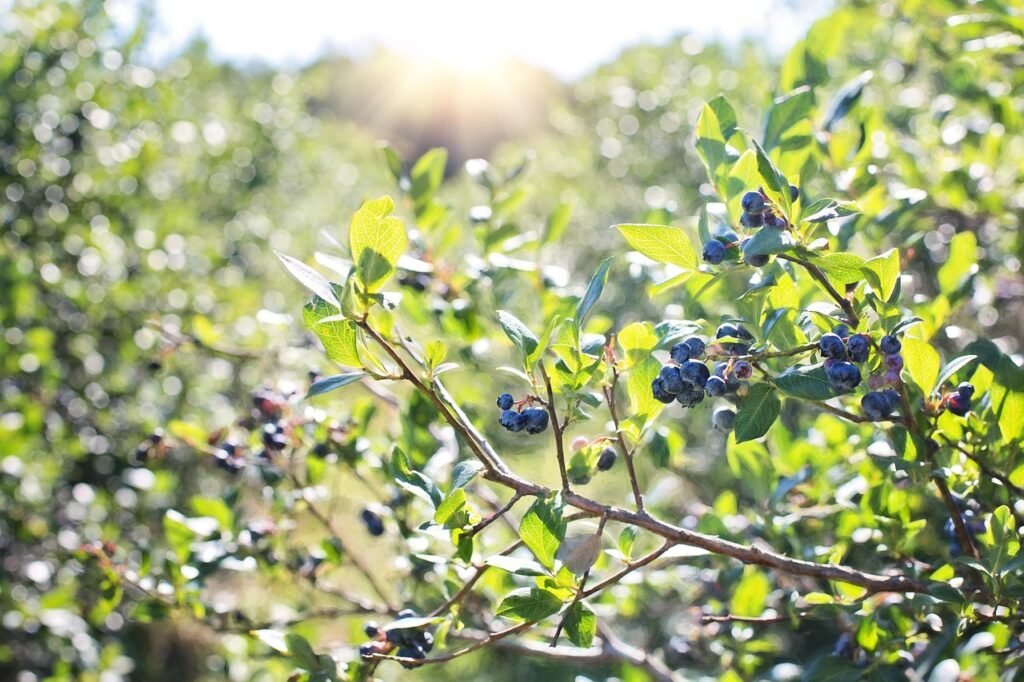
To propagate blueberry bushes, take 4 to 6 inch softwood cuttings from new shoot tips in late spring, strip all but the top few leaves, and root them in a moist mix of peat and sand kept humid. Hardwood cuttings taken in winter from dormant stems work too. Expect roots in a matter of weeks for softwood cuttings.
Softwood or hardwood blueberry cuttings
Blueberries are usually grown from stem cuttings, and the season decides which kind you take. Most home gardeners start with softwood, which roots faster.
| Softwood cuttings | Hardwood cuttings | |
|---|---|---|
| When to take them | After the first spring flush of growth | Late winter, while fully dormant |
| What to cut | Tips of this season’s shoots, firm but flexible | Healthy shoots that grew last summer |
| Length | About 4 to 6 inches | About 5 to 6 inches |
| Leaves | Keep the top 2 to 4 | None, the stems are bare |
| How deep | About 2.5 inches | Half to two thirds of the length |
Softwood timing is touchy. Cuttings taken while tips are very soft wilt fast, and cuttings taken after a second flush of growth root poorly.
Hardwood cuttings go in after the bush has had its winter chill and before buds swell. Stick them so one bud sits above the surface, and keep them cool and evenly moist. They take longer than softwood to root.
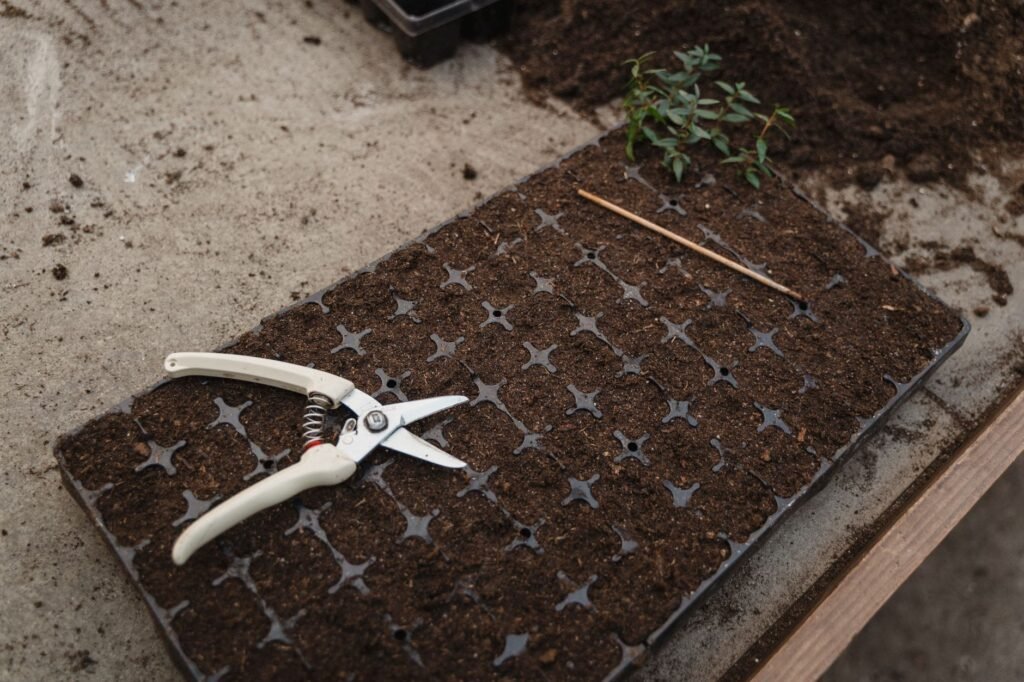
Taking softwood blueberry cuttings step by step
- Cut early in the morning, when stems are full of water. Choose vigorous shoots from a healthy bush with no leaf spots or dieback.
- Take cuttings from the tips of new growth. They should be stiff enough to push into the rooting mix without bending.
- Drop each cutting into a cooler or bucket with a little cool water so it never wilts.
- Strip the lower leaves, leaving two to four at the top.
- Insert each cutting about 2.5 inches deep, spaced so leaves do not overlap.
The University of Georgia propagation bulletin notes that rooting hormone is not needed for rabbiteye blueberry cuttings.
A humid rooting setup that does not rot the stems
Blueberries need an acidic rooting mix. The Georgia bulletin recommends half peat and half clean sand by volume. Commercial growers keep a film of water on the leaves with intermittent mist, and a clear plastic dome or bag propped above the leaves does a similar job at home. Set the tray in bright shade, since direct sun cooks a closed dome.
Moist is not the same as soggy. If you squeeze a handful of mix and more than a few drops run out, it is too wet. Use fresh mix each time rather than reusing old media, which can carry root rot organisms.
Read the bag if you buy a potting mix, since many include lime to cancel out the acidity of peat, and lime works against blueberries. Keep the tray out of wind as well. The Georgia guide warns that leaves drying out for as little as 30 minutes can permanently damage unrooted cuttings.
From rooted blueberry cutting to planted bush
Softwood cuttings generally root in five to seven weeks. Once they resist a gentle tug, open the dome a little more each day so the plants harden off, and water only when the surface of the mix turns dry.
The young plants are small and tender. The Georgia bulletin advises growing rooted plants for at least a year in a nursery bed or pots before moving them to their permanent spot. Rabbiteye types can also be multiplied by digging suckers from around an established bush during dormancy. Cut the top of each sucker back by at least half, since its roots are limited.
Patented blueberry varieties and propagation rules
Many newer blueberry cultivars are patented. Georgia Extension’s guide to softwood cuttings states it is illegal to propagate patented cultivars without authorization from the patent holder, which usually means a license and royalties.
Check the plant tag or the nursery’s listing before you take cuttings. Older, unpatented varieties are fair game, and so are most bushes you grew from seed.
Frequently asked questions
Can I root blueberry cuttings in water?
Water rooting is unreliable for blueberries. Cuttings need an acidic, airy mix that stays moist without drowning the stem, which is why extension guides use peat and sand or pine bark. Standing water tends to rot the base before roots can form, so stick with a rooting mix.
Do I need rooting hormone for blueberry cuttings?
The University of Georgia bulletin on deciduous fruit says rooting hormone is not needed for rabbiteye blueberry softwood cuttings. Some growers still use it on harder to root varieties. If you try it, follow the product label and compare a few treated and untreated cuttings.
How long until a propagated blueberry bush produces fruit?
A rooted cutting spends at least a year growing on before it goes into the ground, and it needs more time after that to reach fruiting size. Many growers remove early flowers on young bushes so the plant builds roots and branches first. Your county extension office can advise on local timing.
When should you plant blueberry bushes?
It depends on your climate. Oregon State University Extension, for example, says blueberries can be planted in spring in every Oregon region and in early October in the Willamette Valley. A rooted cutting still needs its year of growing on first, so ask your county extension office about the best window where you live.
Where should you plant blueberry bushes?
Pick a spot in full sun with well drained soil. Oregon State University Extension says blueberries tolerate partial shade but may yield less, dislike wet or heavy soils, and need a soil pH of 4.5 to 5.5, so test the soil ahead of time. Raised beds or containers of acidic mix work where native soil falls short.
How big do blueberry bushes get?
It depends on the type. Oregon State University Extension lists northern highbush plants at 6 to 7 feet tall at maturity, southern highbush at about 6 feet, rabbiteye at up to 9 feet and lowbush at about 1 foot. Its in-row spacing follows suit, from about 3 feet for northern highbush to 5 feet for rabbiteye.