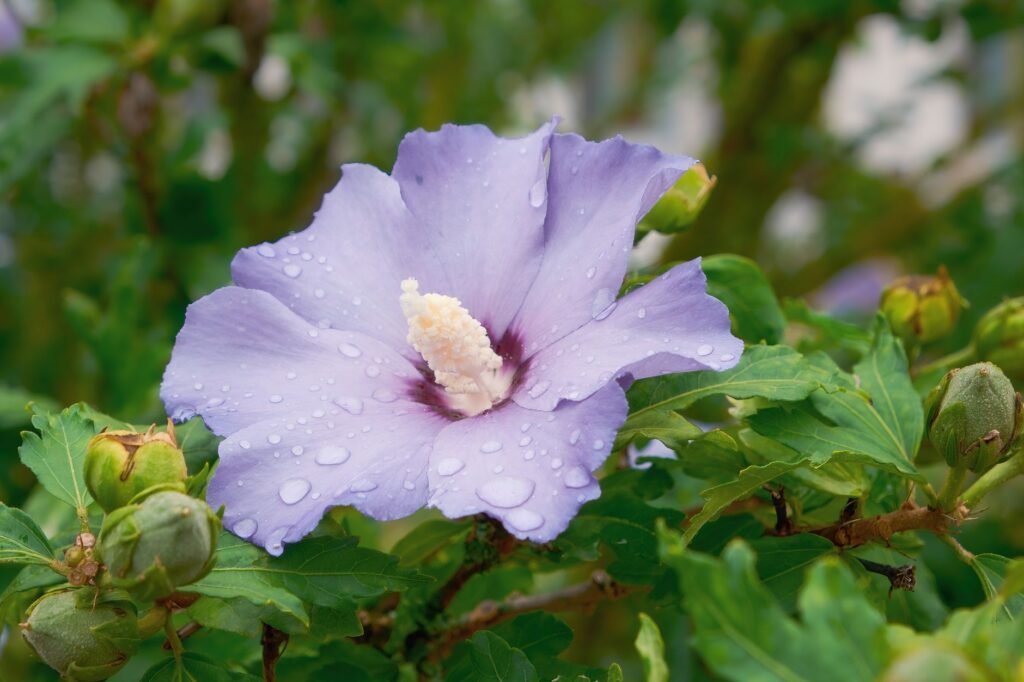
Rose of sharon roots from softwood cuttings taken in early summer or from hardwood cuttings taken off bare stems in the dormant season. The two are different jobs with different timing, and choosing the one that matches the month you are standing in decides most of the outcome.
A deciduous hibiscus gives you two separate windows
This shrub drops every leaf in fall and spends the cold months as bare wood, which is the fact that shapes the whole job. Leafy and leafless stems lose water at completely different rates, so the care a cutting needs depends entirely on which state it is in. Advice written for evergreen shrubs does not transfer.
| Softwood | Hardwood | |
|---|---|---|
| When | Early summer, new growth still flexible | Dormant season, after leaf drop |
| Wood | Green and bending, snaps rather than folds | Brown, firm, pencil thick |
| Leaves | A pair kept at the top | None on the stem at all |
| Main risk | Wilting before roots form | Waking up before roots form |
Softwood is the faster of the two and suits anyone who wants a result inside one growing season. Hardwood asks for patience and almost no attention, which makes it the better choice if you want a row of plants and are willing to wait for spring to tell you how it went.
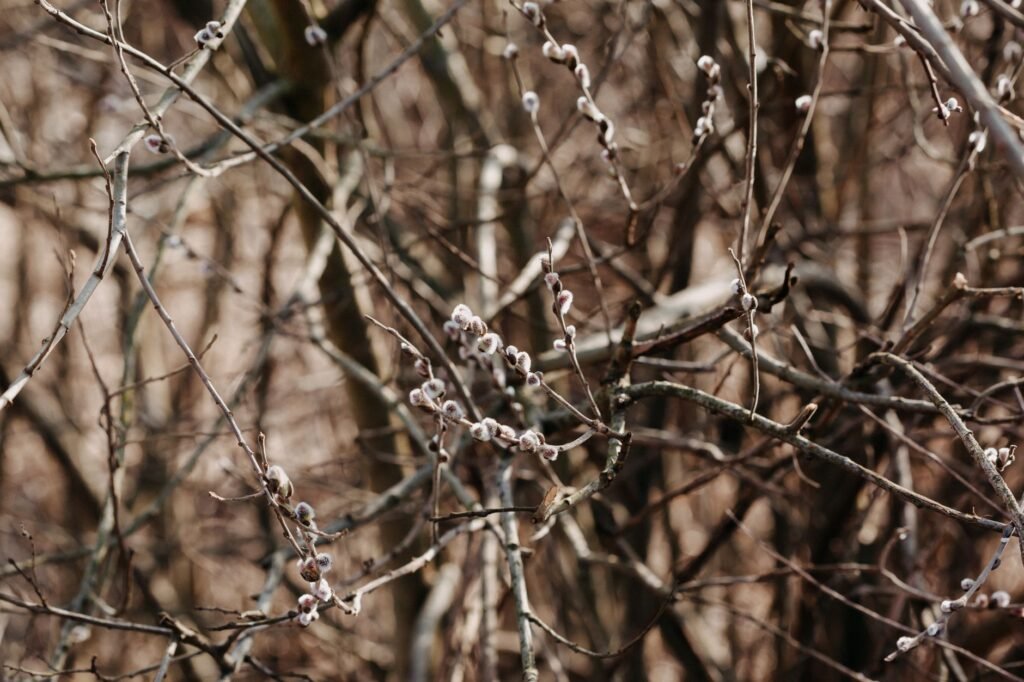
Softwood cuttings in early summer
Take these in the morning while the shrub is full of water. Cut a length of the current season growth from a shoot that has not flowered, trim just under a leaf joint, and strip every leaf but the top pair. Slice the remaining pair in half across the middle if they are broad. That trims evaporation while leaving the cutting enough green to keep feeding itself.
Set the cutting in damp, gritty mix and tent a clear bag over the top, propped clear of the foliage on a few sticks. Bright shade, never direct sun. The soft stem has no reserves and will collapse in an afternoon if it dries, so the enclosure matters more than any rooting powder. Expect resistance when you tug gently after several weeks.
Test for roots by feel rather than by lifting the cutting out. Tip the pot only if you must, and put it straight back. A softwood cutting disturbed mid process usually sulks, and the young roots that do exist are fine enough to snap on contact with your fingers.
Hardwood cuttings while the shrub is bare
- Cut lengths of last season wood roughly the thickness of a pencil, each holding several buds.
- Cut flat below a bud at the bottom and on a slant above a bud at the top, so you can tell the ends apart later.
- Sink them upright into a trench of free draining soil or a deep pot, leaving only the top bud or two above the surface.
- Leave them outdoors somewhere sheltered through the cold months and keep the soil just moist.
- Ignore them until spring. Roots form slowly in cold ground and disturbing them resets the clock.
Why leaves in spring do not mean success
Hardwood cuttings have a cruel habit. Stored energy in the stem can push buds open in spring before any roots exist, so the cutting leafs out, looks like a triumph, and then wilts and dies once those new leaves start demanding water the stem cannot supply. Gardeners call this the false start, and it is why the method gets blamed unfairly.
Judge by resistance instead. Hold the top of the cutting and pull very gently. A rooted cutting anchors and stays put. One that slides is living on reserves regardless of how green it looks. Keeping the cuttings cool through late winter helps, since warm air wakes buds while cold soil keeps roots idle, and that mismatch is exactly what creates the false start.
Named varieties sold for a particular flower color are the reason to bother with cuttings at all. A cutting is a clone and carries the exact flower of the shrub it came from, which seed never does reliably. That single fact is worth more than any technique detail on this page.
Frequently asked questions
Can I just dig up the seedlings under the shrub?
You can, and they transplant easily while small. Understand what you are moving though. A seedling carries a mix of parent traits, so flower color and form can land anywhere within the species range. For a copy of the shrub you like, take a cutting instead.
Is rose of sharon the same plant as hibiscus?
It is a hibiscus, the hardy shrub species that drops its leaves each fall, not the glossy tropical kind sold as a patio plant. The two propagate differently because one goes dormant and the other does not, which is why generic hibiscus advice often misfires here.
When can I move a rooted cutting into the yard?
Grow it on in a pot through at least one full season first. A first year root system is small and a young shrub in open ground dries out fast in its first summer. Plant it out once roots fill the pot and the top has branched.