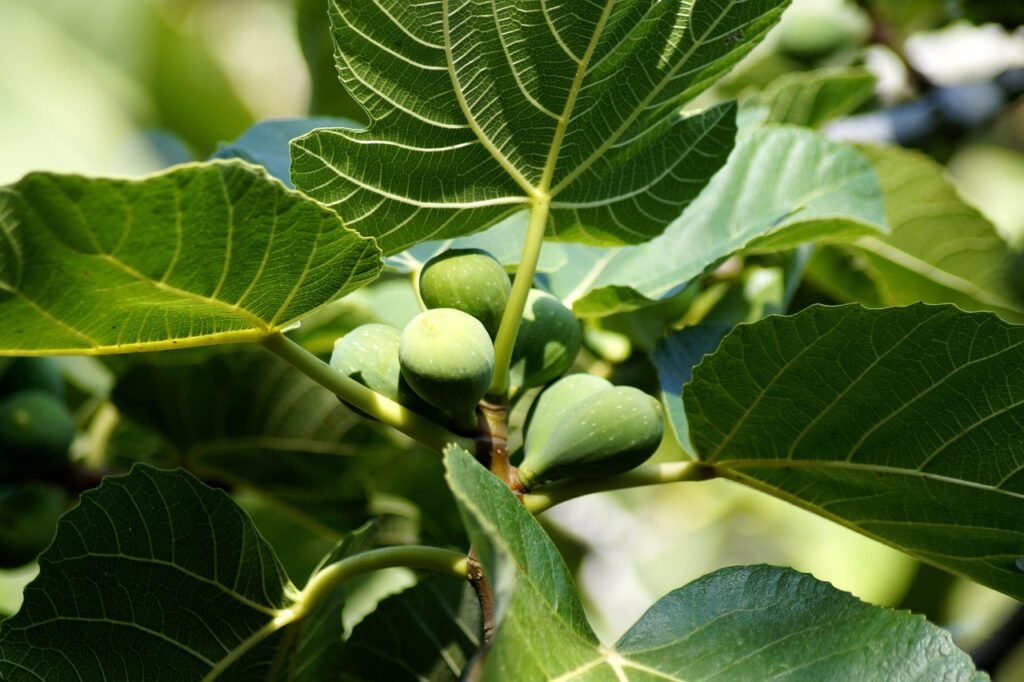
Cut pencil thick lengths of dormant fig wood in winter, wear gloves because the cut ends bleed an irritating milky sap, then root them in a barely damp mix kept cool at the top and warm at the base. Figs strike more reliably than almost any other fruit tree from cuttings.
Dormant wood is the high percentage route
Figs are famously easy from cuttings, and the dormant season is when the odds are best. Bare wood has no leaves pulling water out of a stem that has no roots yet, so the cutting can sit quietly and build roots without racing a clock. Take the wood after leaf fall and before the buds start to swell in late winter.
Choose last season growth about the thickness of a pencil, with short gaps between the buds. Long whippy wood with wide spacing roots less willingly. Each piece wants several buds, cut flat at the bottom just below a bud and slanted at the top so the ends stay obvious once every piece looks alike in a pot.
Winter pruning gives you the material for free. The wood you would otherwise pile up for disposal is exactly what roots best, so the job pairs naturally with the annual tidy up and costs nothing but pot space on a cool windowsill.
The white sap is the part nobody warns you about
Every cut on a fig weeps a thick white latex, and it is not harmless. The sap irritates skin on contact and the reaction gets considerably worse with sun exposure afterward, which surprises people who handled the tree fine indoors and then went out to garden. Getting it in an eye is genuinely painful and needs flushing with plenty of water.
Wear gloves and long sleeves for the whole job, keep your hands away from your face, and wash the blade and your forearms when you finish rather than later. Cut on a surface you can wipe down, since the latex sets into a stubborn film. If any sap lands on skin, rinse it off promptly and keep that patch out of direct sun for the rest of the day.
A setup that roots rather than rots
- Let the cut ends dry for a few hours until the weeping stops and the latex seals over.
- Fill a deep pot with a gritty, open mix that drains sharply. Fig cuttings tolerate dry far better than soggy.
- Push each cutting in so roughly half its length is buried, leaving at least two buds in the air.
- Moisten the mix once, then leave it alone. Barely damp is the target and rot is the main enemy.
- Keep the pot base gently warm and the tops cool, which is the whole trick.
Skip the plastic bag habit borrowed from leafy cuttings. There are no leaves here to keep turgid, and trapped humidity around a dormant stem mostly encourages mold on the buried portion. Open air over the tops and steady warmth underneath beats a sealed tent every time.
Do not trust the first leaves
A fig cutting will happily push out leaves from stored energy while carrying no roots whatsoever. Those leaves unfurl, everyone celebrates, and a week or two later the whole thing wilts because there is nothing underneath to supply them. More fig cuttings are lost this way than any other, and the loss arrives precisely when the pot looks most promising.
That is why the temperature split matters. Warmth at the base pushes roots along while cool air above keeps the buds asleep a little longer, letting the roots get ahead. Leave the cuttings undisturbed and watch for roots appearing at the drainage holes rather than judging by the top. Pot each one on individually once the roots are visible there and the leaves have hardened off.
Air layering suits anyone who dislikes the waiting game. Wounding a branch while it is still attached and wrapping the spot in damp moss lets the tree support the new roots itself, and you cut the branch free only once roots show through the wrapping.
Frequently asked questions
Do fig cuttings need a heat mat?
Not strictly, but gentle bottom warmth speeds root formation and helps roots keep pace with the buds above. Without it, keep the cuttings somewhere cool so the top stays asleep. The combination that fails is warm air over cold soil, which wakes buds before roots exist.
Can I root a fig cutting in a jar of water?
It often produces roots, and those water roots are brittle and adapted to living submerged. Many collapse during the move into soil, so the plant stalls just when it should be growing. Rooting straight into a barely damp mix skips that setback entirely.
Will a fig grown from a cutting fruit like the parent?
Yes. A cutting is genetically identical to the tree it came from, so the fruit, the leaf shape and the ripening habit all carry over. Seed grown figs are a lottery and many of them never produce usable fruit at all.