
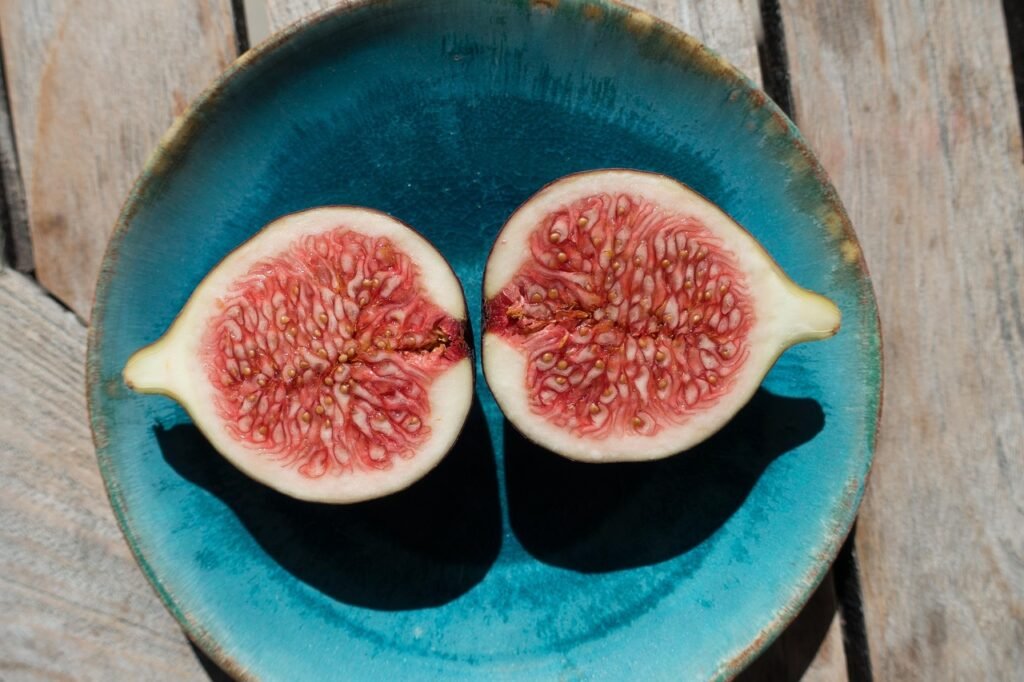
Yes, you can eat fig skin. On a ripe fresh fig the skin is thin and soft, and the only part most people remove is the stem. The California Figs website says the skin, seeds and flesh can all be eaten, so a rinsed, ripe fig can be eaten whole in a few bites.
When you might peel a fig anyway
Skin is edible, but not everyone likes it. Some figs have a thicker or chewier peel than others, and Clemson Extension notes that unripe figs lack sweetness and can be somewhat rubbery, skin included. In those cases, peeling or scooping out the flesh with a spoon is a matter of preference rather than safety.
The other reason is the sap. Fig trees produce a milky latex, and University of Maryland Extension suggests gloves when handling the tree to avoid skin irritation from it. UC IPM notes that milky latex oozing from the cut stem end means the fruit is not fully ripe. If your lips or mouth feel itchy or irritated after eating figs, stop and talk to a doctor, especially if you have other plant or latex sensitivities.
Picking a fig that is ready to eat
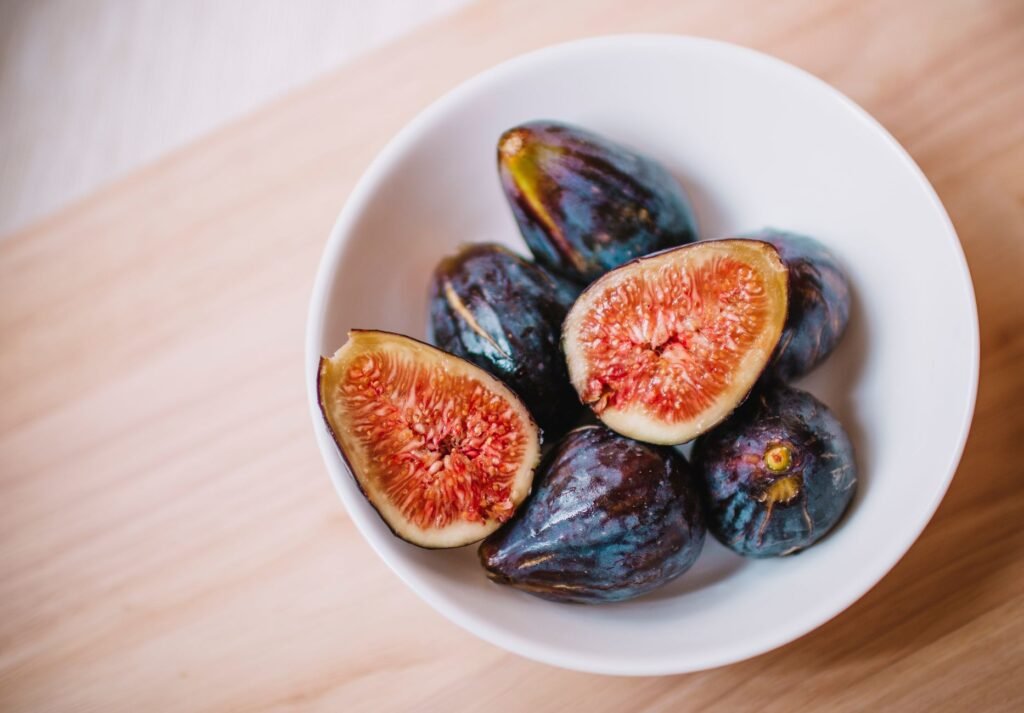
Figs do not improve much after they are picked green, so choosing well at the store or tree decides how the fig will taste.
| Check | Ripe | Not ready |
|---|---|---|
| Touch | Soft, with a little give when gently squeezed | Firm all over |
| On the tree | Droops on its stem and has changed color for its variety | Stands upright and stays green |
| Stem end | No milky sap when picked | Milky latex oozes out |
| Smell | Sweet and fragrant | Sour, which signals fermenting rather than unripe |
| Taste | Sweet and soft | Bland and somewhat rubbery |
Clemson Extension notes that green figs will not ripen off the tree, though figs picked just short of full ripeness keep softening and sweetening in a dry spot at moderate temperature.
At the store, pass over figs with broken skin, mold or leaking juice. The UC postharvest guide lists skin breaks among the defects buyers look for, and it notes that cracks in the skin make the fruit more open to rot.
Eating a fresh fig, bite by bite
- Rinse the fig gently under cool water just before eating, and pat it dry.
- Twist or trim off the stem.
- Eat it whole, or cut it top to bottom into halves or quarters to see the pink or amber interior.
- Pair it with soft cheese, yogurt, a drizzle of honey or thin slices of cured ham, or tear it over a salad.
The crunch comes from the many small seeds in the center, which are eaten along with everything else.
Figs cook well too. Halved figs can be roasted or grilled briefly until they soften and their juices bubble, or chopped and simmered into jam. The skin softens further with heat, which leaves even less reason to peel.
What the inside of a fig really is
A fig is not a single fruit in the usual sense. A University of California postharvest guide explains that it is a compound fruit, formed from a rolled-up flower cluster with the tiny flowers inside. Those flowers develop into the little seedlike achenes, which are the true fruits, while the part you mostly eat is the swollen fleshy wall around them. So when you bite into a fig, you are eating the whole structure, skin included.
Keeping fresh figs from turning
Ripe figs are fragile. The UC postharvest guidelines describe fully mature fresh figs as soft, easily bruised and highly perishable, and put the ideal storage temperature right around freezing, 30 to 32°F. They also note figs are not sensitive to chilling. At home, that points to the coldest part of the fridge, in a single layer so they do not crush each other, washed only right before eating.
The California Figs website says refrigerated fresh figs typically last 5 to 7 days. Buy what you can eat soon, and freeze or cook the rest.
Frequently asked questions
Can you eat the skin of dried figs?
Yes. Dried figs are the whole fruit with most of the water removed, so the skin comes along and is eaten with the flesh and seeds. Some dried figs have a hard nub where the stem was, which you can trim off. Soaking dried figs in warm water softens them for recipes.
Do you have to wash figs before eating them?
Rinse fresh figs gently under cool water just before you eat them, then pat them dry. Avoid washing them before storage, because extra moisture speeds up spoilage on such soft fruit. Handle them carefully, since the thin skin tears easily, and trim off the stem once they are clean.
Are fig seeds safe to eat?
Yes. The California Figs website lists the seeds among the parts of a fig that can be eaten, along with the skin and flesh. The tiny crunchy bits are the true fruits of the fig, called achenes, and there is no need to pick them out before eating a fresh or dried fig.
What do figs taste like?
Ripe fresh figs taste sweet and soft, with a light crunch from their many small seeds, while unripe ones taste bland. Flavor shifts by variety. California Figs describes Black Mission as deep and earthy, Brown Turkey as robust, Sierra as fresh and sweet, and Tiger as fruity, with raspberry and citrus notes.
When are figs in season?
In the US, fresh figs run from about mid-May through November. California grows 98 percent of the country's commercial fresh figs, and its growers note the season shifts a little with the weather and by variety, with Black Mission and Brown Turkey available from mid-May. Dried figs are sold year round.
Do figs have wasps in them?
Very few California figs do, and California grows nearly all of the country's commercial figs. Figs are technically an inverted flower, and some varieties set fruit only after a tiny wasp pollinates them. California Figs says 99 percent of California grown figs are self pollinating, and the one wasp pollinated variety still grown there is being replaced.