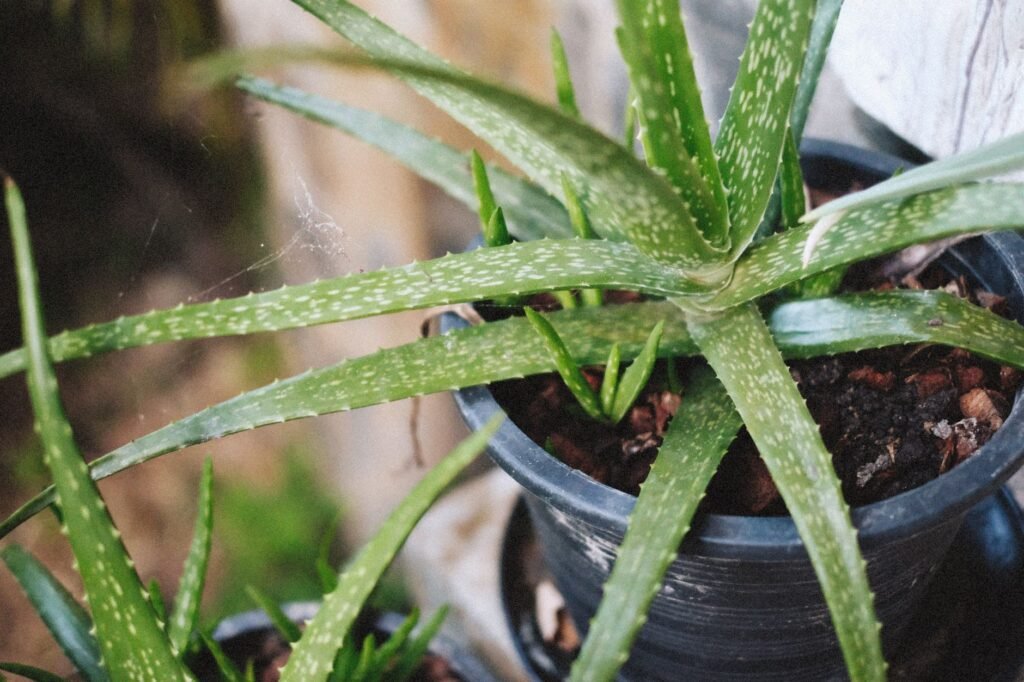
Aloe vera propagates best from its pups, the small offsets that sprout around the base of a mature plant. Separate a pup once it is a couple of inches tall, let the cut end dry for about a week, then pot it in gritty, fast-draining mix and give it time to root.
Spotting an aloe vera pup that is ready to leave
A mature aloe vera spreads outward through underground rhizomes, and new rosettes pop up around the mother plant. Those are the pups. According to the University of Arizona Cooperative Extension, they can be removed once they are a couple of inches tall.
Bigger pups are more forgiving. A pup with several of its own leaves and a few roots has reserves to live on while it settles in, while a tiny one with no roots dries out more easily. If you are unsure, wait another few weeks and check again.
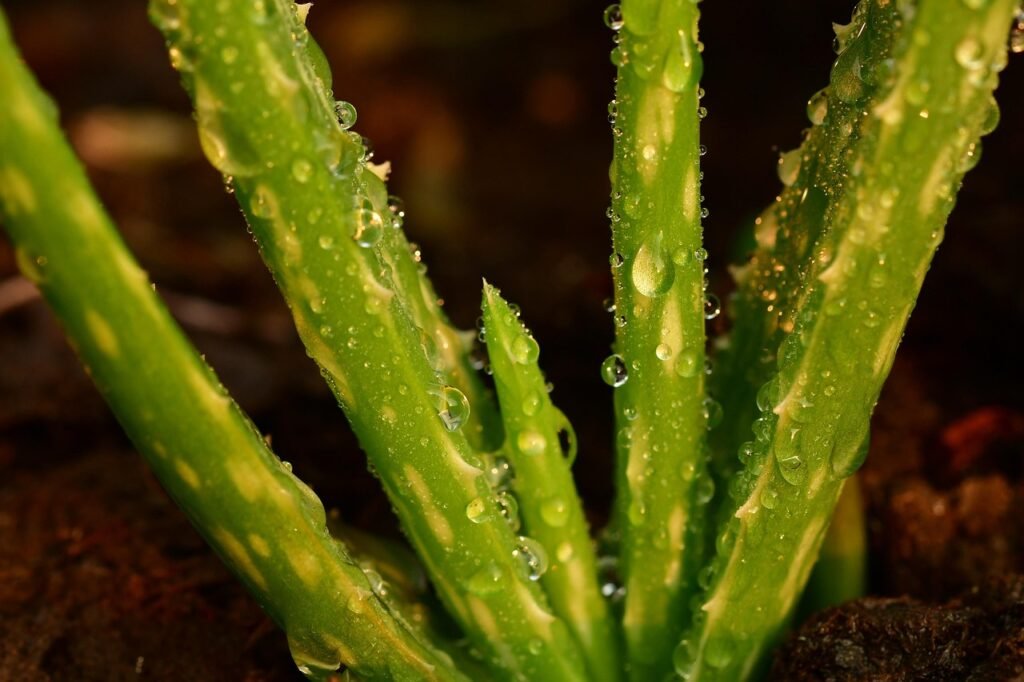
Separating aloe vera offsets from the mother plant
- Water the plant lightly a day ahead so the soil holds together and roots slide free more easily.
- Tip the pot on its side and ease the whole root ball out.
- Brush away soil until you can see where the pup joins the mother plant.
- Tease the pup loose by hand if it comes away with roots attached. If it will not, cut the connection with a clean, sharp knife.
- Keep as many of the pup’s own roots as you can.
- Repot the mother plant in fresh mix at its original depth.
When the pot is crowded with pups, take the chance to divide the aloe clump into several plants. Aloe vera leaves have short, soft prickles along the edges, so gloves make the job more comfortable, and a sheet of newspaper under the pot keeps cleanup easy.
The week of drying that keeps a pup from rotting
The University of Arizona guide recommends letting the wounded area dry and scab over for a week or so before replanting, to stop disease organisms from getting in through the cut. Set the pup somewhere shaded and dry, lying on its side on a paper towel.
For potting, the same guide suggests a commercial potting mix with extra perlite, granite grit or coarse sand, or a packaged cactus mix, in a pot with a large drainage hole. Plant the pup just deep enough to stand upright, firm the mix around it, and hold back on heavy watering until it anchors. The guide says the offset should develop roots after a month or so.
Offsets, division, leaves or seed compared
People try several routes, and they do not all work equally well for aloe vera.
| Method | How it goes |
|---|---|
| Offsets (pups) | The standard method in extension guides; a new plant with its own leaves from day one |
| Dividing a clump | Same idea on a larger scale, splitting a crowded pot into several rosettes |
| Leaf cuttings | Not among the methods the University of Arizona guide lists, so treat it as an experiment rather than a plan |
| Seed | Possible but slow, and most successful under greenhouse conditions, per the University of Arizona |
If a leaf breaks off, compost it and count on pups for new plants.
Caring for the new plant in its first months
Keep the potted pup in bright, indirect light while it roots, then move it gradually into stronger sun, especially if it grew up shaded by the mother plant. Once roots have formed, water deeply and then let the mix dry out before the next watering.
The University of Arizona guide suggests a bright spot near a south or west facing window indoors, soaking the soil thoroughly in summer but letting it dry between waterings, and a light feeding of indoor plant fertilizer in spring. Potted aloes can spend summer outdoors if you bring them back inside before the first fall freeze, since aloe vera grows outdoors year round only where there is no chance of freezing. Longer-term care is covered in our separate guide to growing aloe vera.
Frequently asked questions
Can you propagate aloe vera in water?
Water rooting is not the method extension guides describe for aloe vera. The plant stores water in its leaves, and standing water encourages rot in the fresh cut. Letting a pup dry and scab over, then planting it in a gritty, well-drained mix, is the dependable route recommended by the University of Arizona.
How long does it take an aloe vera pup to root?
The University of Arizona Cooperative Extension says an offset should develop roots after a month or so in potting mix. A gentle tug that meets resistance tells you roots have formed. Pups that already had some roots when separated settle in faster than ones cut away bare.
Why is my aloe vera pup turning soft and brown?
Soft, brown or mushy tissue usually means rot, most often from planting before the cut dried or from soil that stays wet. Remove the pup, trim away any soft parts with a clean knife, let it dry for about a week, and replant it in fresh, fast-draining mix.
How do you propagate aloe vera without roots?
Treat a rootless pup like a cutting. Let the cut end dry and scab over for about a week, as the University of Arizona Cooperative Extension advises, then plant it in a gritty, fast draining mix just deep enough to stand upright. Water sparingly until it anchors, and roots should form in about a month.
Can you propagate aloe?
Yes. The University of Arizona Cooperative Extension says aloes are often propagated from offsets, the pups that form around the base of mature plants, once they are a couple of inches tall. Aloes can also be grown from seed, though the guide notes that it takes time and works best under greenhouse conditions.