
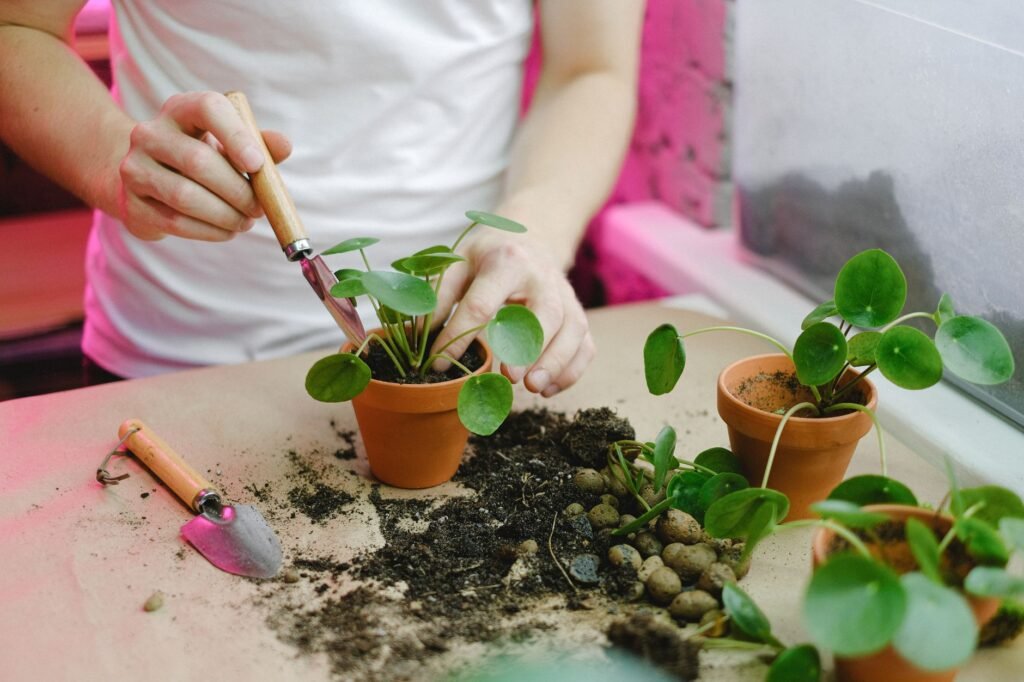
The easiest way to propagate a Chinese money plant is to separate the small pups that sprout from the soil around the parent, each with some roots attached, and pot them in moist, well-drained mix. Stem cuttings root too, in water or soil. Pilea pups root fastest in spring and early summer, when the parent is putting out new growth.
Spotting a Chinese money plant pup ready to separate
A healthy Chinese money plant, known botanically as Pilea peperomioides, sends up baby plants from its roots, sometimes a few inches from the main stem. It can also push out small shoots along the stem itself. Both can become new plants.
Wait until a soil pup has several leaves of its own and looks like a miniature version of the parent. Tiny pups with one or two leaves have very few roots and are more likely to wilt after separation. Brush the soil back gently with a finger to see how far the pup’s stem runs and where it meets the parent’s roots.
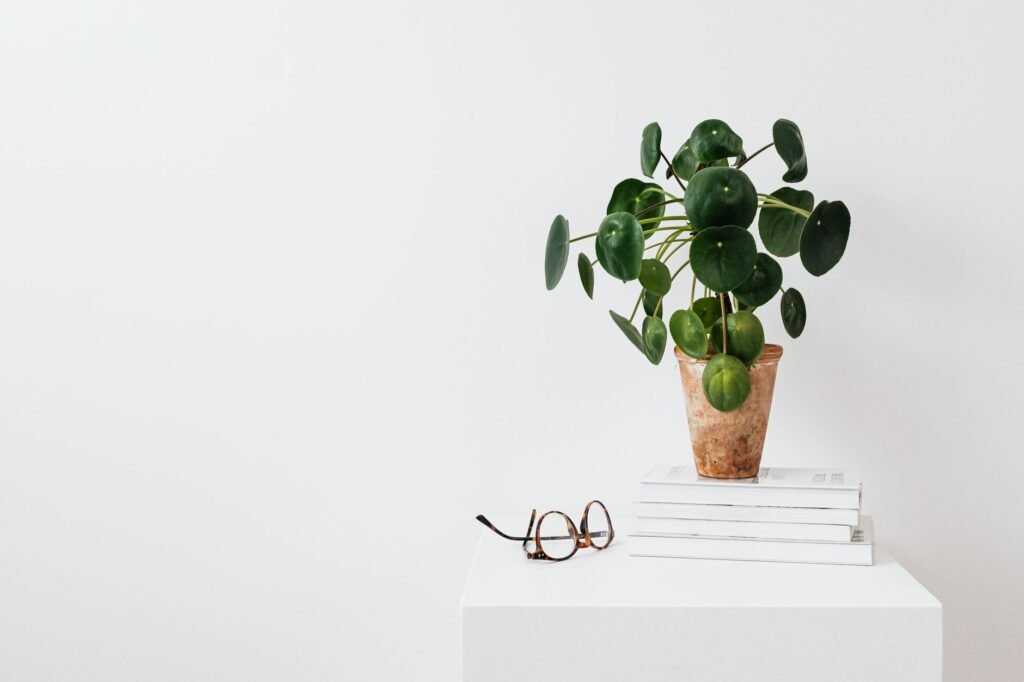
Separating and potting soil pups
- Water the parent pilea the day before so its soil is moist but not muddy.
- Push a clean, sharp knife into the soil an inch or so below the pup and cut the connecting root.
- Lift the pup out with as much of its own root and soil as you can.
- Plant it in a small pot with drainage holes, filled with moist, well-draining potting mix, so it sits at the same soil level it had beside the parent.
- Water lightly and set it in bright, indirect light.
- Keep the soil evenly moist, not soggy, while it settles in.
If the pup comes away with almost no roots, treat it like a cutting and root it in water first.
Rooting Chinese money plant cuttings in water or soil
Stem cuttings suit a parent plant that has grown tall and leggy, which NC State Extension links to inadequate light. Cut the top section just above a leaf, keeping a stem piece of a few inches, and remove the lowest leaves so none sit below the waterline. Pups that sprout along the stem can be snipped off the same way.
| Method | What you need | Pros | Watch for |
|---|---|---|---|
| Soil pup division | Knife, small pot, potting mix | Already rooted, fastest to establish | Taking pups too small |
| Cutting in water | Clean glass jar, room temperature water | You can watch roots form | Change water regularly; rot if the stem turns mushy |
| Cutting in soil | Small pot, moist mix | No transplant step later | Soil drying out before roots form |
Water-rooted cuttings can move to soil once they have a small cluster of roots. Keep the new pot a little more moist than usual for the first couple of weeks while those water roots adjust.
Care for young Chinese money plants
New plants need the same conditions as the parent, just with a bit more attention. NC State Extension’s Pilea peperomioides profile says the plant flourishes in bright, indirect light and moist, well-drained potting mix, and is susceptible to root rot if overwatered. It also recommends avoiding wet foliage, which can cause leaf spots, and keeping plants away from cold drafts and heat sources. The same page lists the plant as safe for pets and children, a nice point in its favor as a gift.
Turn each pot a quarter turn every week or so. The round leaves lean toward the window, and turning keeps the young plant growing upright instead of lopsided.
Why a new pilea droops or rots
A little drooping in the first few days after separation is normal while roots recover. Drooping that continues in wet soil points to rot, not thirst. Check the base of the stem; if it’s soft and dark, take a fresh cutting from the healthy top and start again. Pale, stretched growth means the plant needs more light. Tiny flies around the pot are often fungus gnats, which NC State lists among common pests, and letting the top of the soil dry slightly between waterings discourages them.
Frequently asked questions
Can you propagate a Chinese money plant from a single leaf?
A leaf pulled off with no stem tissue usually just grows roots and may never produce a new plant. Your chances are far better with a pup or a stem cutting. If a leaf breaks off, you can try it in water, but expect it to be a slow experiment.
How long do Chinese money plant cuttings take to root?
It varies with light and warmth. Cuttings taken in spring or early summer, while the plant is actively growing, root faster than those taken in winter. Watch for white roots in a water glass, or gentle resistance when you tug a soil cutting, rather than going by the calendar.
Is the Chinese money plant safe around cats and dogs?
NC State Extension lists Pilea peperomioides as safe for pets and children, which makes it a popular choice for homes with animals. Any plant can upset a pet's stomach if chewed heavily, so call your veterinarian if your pet eats a lot of leaves and seems unwell.
How often should you water a Chinese money plant?
There is no fixed schedule, so water by feel. NC State Extension says the plant likes moist, well-drained potting mix but is prone to root rot if overwatered. Water thoroughly once the top of the mix starts to dry, let the excess drain from the pot, and keep water off the leaves to avoid spots.