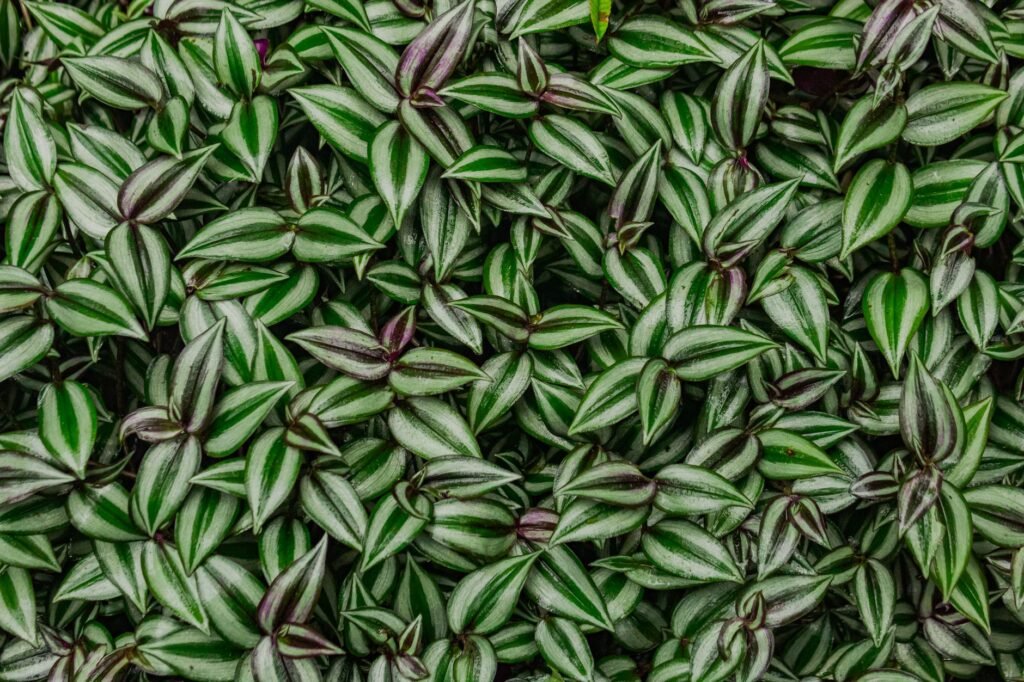
Snip a stem tip a few inches long just below a node, remove any leaves that would sit underwater or in soil, and set it in a glass of water or moist potting mix. Tradescantia roots from its nodes so readily that you can skip rooting hormone entirely, and few houseplants are easier to multiply.
Where tradescantia roots form on the stem
Nodes are the slightly swollen joints along a tradescantia stem, each one marking the spot where a leaf base wraps around it. On tradescantia, every node can grow roots, which is why trailing stems that touch soil often root on their own. NC State Extension notes that the plant roots at the nodes and that leggy growth makes good material for cuttings.
That gives you a practical rule. Look for stems that have grown long with wide gaps between leaves. Trimming them improves the look of the mother plant, and the tips you remove become new plants. Cut with clean scissors just below a node, and aim for a piece with at least two or three nodes.
The stems of some types, especially purple heart, are brittle and snap easily. Pieces that break off by accident can be rooted the same way.
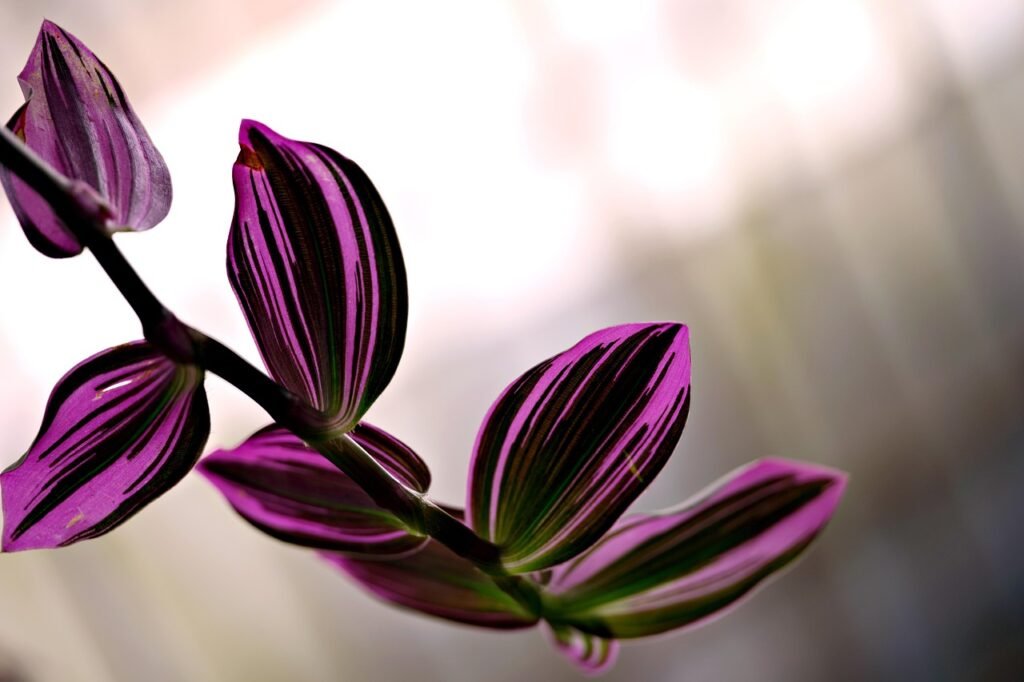
Rooting tradescantia cuttings in water
- Pull off the leaves from the bottom node or two, so no foliage will sit in the water.
- Place the cuttings in a small glass or jar of room temperature water, with at least one bare node submerged.
- Set the jar in bright, indirect light. A spot near a window without hot afternoon sun works well.
- Swap in fresh water every few days, or sooner once the glass looks cloudy.
- Watch for white roots growing from the submerged nodes.
- Once several roots have formed and started to branch, plant the tradescantia cuttings in a pot filled with damp, well drained potting mix.
Clear glass lets you see progress, which is half the fun. Do not leave the cuttings in water indefinitely, though. The longer they grow there, the bigger the adjustment when they move to soil.
Sticking tradescantia cuttings in soil
You can skip the water step entirely. The University of Wisconsin Extension notes that tradescantia cuttings root readily in water or in moist potting soil. Push the bare nodes of each cutting into damp mix, firm it around them, and keep the soil lightly moist while roots form.
For a full pot fast, plant several cuttings together around the edge and one or two in the middle. Tradescantia looks best bushy, and one lone cutting leaves a pot looking sparse for a long while. Pinching the growing tips once the cuttings are established encourages branching.
Layering also works. Lay a long stem across a pot of moist soil next to the parent, hold one node against the surface with a paper clip opened into a U, and snip the stem from the mother plant after roots take hold.
Common tradescantia types and how they differ
| Common name | Look | Propagation note |
|---|---|---|
| Inch plant or wandering dude | Silver striped leaves | Roots quickly from tip cuttings |
| Purple heart | Long, deep purple leaves | Fragile stems, root any piece with a node |
| Small leaf spiderwort | Small green leaves, white flowers | Roots at every node, spreads fast outdoors |
| Cobweb spiderwort | Fuzzy leaves covered in white hairs | Tip cuttings, same method as the others |
The method barely changes from one to the next, so the table is more about knowing what you have than learning a new technique.
Gloves, pets and outdoor spread
NC State lists skin irritation and redness from handling the leaves and sap, so wear gloves if you have sensitive skin or are taking a lot of cuttings. NC State also lists small leaf spiderwort as a problem for dogs, cats and horses, so keep cuttings and pots out of reach of pets that chew plants.
Be careful with scraps. Small leaf spiderwort counts as an invasive weed across parts of the southeastern United States, and because every node can root, stems tossed on a compost pile or garden bed can take hold. Bag trimmings or put them in the trash if you live somewhere warm, and ask your local extension office which invasive plant rules apply where you garden.
Frequently asked questions
Can you propagate tradescantia from a single leaf?
A leaf with no node attached will not usually grow into a new plant. You need a piece of stem that includes at least one node, since that is where tradescantia forms roots. A short stem section with one leaf and its node can root, but tip cuttings with several nodes establish faster.
Why are my tradescantia cuttings rotting in water?
Rot usually starts with leaves left below the waterline, stale water, or a cutting that was damaged or mushy when taken. Remove any submerged leaves, change the water every few days, and trim off soft sections back to firm, healthy stem before putting the cutting back in fresh water.
When is the best time to propagate tradescantia?
Spring and summer, when the plant is actively growing, give the fastest results. Indoor tradescantia can be propagated any time of year, since the plant roots so easily, but cuttings taken in a dim winter room tend to root more slowly and may stretch toward the light.
How do you care for a tradescantia plant?
Give it filtered sun, since NC State Extension notes that in low light the stems drop their lower leaves and the leaf color fades. Water regularly but let the soil dry between waterings, and water less in winter. Room temperatures of about 65 to 75°F and ordinary household humidity suit it well.
How do you make a tradescantia bushier?
Trim it often. NC State Extension says trimming promotes denser foliage and that the plant can be pruned back hard every spring. Pinch the stem tips after new growth appears, then root the trimmings and tuck them back into the same pot around bare spots, since several stems together fill a pot far faster than one.