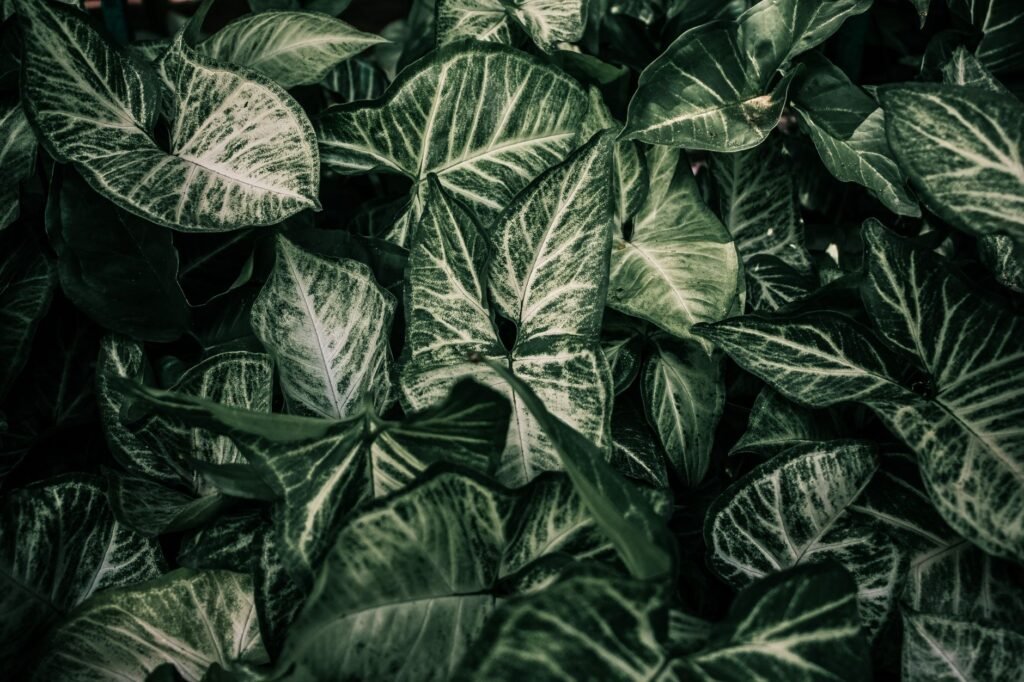
To propagate syngonium, cut a stem just below a node, the bump where a leaf and aerial root emerge, then root it in water or moist potting mix in bright, indirect light. New roots grow from the node. Arrowhead plants can also be divided at the roots or layered into a second pot.
Finding the node on an arrowhead plant stem
Syngonium podophyllum, sold as the arrowhead plant or arrowhead vine, roots from its nodes, not from bare stem. On an arrowhead vine, each node shows up as a faint thickened band at the point where a leaf stalk joins the stem. Many nodes already carry a small brown nub or a short aerial root, which gives the cutting a head start.
NC State Extension describes the stems as succulent climbers with adventitious roots, which is why this plant roots so readily. A cutting with no node can stay green in water for a while but is unlikely to grow roots. Each cutting needs at least one node, and two is safer.
Choose stems with healthy leaves and no yellowing. Long, leggy stems make the best candidates, since trimming them also makes the parent plant look fuller.
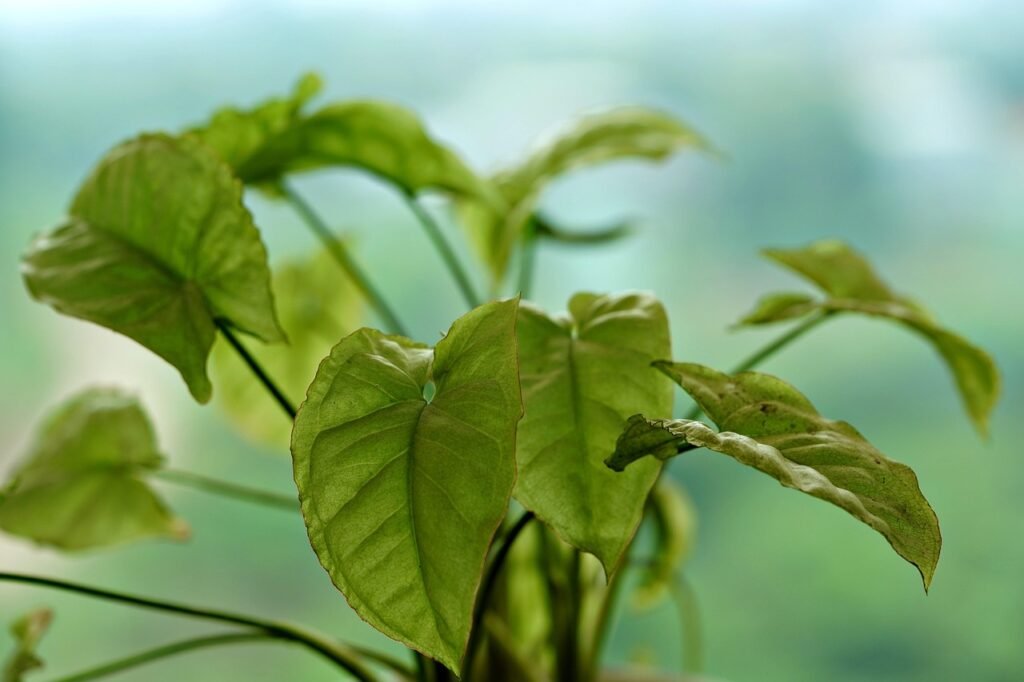
Rooting syngonium cuttings in water
- Put on gloves, since the sap can irritate skin, and use clean, sharp scissors or pruners.
- Cut the stem just below a node, keeping one or two leaves on each cutting.
- Remove any leaf that would sit underwater, since submerged leaves rot.
- Stand the cutting in a clear glass of room temperature water with the node covered.
- Set it in bright, indirect light, out of direct sun.
- Refresh the syngonium jar every few days, and pour out the old water sooner once it looks cloudy.
Roots start as small white nubs at the node. Timing depends on warmth and light, so a cutting in a warm, bright room roots faster than one on a cool windowsill in winter.
Moving syngonium from water to soil, or starting in soil
Once the roots are a decent length and a few side roots have formed, pot the cutting in a small container of moist, well drained potting mix. Keep the soil evenly damp during the syngonium’s first couple of weeks in its pot, while roots that grew in a glass get used to soil. Those roots are fragile, and letting the pot dry out right away is an easy way to lose the cutting.
You can skip the water stage entirely. Push the node into moist potting mix, tent the pot loosely under a clear plastic bag, leaving it unsealed so the air around the leaves stays humid, and give the arrowhead cutting a warm spot where direct sun never reaches it. When the stem holds firm as you pull on it lightly, roots have formed under the soil. The plant likes moist soil, but moist should never mean soggy.
Planting several rooted cuttings in one pot fills out a bushy arrowhead plant far faster than one stem would on its own.
Division and layering for a bushier arrowhead plant
NC State Extension lists division, layering and stem cuttings as propagation methods for syngonium. Division works on a crowded, mature plant. Slide it out of its pot, find natural clumps with their own stems and roots, and gently pull or cut them apart. Pot each clump at the depth it grew before.
Layering suits a trailing plant. Place a second small pot filled with damp mix next to the parent syngonium, pin a long vine down so a node rests on the soil, and leave it attached. The parent keeps feeding it while roots form, and once it resists a gentle tug you can snip the connecting stem.
| Method | Best for | Trade-off |
|---|---|---|
| Water cuttings | Beginners, watching roots form | Roots must adjust to soil later |
| Soil cuttings | Skipping the transplant step | Harder to see progress |
| Division | Large, crowded plants | Disturbs the parent |
| Layering | Long trailing stems | Slow, and needs space beside the parent |
Handling syngonium sap around kids and pets
Arrowhead plant is toxic if chewed. NC State Extension’s plant profile lists calcium oxalate crystals as the toxic principle and rates the poison severity as medium. Symptoms include oral irritation, pain and swelling of the mouth, tongue and lips, drooling, vomiting and difficulty swallowing.
Keep cuttings in glasses and newly potted plants out of reach of pets and young children, and wash your hands after handling stems. If a pet chews on the arrowhead plant, get your veterinarian on the phone or contact a pet poison hotline. If a child eats any part of it, call Poison Control.
Frequently asked questions
Can you propagate syngonium from a single leaf?
A leaf on its own will not grow into a new plant. It needs a piece of stem with at least one node, where new roots and shoots form. A leaf with only its stalk may stay green in water for weeks, but it will not produce new growth.
Why are my syngonium cuttings rotting in water?
Rot usually comes from submerged leaves, stale water or a cutting without a healthy node. Trim off soft, dark sections with a clean cut, remove any leaves below the waterline, and change the water every few days. Bright, indirect light and warmth help roots form before rot sets in.
Why do new arrowhead plant leaves look different from old ones?
Syngonium changes leaf shape as it matures. NC State Extension notes that young plants have heart or arrowhead shaped leaves, which grow longer and split into several leaflets on older plants. Cuttings taken from mature stems may keep that more divided leaf form for a while.
When should I plant syngonium?
Indoors, you can pot it any time the room stays warm, though cuttings root faster in warm, bright conditions. Outdoors, wait until nights stay warm, because NC State lists arrowhead plant as hardy only in USDA zones 10 through 12. In colder areas, grow it in a container outside for summer and bring it in before cold weather.
How do I prune an arrowhead plant?
Snip leggy or climbing stems just above a node with clean pruners, wearing gloves because the sap can irritate skin. NC State Extension notes that cutting off stems as they begin to develop helps the plant keep its arrowhead shaped leaves and a bushier habit. Any trimmed piece that has a node can be rooted as a new cutting.