
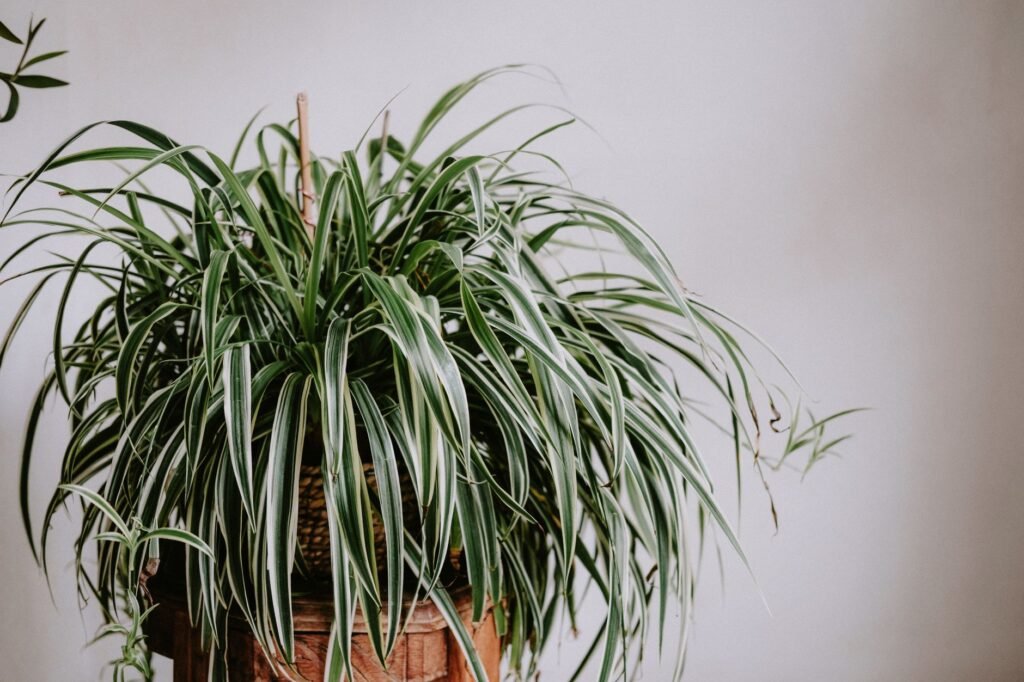
To propagate a spider plant, snip off one of the small plantlets that hang from its long stems and set its base in moist potting mix or a glass of water until roots grow. Babies that already show root nubs take hold fastest. You can also pin a plantlet into soil while it stays attached, or divide a large plant.
Spotting spider plant babies ready to root
Spider plants send out long, arching stems that first carry small white flowers and then small plantlets, often called babies or spiderettes. As the babies mature, they start forming short roots along their base, even while hanging in the air.
Look underneath each plantlet. Small brown or white nubs mean it is ready. A baby with no nubs at all can still root, but it takes longer and is more likely to rot in water. Pick plantlets with several healthy leaves and no yellowing.
Three ways to root spider plant babies
| Method | How it works | Good for |
|---|---|---|
| Directly into soil | Cut the baby and plant its base in moist potting mix | Plantlets with visible root nubs |
| In water | Rest the base in a glass of water, leaves kept dry | Watching roots form, unrooted babies |
| Pinned while attached | Hold the baby on soil in a nearby pot, cut later | The highest success rate |
For water rooting, only the base should sit in the water. Change it every few days, and move the plantlet into potting mix once its roots are a couple of inches long. Water roots are more fragile than soil roots, so keep the new pot evenly moist for the first few weeks. Tap water that browns the parent’s leaf tips can affect a rooting baby too, so rainwater or distilled water is a good choice for the glass.
Pinning a spider plant baby while it stays attached
This method lets the parent plant keep feeding the baby until it has roots of its own. The University of Wisconsin spider plant guide suggests a bent paper clip or piece of wire to hold the plantlet against the soil.
- Fill a small pot with moist potting mix and set it right beside the parent.
- Lay a runner across so a plantlet rests on top of the new pot.
- Press the base of the baby into the soil and hold it there with a bent paper clip.
- Keep the new pot moist, but not soggy, while roots form.
- Tug gently after a few weeks. Resistance means it has rooted.
- Cut the runner between the two pots.
Dividing a crowded spider plant at the roots
Large spider plants can also be divided. Ease the whole spider plant from its container and look at the root ball. Spider plants have thick, fleshy roots that store water, and a crowded pot often looks like a solid mass of them.
Pull or cut the clump into sections, making sure each piece has its own leaves and a good share of roots. Pot each section in fresh mix at the same depth it grew before, and water it well. Choose pots only a little larger than each root ball, because a large pot holds extra wet soil around a small root system. Division is also a good answer for a plant whose roots push out of the drainage holes. Seeds are another option, though seedlings may not keep the parent’s leaf striping.
Why a spider plant stops making babies
Runners usually form in response to short days and long, uninterrupted nights for at least three weeks, according to Wisconsin Extension. A plant under lamps that stay on late, or in a room lit all evening, may never get that signal. Too much fertilizer can also cut down on plantlets.
Give the plant medium to bright light during the day and real darkness at night. Let the soil dry slightly between thorough waterings. Brown leaf tips often come from dry soil, salt buildup or fluoride and chlorine in tap water, and distilled water or rainwater helps.
Frequently asked questions
Are spider plants safe for cats and dogs?
The ASPCA lists spider plant as non-toxic to both cats and dogs. Cats often chew the dangling leaves anyway, and eating a lot of any plant can upset a pet's stomach. If your pet seems unwell after chewing a plant, call your veterinarian for advice.
When is the best time to propagate a spider plant?
You can root spider plant babies any time they appear and show root nubs. Spring and summer are often easiest, because the plant is growing actively and new roots form quickly with longer days and warmer rooms. Keep new plantlets out of cold drafts.
How many spider plant babies can I plant in one pot?
Several babies can share one pot if you want a fuller plant faster. Space them a few inches apart in fresh potting mix and water them together. They will fill in and look like one bushy plant, which suits hanging baskets especially well.
How often should you water a spider plant?
Water it thoroughly whenever the top of the soil has dried slightly, rather than on a fixed schedule. Spider plants grow best in moist soil, and their thick, fleshy roots help them handle an occasional missed watering. Cut back in winter, and use rainwater or distilled water if the leaf tips start to brown.
Where do you cut spider plant babies?
Cut the runner, the thin stem that links each baby to the mother plant, using clean scissors. Wisconsin Extension suggests letting the baby root in a pot of mix while it is still attached, then severing that stem once roots form. A baby that already shows root nubs can be cut free and potted up right away.