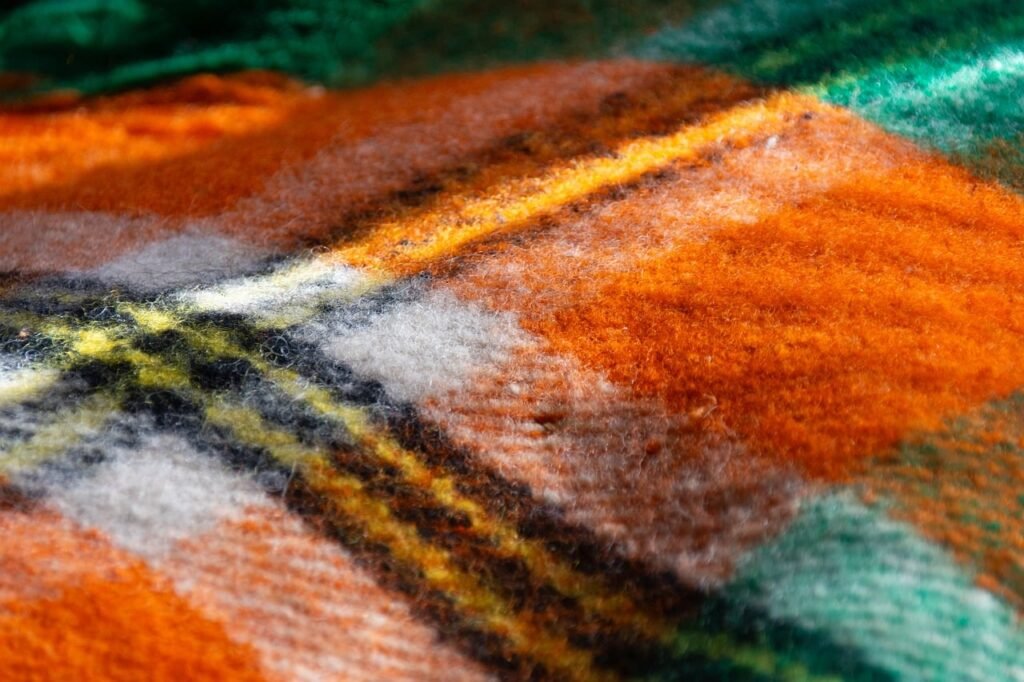
To wash a wool blanket, check the care label, then wash it in cold water with a wool detergent, either by hand in a tub or on your machine’s gentle wool cycle. Press the water out without wringing, and dry it flat or draped over a line out of direct sun. Never put it in the dryer.
Reading the care label on a wool blanket
The label comes first, because not every wool blanket can go in water. Some are marked dry clean only, and blends with other fibers can behave differently from pure wool. The Woolmark Company, which certifies wool products, advises following the blanket’s own care instructions.
If the label shows a washtub symbol, look for a hand or a single dot inside it, which point to hand washing and cool water. A label that allows machine washing may still ask for a wool or delicate cycle. When a blanket has no label at all, treat it as hand wash only and test a hidden corner first.

Hand washing a wool blanket in the bathtub
- Fill a clean tub with cold water deep enough to submerge the blanket, and stir in a detergent made for wool.
- Lay the blanket in and press it gently under the water until it is soaked through.
- Let it soak for a short while, then squeeze the suds through it with flat hands. Do not rub or twist.
- Drain the tub and refill with cold water to rinse. Repeat until no suds remain.
- Drain again and press the blanket against the tub floor to push water out.
- Roll it up in large towels and press to absorb more water, without wringing.
A bathtub suits a full size blanket, and a large utility sink can handle a throw. Rinse the tub first so no bathroom cleaner ends up in the wool. A wet wool blanket is heavy. Support the whole thing in your arms when you lift it, since hanging it from one edge can stretch the weave.
Machine washing on a wool cycle
If the label allows it, the Woolmark care guide for blankets recommends the gentle wool cycle, cold water and a wool specific detergent. Make sure the blanket has room to move, since a large blanket packed into a small drum washes unevenly. Your washer’s manual explains what its wool cycle does, including how fast it spins.
The reason for all this caution is felting. Wool fibers are covered in tiny scales, and heat, moisture and agitation together make them lock into each other. Once that happens the blanket shrinks and thickens, and it cannot be reversed. Cold water and a slow cycle keep agitation low. Skip bleach and regular detergents with enzymes unless the product says it is safe for wool.
Drying the blanket flat so it holds its shape
Woolmark advises against the dryer, which can ruin the softness and shape. Instead, drape the blanket across a clothesline or two parallel lines so its weight is spread out, or lay it flat on a drying rack or clean towels. Turn it once or twice so both sides dry evenly.
Dry the blanket away from direct sun, since strong light can fade the dye and leave wool fibers feeling coarse. A shaded spot with good airflow works outdoors, and an airy room with a fan works indoors. Do not use it or store it until it is completely dry all the way through.
Between washes, airing and spot cleaning
| Situation | What to do |
|---|---|
| Smells stale or dusty | Shake it outdoors, then hang it where air moves |
| A fresh spill | Blot with warm water and mild detergent, do not scrub |
| Putting it away for the season | Store clean and dry in a cool, dark, sealed bag or bin |
| Worried about moths | Add cedar blocks or chips to the storage bin |
Wool resists odors well, so blankets need washing less often than most bedding. Some guidelines suggest about once every three months for a blanket in regular use, with airing in between.
Frequently asked questions
Can I wash a wool blanket that says dry clean only?
It is safer to follow the label. Dry clean only often means the blanket, its dyes or its trim may shrink, bleed or distort in water. Spot clean and air it between professional cleanings. If you decide to risk it, test water on a hidden corner first and accept the chance of damage.
How often should a wool blanket be washed?
Wool resists odors, so it rarely needs a full wash. Woolmark notes that some guidelines suggest about once every three months for a blanket in regular use. Air it outdoors between washes and blot spills right away, which stretches the time between full washes even further.
What detergent should I use for wool?
Use a detergent labeled for wool or delicates. Regular laundry detergents can contain enzymes that break down protein fibers like wool, and bleach damages them. Use the amount the bottle recommends, since extra soap is harder to rinse out of a thick blanket and can leave it stiff.
Does merino wool shrink?
It can. Merino is still wool, and untreated merino fibers carry tiny surface scales that lock together under heat, moisture and agitation, so a hot or rough wash can felt and shrink it. Some merino products are treated to be machine washable, which changes those scales. Follow the label, and without that claim, wash cold and gently.
Does wool shrink in the dryer?
Yes, it can. A dryer adds heat and constant tumbling to damp wool, the same mix that makes the fibers' tiny scales lock together and felt. A blanket can come out smaller, thicker and stiffer, and felting cannot be undone. Dry it flat on a rack or spread across two clotheslines instead, turning it once or twice.