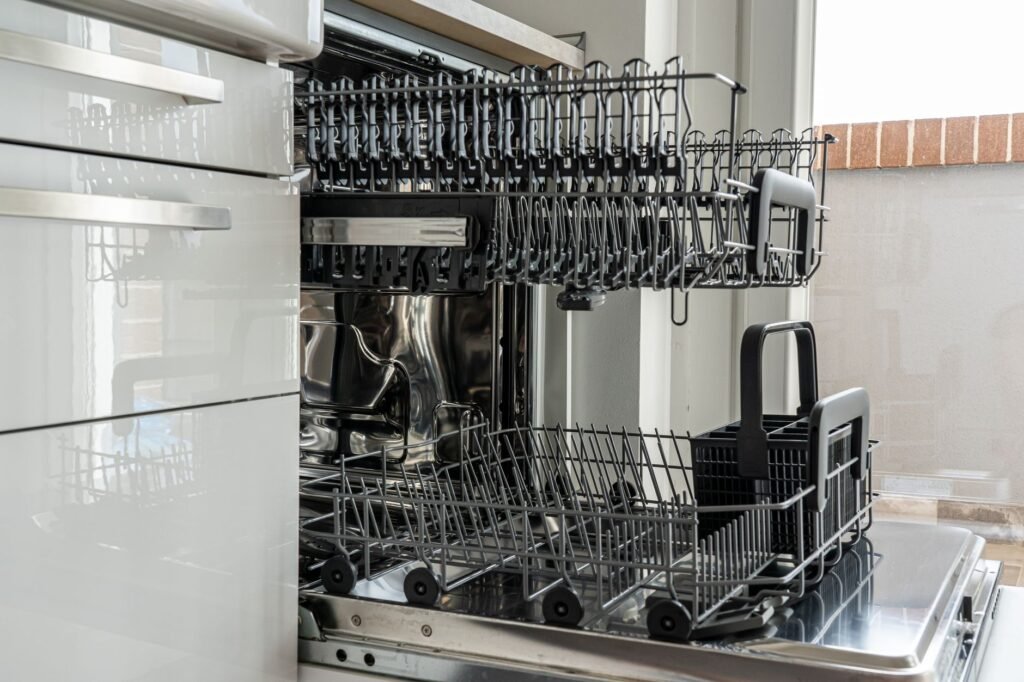
To clean a dishwasher, remove and rinse the filter, clear the spray arm holes, wipe the door seal, then run an empty hot cycle with a dishwasher cleaner. Cleaning the filter carries the heaviest load, and most musty smells and gritty dishes start there, so do it first even if you skip everything else.
Start at the filter in the floor of the tub
Some dishwashers have a self-cleaning filter with a grinder, and many others use a manual filter you rinse by hand. If you see a removable cylinder or a mesh screen in the floor of the tub, near the lower spray arm, yours is the manual kind. Your manual shows the exact shape, and most makers post their manuals on their support sites, searchable by the model number printed around the door edge.
Pull out the lower rack, twist the cylinder the way the arrows on it point, and lift out the flat screen underneath. Rinse both under warm running water and scrub with a soft brush and a dab of dishwashing liquid. Skip wire brushes, which can tear the mesh. Look into the opening while the filter is out and pick out any glass, bones, seeds or labels sitting there before you put everything back and lock it in place.
Cleaning the whole dishwasher in one session
- Empty the machine and slide out both racks so you can see the tub floor.
- Remove and wash the filter as described above.
- Spin each spray arm by hand. If any holes are packed with debris, pick them clear with a toothpick. Most lower arms lift off, and many upper arms unclip or unscrew.
- Wipe the door gasket and the bottom edge of the door with a cloth and warm soapy water. An old toothbrush reaches into the folds.
- Clean the detergent dispenser and the area around the door hinges, where splashes dry into a film.
- Put the racks back and run the hottest empty cycle with a dishwasher cleaner, following its label.
- Wipe the front panel and controls with a damp cloth, and for a stainless front, follow the grain and the maker’s cleaning advice.
The bottom edge of the door is the spot people forget. It never gets hit by the spray, so grease and food drips build up there and start to smell long before the tub looks dirty.
Vinegar, baking soda and store-bought dishwasher cleaner
| Option | What it helps with | How it is used | Watch out for |
|---|---|---|---|
| Dishwasher cleaner, tablet or liquid | Grease and detergent buildup | Empty hot cycle, per the label | Use only products labeled for dishwashers |
| White vinegar | Cloudy mineral film from hard water | A cup set upright on the top rack, empty hot cycle | Some manuals discourage it; check yours |
| Baking soda | Musty odor | Sprinkled on the tub floor, short hot cycle | Deodorizes, does not remove scale |
| Chlorine bleach | Mildew spots | Only if your manual allows it | Never in the same cycle as vinegar |
That last row deserves attention. Bleach releases toxic chlorine gas when it meets an acid such as vinegar, and it forms other toxic gases with ammonia. Never combine them in one cycle, and run a full rinse between products if you use more than one.
A clean dishwasher that still leaves dishes dirty
If the tub is clean and dishes still come out with grit or film, look at loading first. A tall pan or cutting board can block a spray arm, so spin the arms by hand after loading to make sure nothing stops them. Detergent that has clumped in a humid cabinet dissolves poorly, so try a fresh box.
Spots and cloudy glasses usually point to hard water, which a rinse aid helps with by reducing water spots. If your dishwasher is connected to the hot water line, running the kitchen tap until it turns hot before starting a cycle means the first fill is warm. Standing water in the bottom after a finished cycle usually means a clogged filter; if it is still there once the filter is clean, call a technician to check the drain.
Frequently asked questions
Should the dishwasher door stay open after a cycle?
Leaving the door cracked for a while after a cycle lets steam escape and helps the gasket and tub dry, which discourages musty smells. Keep it closed when small children or pets are around, since an open door puts detergent residue and sharp utensils within easy reach.
Why does my dishwasher smell even after cleaning?
A lingering smell usually traces back to something a cleaning cycle cannot reach, such as food trapped in the sump below the filter or residue in the drain line. Recheck the filter and the opening beneath it first, and if the odor stays, have a technician or plumber look at the drain connection.
Can you use a regular detergent pod to clean the machine?
A regular pod in an empty cycle will clean a little, but it is made for food soil rather than the grease and mineral buildup inside the machine. A cleaner labeled for dishwashers is the better choice, used exactly as the package directs, and your manual may name products to avoid.
How should you load a dishwasher?
Scrape off bones, toothpicks and other hard bits first, since Maytag notes they can clog the filter. Put plates and cookware on the bottom rack with dirty sides facing the center, and cups, glasses, small bowls and plastics on top, angled down without nesting. Load forks and spoons handles down, sharp knives blades down, and keep the spray arms free.
How long does a dishwasher run?
Most cycles run 1.5 to 4 hours, according to Whirlpool, with a normal wash taking about 1.5 to 2 hours and quick cycles 30 to 60 minutes. Newer machines use less water and energy, so they run longer than older ones. Heavy soil or mineral buildup can also stretch sensor cycles, another reason to keep the machine clean.