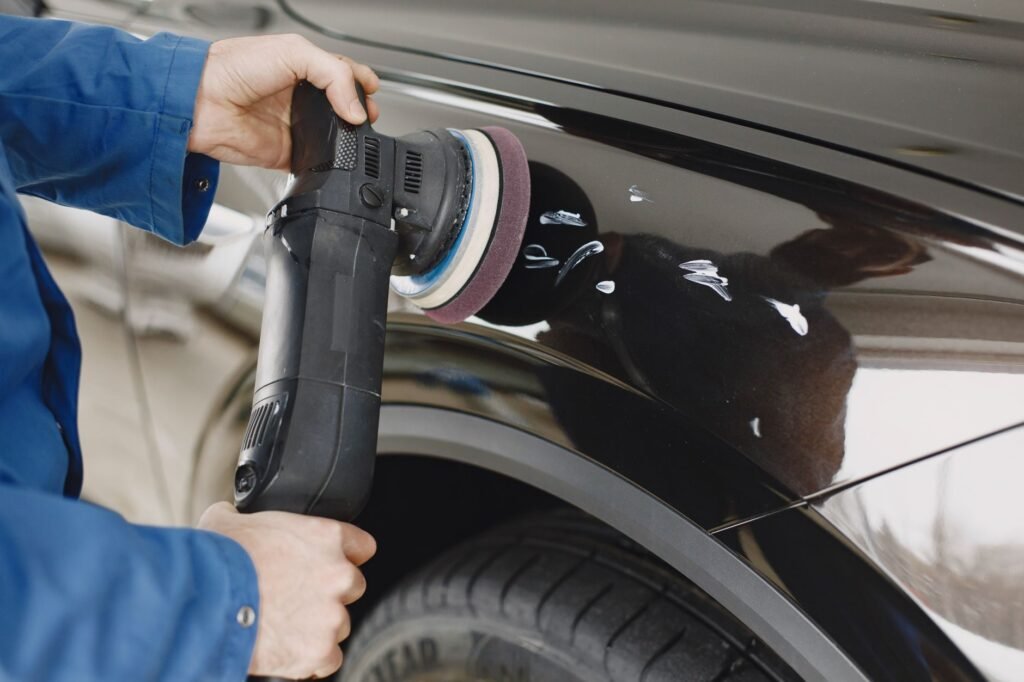
Most light car scratches sit only in the clear coat and can be polished out by hand with a scratch remover or polishing compound. Deeper scratches that show primer or bare metal need touch-up paint to fill them, and a gouge that runs across a whole panel is body shop work.
Run a fingernail across the scratch before buying anything
Modern car paint is a stack of thin layers. The metal gets a corrosion coating and primer, then a color layer called the base coat, then a glossy clear coat on top that takes the sun, the road grit and the car wash brushes. All of it together comes to around 0.1 millimeter, so there is very little material to work with.
Wash and dry the area, then drag a fingernail across the mark at a right angle. If your nail glides over it, the damage is almost certainly confined to the clear coat, and polishing can level it. If your nail catches, the scratch has probably cut into the color layer or deeper. Look at the bottom of the groove in good light too. White or gray down there usually means primer, and shiny silver means bare metal.
Scratch depth and the repair that fits it
| What you see | Likely depth | Home fix | What to expect |
|---|---|---|---|
| Haze or fine swirls, nail glides | Surface of the clear coat | Scratch remover or fine polish | Usually disappears |
| Thin line, nail barely catches | Into the clear coat | Polishing compound, then a finer polish | Fades a lot, may leave a faint line |
| Nail catches, color visible in the groove | Into the base coat | Touch-up paint, then clear coat | Less visible, rarely invisible |
| White, gray or silver in the groove | Primer or bare metal | Touch-up paint soon, to seal it | Protects the metal; looks vary |
| Long gouge, dent or cracked bumper | Through the paint into the panel | Body shop | Panel repair and repaint |
Transfer marks fool a lot of people. When another car or a painted post rubs yours, it can leave its own paint sitting on top of your clear coat. That looks like a deep scratch but often comes off with a clay bar or a little polish, so try the gentlest step first and escalate only if the mark stays.
Polishing out a clear coat scratch by hand
- Wash the panel with car soap and dry it fully, because any grit left behind gets dragged around by the pad and makes new scratches.
- Work in the shade on cool paint. Compound dries quickly on a hot panel and gets hard to wipe off.
- Put a small amount of compound on a foam or microfiber applicator rather than on the car.
- Rub over the scratch with firm, overlapping passes, first along the scratch and then across it, keeping to a small area.
- Buff away the compound residue using a clean microfiber towel and check the spot from a few angles.
- Repeat a couple of times while the line keeps fading. Stop when it no longer changes, since each pass removes a little clear coat.
- Follow with a finer polish to bring back the gloss, then wax or sealant to protect the spot.
Filling a chip or deep scratch with touch-up paint
Once a scratch reaches the color layer, polishing only softens its edges. The fix is filling the groove. Start by finding your paint code, which is often printed on a label in the driver door jamb, though some makers put it under the hood or in the trunk. The owner manual or a dealer parts counter can tell you where yours is, and the code gets you the exact shade rather than a close guess.
Clean the scratch with rubbing alcohol or a wax and grease remover so the paint bonds. Apply thin layers with a fine brush, or a toothpick for tiny chips, letting each dry before the next, until the paint sits slightly above the surface. Add clear coat if your kit includes it. Some people later level the bump with very fine wet sanding and polish, but that step is easy to overdo, so practice on a hidden spot first. Cover any bare metal quickly, because exposed steel can start to rust.
When a body shop beats a home kit
A scratch that crosses two panels, a dent under the scratch, a cracked plastic bumper, or damage on a newer car you plan to trade in are all good reasons to get an estimate before you touch it. A failed home repair can make the shop job bigger. If another driver or a vandal caused it, photograph it first and ask your insurance agent about coverage and the deductible before filing a claim.
Frequently asked questions
Does toothpaste remove scratches from a car?
Toothpaste is a mild abrasive, so it can dull very light haze on clear coat, but it was never designed for automotive paint and its grit is not consistent. A purpose-made scratch remover or fine polish does the same job more predictably and will not leave residue in trim or panel seams.
Will wax hide scratches on a car?
Wax and some glazes fill very fine swirls and make them less visible for a while, which is why a freshly waxed car looks smoother. They do not remove anything, so the marks come back as the wax wears off after a few washes. Polishing is what actually levels the clear coat.
Is it safe to use a power buffer on car paint?
It is, as long as you choose a dual action polisher, keep it moving and use light pressure. Problems come from holding it in one spot or running it over sharp edges, which can cut through the clear coat. Practice on a less visible panel before working on the hood or doors.
Do car washes scratch your car?
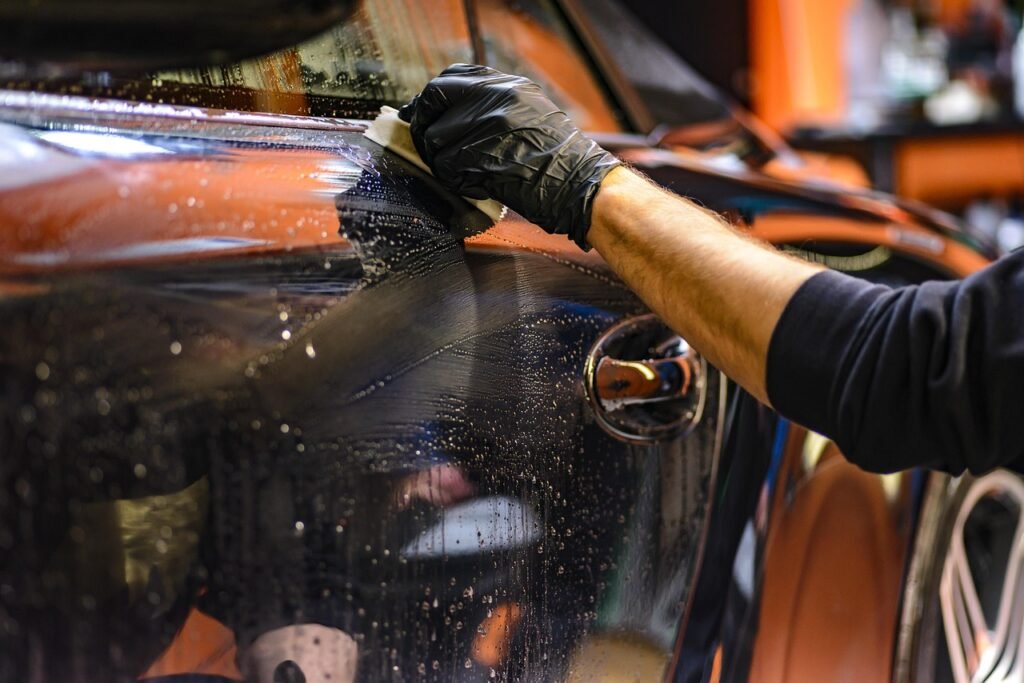
They can. Any wash that drags grit across the paint, from worn brushes and cloth strips to a dirty mitt, can leave fine swirl marks in the clear coat. Touchless washes avoid touching the paint. At home, rinse off loose dirt first and wash with a clean microfiber mitt. Light swirls usually polish out.
Can you buff out scratches on a car?
Yes, if the scratch sits only in the clear coat. Buffing with a scratch remover or polishing compound levels the clear coat around the mark until it fades or disappears. If your fingernail catches in the groove, the scratch has reached the color layer or deeper, and it needs touch-up paint rather than more buffing.