Line a bowl with aluminum foil, add baking soda and very hot water, and rest the silver so it touches the foil, which pulls the black off chemically instead of rubbing it off. Rinse and dry at once. Keep that bath away from antiqued detail, glued stones and weighted handles, which need a cloth instead.
Black on silver is sulfur, and it changes everything
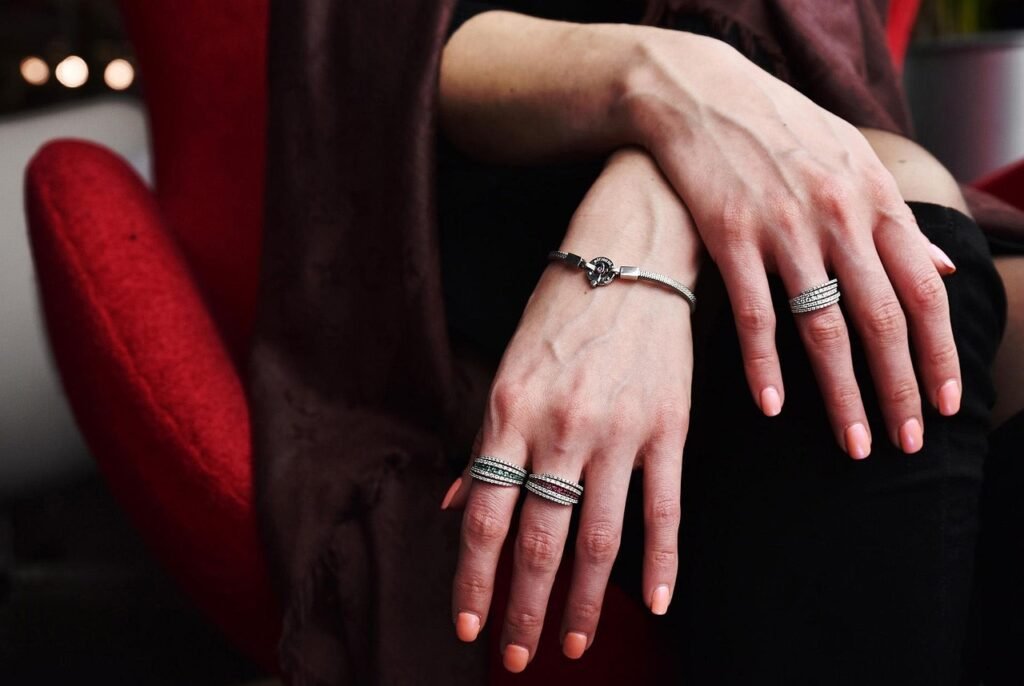
Tarnish is silver sulfide. Traces of sulfur compounds in air, in wool, in rubber bands and in egg yolk react with the surface and convert a thin skin of the metal into a dark compound. The important part is that no dirt has landed on your silver. The silver itself has changed, which is why a soapy sponge does nothing and why every polish on the shelf works by grinding that converted layer away.
Grinding works, and it costs you. Each polishing takes a little metal with the tarnish, and on plated pieces there is only a thin layer of silver over a base metal to give. Repeat that often enough and you see gray patches where the plating has worn through at the high points. Sterling has more to spare, being mostly silver with copper added for strength, but engraved lines and hallmarks still soften over decades of hard buffing.
The foil bath is a reaction, not a scrub
Put tarnished silver in contact with aluminum in a warm solution of baking soda and you set up a small electrochemical cell. Aluminum gives up electrons more readily than silver does, so the sulfur migrates off the silver and binds to the aluminum instead. The silver stays on your piece. The foil goes dull and yellow, which is the visible proof of the trade.
That same thoroughness is the drawback. Many silver designs are deliberately oxidized, meaning the recesses of a pattern were darkened on purpose so the relief reads clearly. The bath does not know the difference between wanted and unwanted sulfide and will lift both, leaving a flat, oddly modern looking piece. Hot water also softens the pitch or cement inside weighted candlesticks and hollow knife handles, and it can loosen adhesive around set stones. Those pieces get a polishing cloth and nothing else.
Running the bath safely
- Check the piece first for glued stones, pearls, hollow weighted bases and intentional dark detail. Any of those, stop and use a cloth.
- Line a heatproof bowl with aluminum foil, shiny side up.
- Add a spoonful or two of baking soda per quart of water, scaled to the size of the bowl rather than to a fixed rule.
- Pour in water hot from the tap or just off the boil, keeping it well away from anything with cemented parts.
- Lay the silver so it physically touches the foil. Contact is the whole mechanism, not the soak.
- Watch it. Light tarnish clears in under a minute, heavy tarnish takes a few, and there is no benefit to leaving it longer.
- Lift the piece out, rinse in clean water, and dry immediately with a soft cloth, since water spots and damp air start the cycle again.
Bath, cloth, or hands off
| Piece | Right treatment |
|---|---|
| Plain sterling flatware, evenly darkened | Foil and baking soda bath, then dry at once |
| Ornate pattern with deliberately dark recesses | Polishing cloth on the high points only, keep it out of the bath |
| Weighted candlestick or hollow knife handle | Damp cloth and dry buff, since hot water softens the internal filler |
| Thin silver plate showing wear | Least aggressive option available, every polish thins what is left |
| Antique with collector value | Ask a conservator before doing anything, patina can be part of the value |
| Toothpaste or household abrasive | Never, it scratches soft silver and blurs engraving |
| Storage in a plastic bag with a chalk stick or tarnish strip | Slows the sulfur reaching the surface, so cleaning comes around less often |
Prevention beats treatment here. Silver that gets used and washed promptly tarnishes far more slowly than silver sealed in a drawer with rubber bands and newspaper, both of which are sulfur sources.