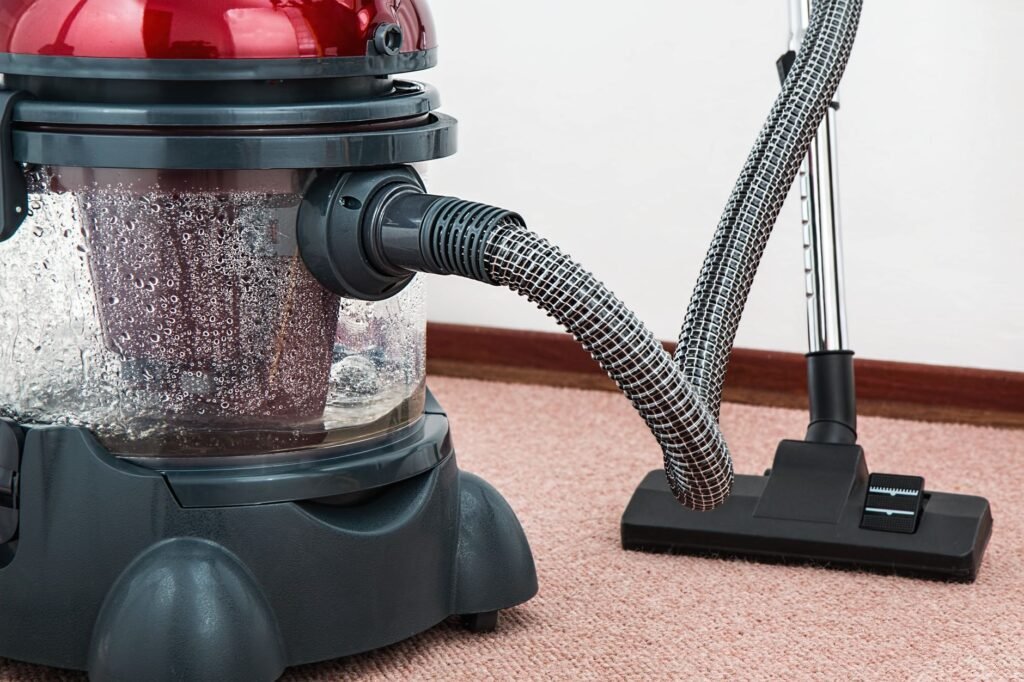
Blot the spill with a dry white cloth, then work a small amount of pretested carpet cleaner in from the edges toward the center, rinse with clear water and blot dry. Never scrub or brush. Scrubbing spreads the stain wider and roughs up the carpet fibers so the spot looks worse than the spill did.
The first five minutes after a spill hits the rug
Speed does more than any product. The less time a liquid has to sink into the backing, the less there is to pull back out later.
Grab a white absorbent cloth or unprinted white paper towels. Printed or colored ones can transfer dye onto a light carpet. Press down, lift, move to a dry section of the cloth and press again. The Carpet and Rug Institute says to keep blotting until the area is nearly dry and warns against scrubbing or using a brush, since bristles damage the pile.
Solids come off differently. Dried crumbs and dirt can be vacuumed up, and semi solid food can be lifted with a spoon before you do anything wet. Pressing a cloth onto a blob of food only pushes it deeper.
Picking a carpet cleaner the fibers will tolerate
Carpet is dyed and constructed in many ways, so no single cleaner is safe everywhere. Pretest anything you plan to use on a scrap of carpet or somewhere hidden, like the floor of a closet or under a sofa. Wait, then blot with a white cloth and check whether any dye transferred to the cloth or the carpet fibers changed.
The Carpet and Rug Institute runs a Seal of Approval program for spot cleaners and publishes a free Spot Solver tool on its website with steps for specific stains. If your carpet is still under warranty, check the manufacturer’s care guide too, because some warranties specify which cleaning methods are acceptable.
Use less than you think you need. A small amount of cleaner on the cloth, not poured on the carpet, keeps the backing from getting soaked.
Spot cleaning a carpet stain, step by step
- Blot up as much of the spill as you can with a dry white cloth.
- Pretest your cleaner in a hidden spot and let it sit briefly.
- Put a small amount of cleaner on a fresh white cloth rather than on the carpet.
- Work it in gently from the outer edge of the stain toward the center, so the mark does not creep outward.
- Blot, turning the cloth often, until no more color lifts.
- Blot the area with clear water once or more to rinse out any leftover product.
- Blot dry with clean towels and let air move across the spot.
Leftover cleaner is sticky, so the rinse step keeps the spot from grabbing dirt from shoes over the next few weeks.
First moves for common household spills
| What landed on the carpet | First move | Avoid |
|---|---|---|
| Dry crumbs, dirt or powder | Vacuum once fully dry | Wetting it first, which makes mud |
| Semi solid food | Lift with a spoon | Pressing a cloth onto it |
| Coffee, juice or soda | Blot with a white cloth until nearly dry | Scrubbing or brushing |
| Pet urine | Extract with a wet vacuum, rinse with cool water | A steam cleaner, whose heat sets stain and smell |
| A stain you cannot identify | Pretest a mild spot cleaner | Mixing several products |
The pet accident advice comes from the Carpet and Rug Institute, which suggests a certified carpet cleaning firm for stains and odors that keep coming back.
Drying the spot and knowing when to call a pro
A damp patch left overnight under furniture is where trouble starts. The EPA says that when wet materials are dried within 24 to 48 hours, in most cases mold will not grow. Stack dry towels on the spot, stand on them for a minute, replace them and repeat, then run a fan across the area.
Call a professional when the stain covers a large area, the carpet is wool or a delicate rug, or a DIY attempt has left a ring or a faded patch. The Carpet and Rug Institute also recommends a professional deep clean every 12 to 18 months to pull out grime that household spot cleaning never reaches.
Frequently asked questions
Does vinegar work on carpet stains?
Some people use diluted vinegar, but carpets differ in fiber and dye, and results vary. If you try it, pretest in a hidden spot first. A spot cleaner approved for your carpet type, used sparingly and rinsed out with clear water, is the more predictable choice.
Why did the stain come back after the carpet dried?
Leftover cleaner is a common cause, since sticky residue grabs dirt from shoes. A stain that soaked deep into the pile can also resurface. Rinse the spot with clear water, blot thoroughly with dry towels, and weight them down to pull out more moisture before it dries.
Can I use a steam cleaner on a pet urine spot?
The Carpet and Rug Institute advises against it, because heat can set both the stain and the odor. Extract the urine with a wet vacuum instead, rinse with cool water, and call a certified cleaning firm if the smell returns after the area dries.
How do you get blood stains out of carpet?
Blot, never rub, and work from the edges inward. The Carpet and Rug Institute's Spot Solver starts blood stains with a mild detergent solution, a quarter teaspoon of liquid dishwashing detergent per cup of lukewarm water, applied with a white cloth and blotted. Repeat while color transfers, then rinse with cold water and blot dry.
How do you get old stains out of carpet?
Treat them like fresh ones, with patience. Pretest a mild detergent solution, work it in from the edges with a white cloth, let it sit a few minutes and blot, repeating while color still transfers. The Carpet and Rug Institute warns that delay can make a spill permanent, so call a certified cleaner if nothing lifts.