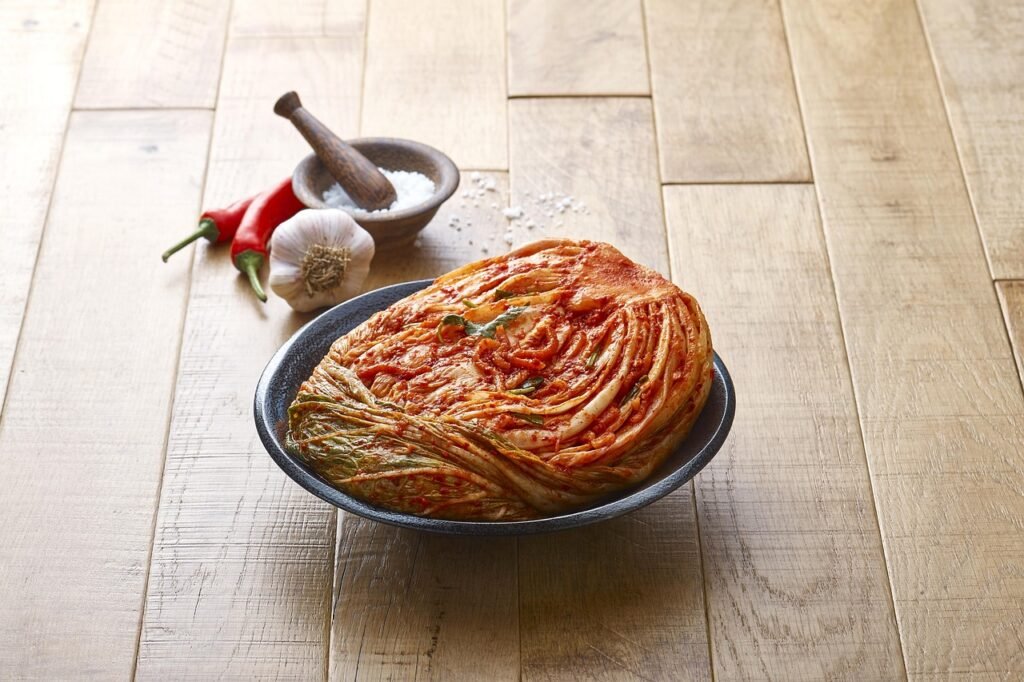
To make kimchi, salt napa cabbage until it softens, rinse and drain it, coat it in a paste of garlic, ginger, fish sauce and Korean red pepper flakes, then pack it into a jar under its own brine to ferment. After one to five days at room temperature it moves to the fridge.
What kimchi is and why it turns sour
Kimchi is a traditional Korean dish made mostly from fermented cabbage, often with radish, carrots and spices, and it tastes sour, tangy and salty. There are many regional and family versions. The napa cabbage style below is the one most Americans picture.
The sourness comes from lactic acid bacteria that live on the vegetables. Salt pulls water out of the cabbage and holds back unwanted microbes while those bacteria eat sugars and produce acid. University of Georgia Extension notes that bubbling may start on the first or second day, the flavor turns tangier and the texture softer around days five to seven, and after about two weeks the kimchi reaches a pH below 4.6.
Ingredients for one quart of napa cabbage kimchi
These amounts follow the tested home recipe from Clemson Cooperative Extension, which fills a 1 quart jar.
| Ingredient | Amount |
|---|---|
| Napa cabbage | 1 medium head, about 2 pounds |
| Iodine free sea salt or kosher salt | 1/4 cup |
| Grated garlic | 1 tablespoon, about 5 or 6 cloves |
| Grated fresh ginger | 1 teaspoon |
| Granulated sugar | 1 teaspoon |
| Fish sauce | 2 tablespoons |
| Korean red pepper flakes (gochugaru) | 1 to 5 tablespoons, to taste |
| Korean or daikon radish, in matchsticks | 8 ounces |
| Green onions, in 1 inch pieces | 4 medium |
Skip iodized table salt. The recipe calls for iodine free salt, and swapping in a different grind changes how salty a quarter cup turns out.
Salting, rinsing and packing the jar
- Cut the cabbage lengthwise through the stem into quarters, cut out the cores, then slice each quarter into 2 inch wide strips.
- Sprinkle the salt over the cabbage and massage it with your hands until it starts to soften.
- Cover the cabbage with water, set a weighted plate on top to keep it submerged, and let it stand 1 to 2 hours.
- Rinse and drain the cabbage two or three times, then let it drain for 15 to 20 minutes.
- Meanwhile, blend the garlic, ginger, sugar and fish sauce, then stir in the gochugaru.
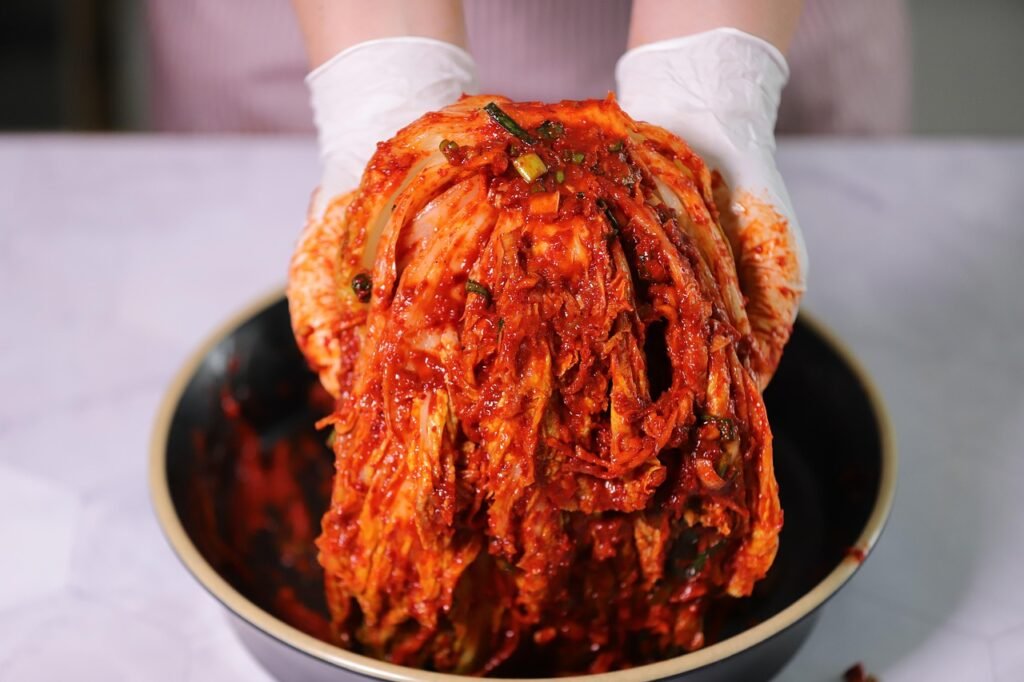
- Squeeze excess water from the cabbage, combine it with the paste, radish and green onions, and work the paste in with your hands until everything is coated. Gloves save your fingers from the chili.
- Pack the mixture into a 1 quart jar, pressing down until the brine rises over the vegetables. Leave at least 1 inch of space at the top and seal.
Room temperature days, then the fridge
Clemson’s recipe ferments the jar at room temperature, 68 to 72 degrees Fahrenheit, out of direct sunlight for 1 to 5 days. Check it daily and press the vegetables back under the brine. Gas builds up as it ferments, so open the lid over the sink.
Taste from day two onward. When the sourness suits you, move the jar to the refrigerator, where Clemson says it keeps for up to 6 months. UGA Extension recommends storing it at 41 degrees or below. The cold slows fermentation rather than stopping it, so the kimchi keeps getting more sour and softer week by week. Older, very sour kimchi is the one people save for stews and fried rice.
In hot weather you can skip most of the counter time and let the jar ferment slowly in the fridge from the start.
Signs a batch of kimchi has gone wrong
Bubbles, a sharp sour smell and brine that seeps out of the lid are all normal. UGA Extension advises throwing the batch out if you see mold, notice an off odor that’s different from the usual fermented smell, or find an unusual texture such as slime. Don’t scrape and save. Keeping the vegetables pressed under the brine, using clean jars and utensils, and leaving the headspace are the habits that keep those problems away.
Frequently asked questions
How long does homemade kimchi last in the fridge?
Clemson Cooperative Extension says fermented kimchi can be stored in the refrigerator for up to 6 months. It keeps fermenting slowly the whole time, so expect it to get sourer and softer. Keep the vegetables pressed under the brine and use a clean utensil each time you take some out.
Can I make kimchi without fish sauce?
Yes. Many cooks leave it out for a vegetarian version and add a little extra salt or a seaweed or soy based seasoning for savory depth. The fermentation itself comes from the salted vegetables, not the fish sauce, so the process and timing stay the same.
Why is my kimchi not bubbling?
Cool rooms slow fermentation, so bubbles may take longer to appear. Make sure the jar sits somewhere near 68 to 72 degrees and the vegetables stay under the brine. Taste it after a few days; rising sourness shows fermentation is working.
What does kimchi taste like?
Kimchi tastes sour, tangy and salty, with garlic, ginger, savory fish sauce and usually some chili heat. Freshly made kimchi is crisp and closer to a spicy salad. As it ferments it turns more sour and softer and can get a little fizzy, which is why older kimchi often goes into stews and fried rice.
Is kimchi spicy?
Usually, at least a little. Most napa cabbage kimchi gets its heat from gochugaru, Korean red pepper flakes, and Clemson's quart recipe allows 1 to 5 tablespoons depending on your spice preference. Baek kimchi, or white kimchi, is made without red pepper at all and was often made in homes with young children who could not handle spicy food.
How do you eat kimchi?
Most often as a side dish with rice. UNESCO calls kimchi an essential part of Korean meals, and Clemson Extension suggests adding it to eggs, noodles and burgers too. Fresh kimchi can be eaten like a salad, while older, sourer kimchi is usually cooked into stews such as kimchi jjigae or stirred into fried rice.