

Yes, sauerkraut freezes well, and it keeps its tang. What you give up is crunch. Freezing stalls the fermentation, and ice crystals soften the shredded cabbage, so thawed kraut lands somewhere between fresh and cooked. Keep it submerged in its own brine and the loss stays small.
What Freezing Does to a Live Ferment
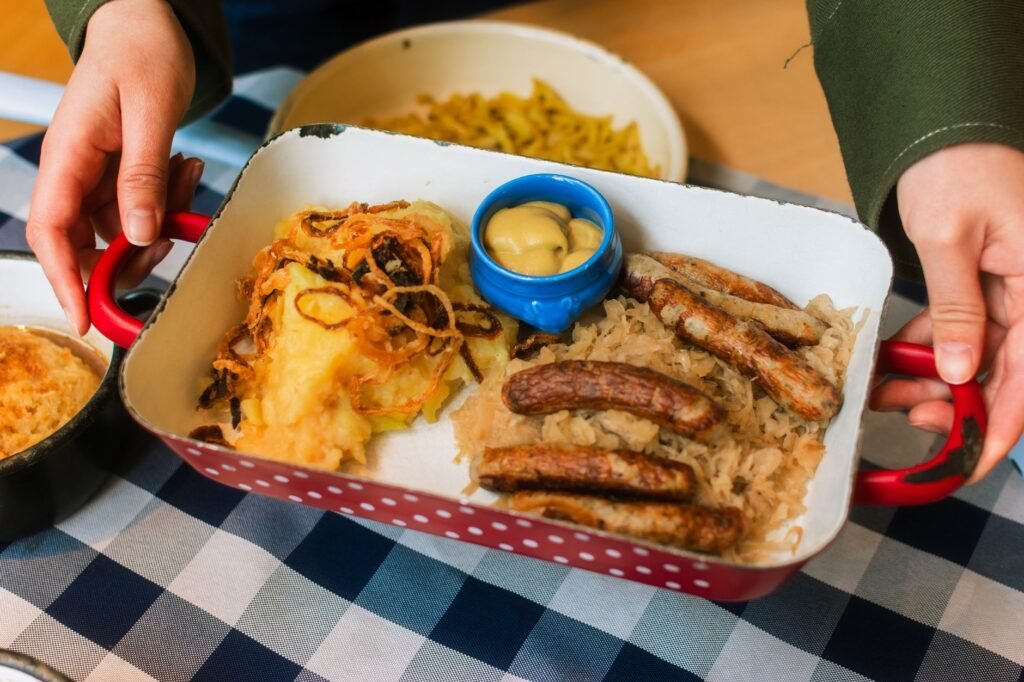
Sauerkraut is cabbage preserved by lactic acid bacteria, and a freezer puts that whole process on pause. Cold does not undo the sourness already built up, so the flavor holds. Fermentation simply stops advancing while the kraut is solid and creeps along again once it warms.
Texture is where the damage lands. Shredded cabbage holds a lot of water, and that water expands into sharp crystals that puncture cell walls. On thawing, the punctured strands release liquid and go limp. Kraut that used to snap between your teeth still has body, but it reads closer to the kraut you would simmer on a stove.
Brine is your buffer. Cabbage sitting in liquid freezes as one block instead of drying at the edges, and dissolved salt keeps that block slightly slushy rather than rock hard, which means smaller crystals and less rupture.
How to Freeze Sauerkraut Step by Step
- Drain nothing yet. Scoop kraut and enough brine to cover it into your container.
- Pick your vessel. Freezer bags laid flat chill fastest and stack neatly; rigid tubs protect the strands from being crushed under heavier items.
- Leave headroom. Brine swells, and a container filled to the rim will crack or push its lid off.
- Portion by the meal. A large frozen block cannot be split, so freeze in the amounts you actually cook with.
- Press the air out of bags, seal them, and label each one with the date and whether the kraut was plain or sweetened.
- Lay bags flat on a shelf until solid, then stand them upright like files.
Canned kraut freezes the same way, but move it out of the can first. An opened can is not built for freezer storage, and the metal can lend a tinny note to anything acidic left sitting in it.
Thawing It and Cooking With It
Thaw in the refrigerator overnight, still in its container, so the strands sit in brine the whole time. A microwave defrost cooks the edges while the middle stays icy, and a warm water bath gives the mushiest result of the three.
Once thawed, drain and squeeze if your recipe wants dry kraut, then aim it at heat. Thawed sauerkraut shines braised with pork, layered into a grilled sandwich, folded into pierogi filling, stirred through a bean soup, or roasted under sausages, because every one of those was going to soften it anyway. Where it disappoints is raw. A crisp slaw or a snappy hot dog topping wants exactly the bite you traded away.
If you keep kraut around specifically for the live cultures, hold an open jar in the fridge for that purpose and send only the surplus to the freezer for cooking.
How Long It Stays at Its Best
Think in terms of peak quality rather than a safety cutoff. Kraut held at a steady freezer temperature tastes and feels its best for several months, then slowly turns duller and wetter. Freezing itself holds bacteria in check indefinitely; what moves is flavor and texture.
Two habits stretch that window. Store the container toward the back, where temperature swings least, and do not refreeze a batch you already thawed and left sitting warm on the counter. A second freeze doubles the crystal damage, and you will taste it.