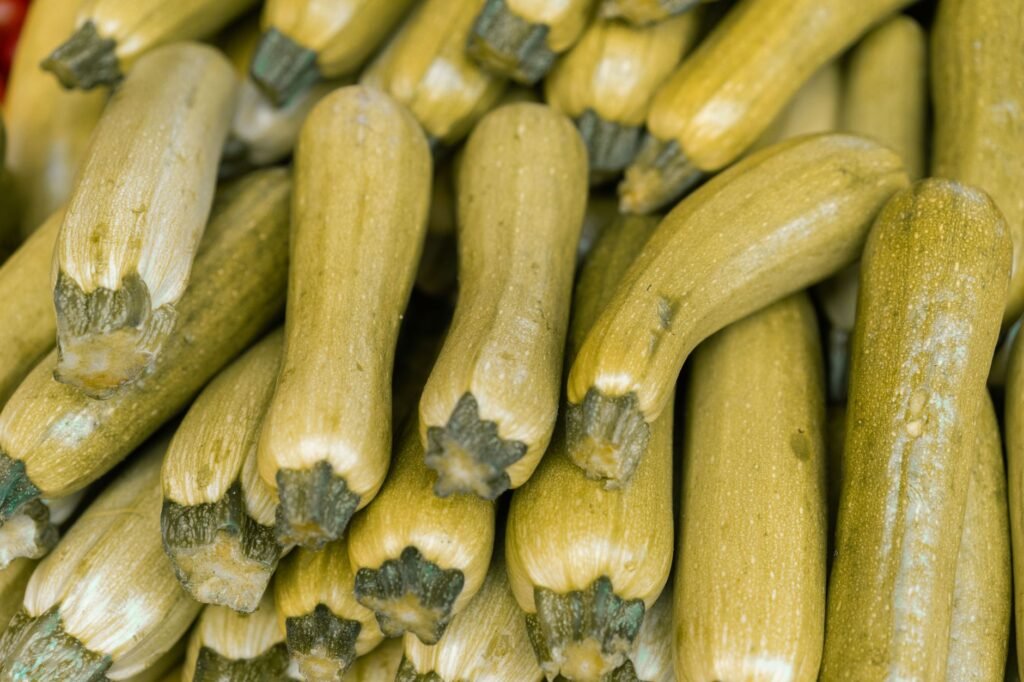
Yes, but raw zucchini slices thaw into mush unless you blanch or shred them first. Zucchini runs close to 95 percent water, so ice crystals wreck the cell walls that give it bite. Pick the cut that matches the dish you plan to cook, and freezing becomes worth doing.
Why Zucchini Collapses in the Freezer

Summer squash has thin skin, soft seeds, and very little fiber holding it together. All that water freezes into crystals with sharp edges, and those edges slice through cell walls from the inside. Thaw the slice and the structure has nothing left to hold its shape, so it slumps and weeps.
There is a second problem that has nothing to do with ice. Enzymes in raw squash stay slowly active below freezing, gradually dulling color and pushing the flavor toward bitter. A brief plunge in boiling water shuts those enzymes down, which is the entire reason blanching exists.
So you have two choices. Blanch, and keep recognizable pieces for cooked dishes. Or shred, accept that the shape is gone anyway, and freeze raw for baking.
Blanching Times by Cut
| Cut | Boiling water | Best for later |
|---|---|---|
| Half-inch rounds or cubes | About 3 minutes | Soups, stews, curries, ratatouille |
| Lengthwise planks | About 3 to 4 minutes | Casseroles, baked layers |
| Spiralized noodles | About 1 minute | Warm sauced bowls, never raw |
| Shredded for baking | Steam 1 to 2 minutes, or skip | Breads, muffins, fritters |
Move every batch into ice water for the same length of time it boiled. Cutting the heat that fast is half the job; squash left to cool on its own keeps cooking and arrives in the bag already soft.
Freezing Shredded Zucchini for Baking
- Grate on the large holes of a box grater. Leave the skin on for color unless the squash is oversized and tough.
- Measure into the portions your recipes call for, usually one or two cups, so you never thaw more than a loaf needs.
- Pack each portion into a bag, flatten it into a thin sheet, and push all the air out before sealing.
- Write the amount on the bag, not just the date. Frozen shreds are impossible to judge by eye.
- Freeze flat, then stack the finished sheets.
Raw shreds hold up here because texture no longer matters. They are going into batter, and the mild bitterness that builds in raw slices never gets a chance to develop over the short stretch a bag of shreds usually survives in a working kitchen.
What to Cook With It Later
Frozen zucchini is a cooked-dish ingredient, full stop. It belongs in minestrone, tomato sauce, curry, stir-fried rice, fritters, quick bread, and baked gratins. It does not belong in salad, on a grill, or anywhere the point was a firm slice.
Watch the liquid. Every piece carries water it will release in the pan, so add frozen zucchini later than you would add fresh, and give sauces extra time to reduce afterward.
On storage time, judge quality rather than safety. Blanched pieces hold their color and flavor for months before turning watery and bland. A freezer keeps microbes from growing for as long as the food stays solid, so the countdown you are watching is a quality countdown, not a safety one.