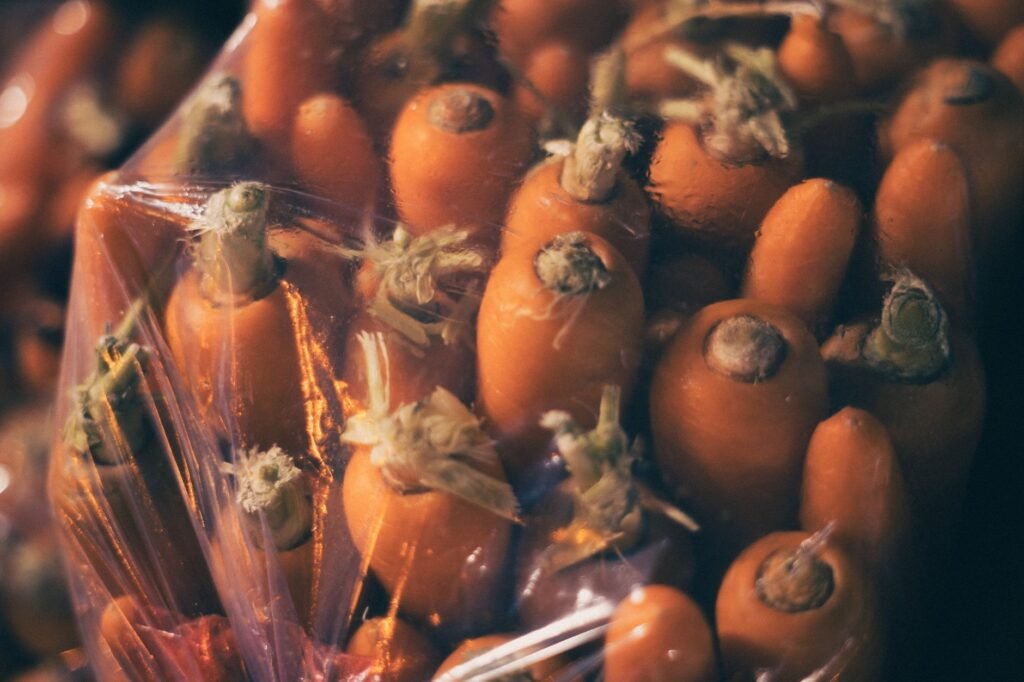
Yes, but raw carrots need a quick boil first or they turn bitter and dull in the bag. Enzymes inside the root keep working at freezer temperature, slowly eating the sugar and the orange color. A short boil knocks those enzymes out, and an ice bath stops the cooking before the carrot goes soft.
What happens to an unblanched carrot
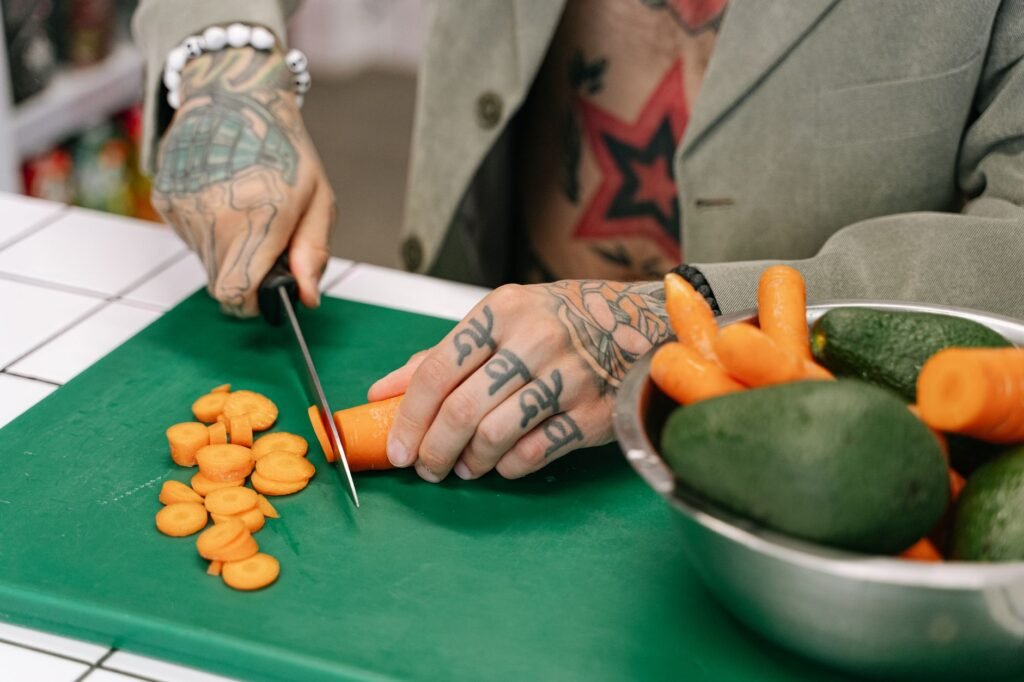
Vegetables stay chemically active after harvest. The enzymes that ripened the root in the ground carry on breaking down cell walls and pigment, and cold slows them without ever stopping them. Six months later an untreated batch is pale, limp and faintly bitter, with a smell people usually describe as hay.
Heat denatures those enzymes for good. The boil does not need to cook the vegetable through, it only needs to run hot enough for long enough to shut the chemistry down. Undershoot the clock and you get the worst of both outcomes, a warmed carrot with live enzymes still inside it.
Boiling times by cut
| Cut | Time in boiling water |
|---|---|
| Whole small or baby carrots | 5 minutes |
| Half inch coins | 2 minutes |
| Quarter inch coins | 2 minutes |
| Sticks and batons | 2 minutes |
| Small dice | 2 minutes |
| Grated for baking | None, if used within a month |
| Cooked and mashed | None, it is already cooked |
Match the ice bath to the pot. Two minutes in the boil means two minutes in the ice water, which drops the core temperature before residual heat softens the pieces.
The full run, pot to bag
- Scrub and peel, then cut everything to a uniform size so one timing covers the whole batch.
- Bring a large pot to a hard boil and work in rounds. Dumping too much in at once drops the temperature and wrecks the timing.
- Lift them out with a spider directly into a bowl of ice water, leaving the pot boiling for the next round.
- Dry them properly. Spread on a towel and pat. Surface water becomes the ice that glues everything into one block.
- Spread on a tray and freeze loose, then tip the hardened pieces into a bag so you can pour out a handful later.
Cooking them later without mush
Do not thaw them. A thawed carrot has already surrendered its structure, so it hits the pan wet and steams instead of browning. Tip them in frozen, wherever the moisture is welcome:
- Soups and stocks, straight from the bag
- Stews and braises, added in the last half hour so they do not disintegrate
- Mash and puree, which is the single best use for a root that spent a year frozen
- Glazed in a hot skillet with butter, cooked hard and fast until the edges caramelize
Roasting is the one thing to skip. A frozen carrot releases too much water to crisp, and the tray ends up steaming instead. Properly blanched carrots hold their quality for ten to twelve months. Deep cold halts spoilage organisms for as long as the power stays on, so color, sweetness and snap are what actually fade with time.