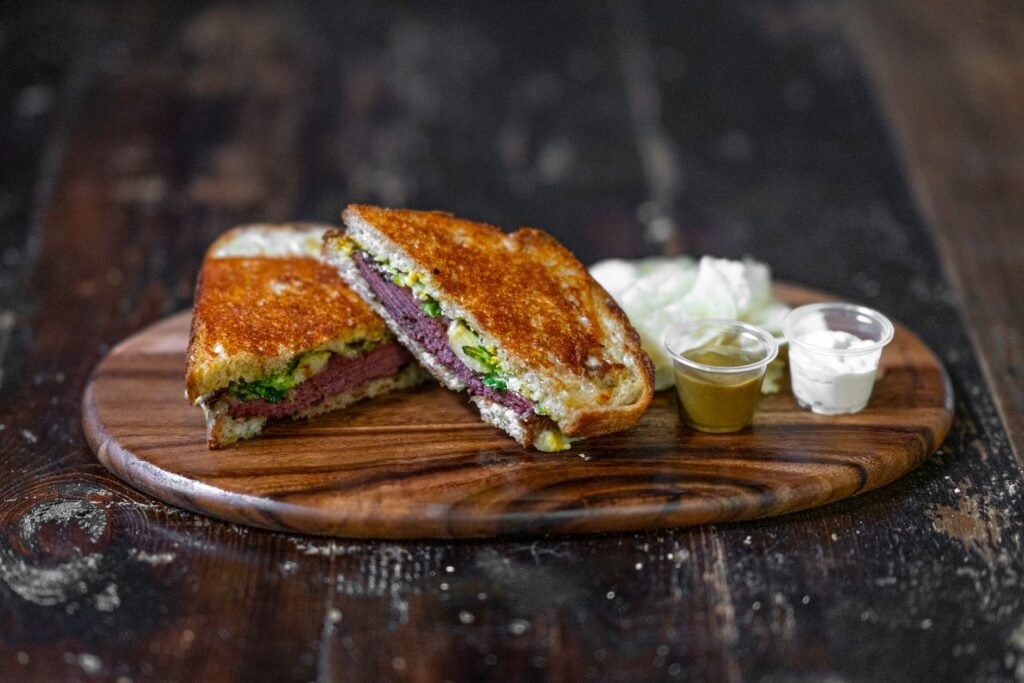
Yes, though sliced lunch meat never comes back quite the same. Deli turkey and ham are pumped with brine, and that added water turns into crystals that leave the slices spongy and weeping. Dry cured meat like salami barely notices. Plan on cooking whatever you thaw rather than eating it cold.
Water content decides everything

Two very different products sit in the same case under the same label. One is whole muscle meat tumbled with a salt solution until it holds far more water than it started with, which is what makes supermarket turkey breast so moist and so cheap by weight. The other is meat that had water deliberately pulled out of it across weeks of curing and drying.
The first kind carries a lot of free water, and free water is what tears cells apart when it expands. The second kind has most of its remaining water bound up with salt, which lowers the freezing point and keeps the crystals tiny. That single difference explains every row in the table below.
How each type comes out
| Product | Result |
|---|---|
| Pepperoni and hard salami | Excellent, barely changes |
| Prosciutto and dry cured ham | Very good, may darken slightly |
| Bologna and emulsified meats | Good, a touch firmer |
| Rare roast beef | Fair, the red edges go gray |
| Baked or honey ham | Fair, releases liquid |
| Oven roasted turkey breast | Poorest, spongy and wet |
| Sealed factory packs | Better than counter slices in every category |
Repack before it goes in
- Freeze unopened packs exactly as they are. A factory vacuum seal beats anything you can manage at home.
- For counter slices, build sandwich sized stacks of four to six, which is roughly one lunch.
- Slide parchment between the stacks so you can lift one out without thawing the whole pile.
- Wrap each stack in film, then gather them all into one bag with the air pressed out.
- Date the bag. Lunch meat is the thing people find unlabeled and cannot identify six months later.
Thawing, and what to do with it
Thaw in the fridge on a plate lined with paper towel, which catches the liquid that comes out. Give a stack half a day. Once soft, blot both faces before anything touches bread, since that surface water is what turns a sandwich soggy within an hour. Do not refreeze what you thawed, because every cycle pushes more water out and the slices get progressively more rubbery.
Heat covers most of the sins. Thawed slices are good in a pressed sandwich, a melt, a quesadilla, chopped through scrambled eggs, or fried crisp and crumbled over a salad. A cold platter is the single place they look wrong, because the change shows most when meat is served plain and chilled. One to two months is the quality window. The freezer keeps microbes dormant without a deadline, taste is what has one.