
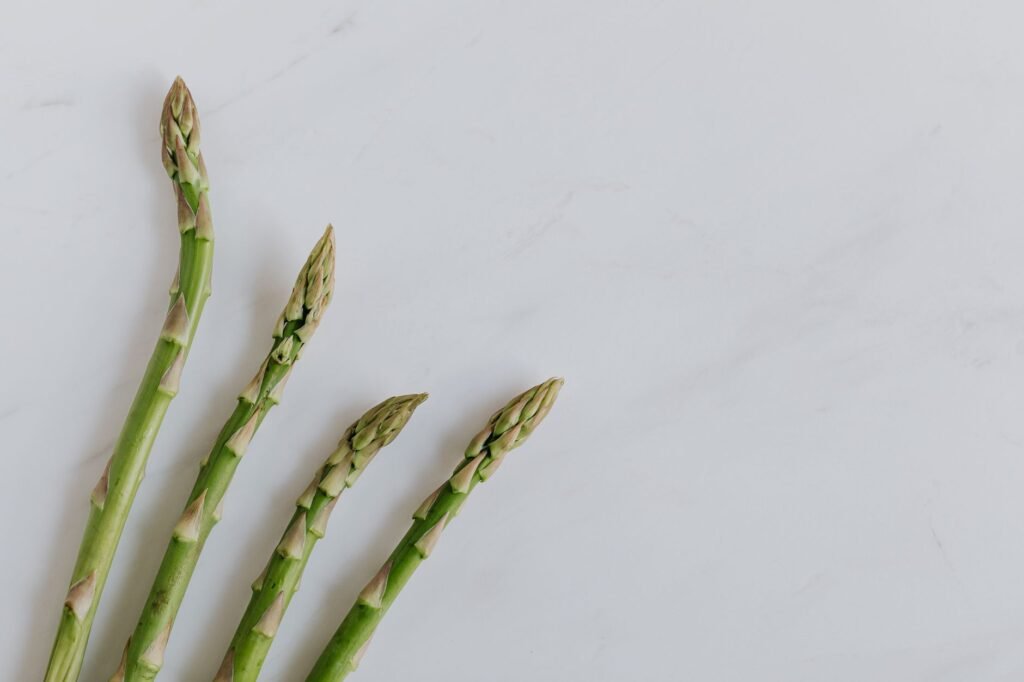
Yes, if you blanch the spears and dry them thoroughly before they hit the tray. Asparagus is mostly water held in a fibrous stalk, so it will never snap again after thawing. What blanching protects is the green color and the grassy flavor, both of which fade fast in an untreated spear.
Why the snap never comes back
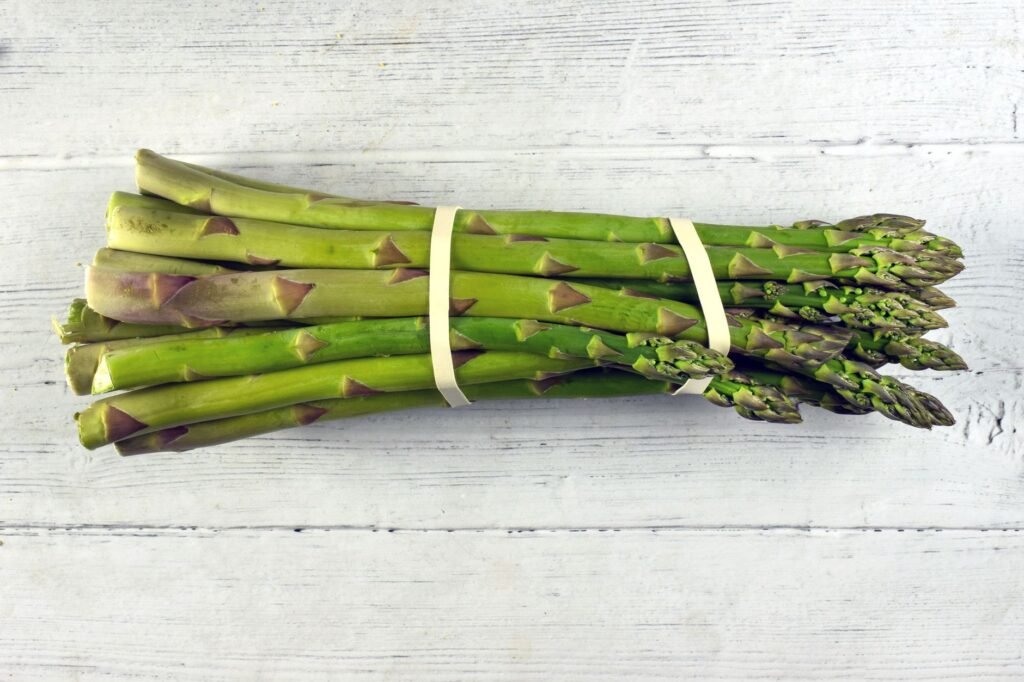
Bite a raw spear and the crunch comes from water pressing outward against stiff cell walls. Freeze it and that water expands, splits the walls, then drains away as the spear softens. The pressure is gone for good, leaving fiber and flavor with no structure behind them. No technique repairs that, which is why frozen asparagus belongs in dishes where it is meant to be tender.
Blanching is still worth the ten minutes it costs. Untreated spears turn olive brown and develop a cabbage like smell within a couple of months, because the enzymes that were ripening the plant keep running in the cold. A short dip in boiling water ends that permanently and locks in the bright green.
Blanching time depends on thickness
| Spear size | Dip time |
|---|---|
| Pencil thin | 2 minutes |
| Medium, about a finger wide | 3 minutes |
| Thick | 4 minutes |
| Cut into one inch pieces | 2 minutes |
| Tips only | 2 minutes |
Sort the bunch by thickness before you start instead of averaging it. A thin spear left in for four minutes arrives limp, and a thick one pulled at two minutes keeps enough live enzyme to go drab later on.
Tray freeze so the spears stay separate
- Snap or trim the woody ends first. They will not improve in storage and they waste space.
- Use a wide skillet rather than a stockpot. Spears lie flat in a skillet and heat evenly instead of tangling upright.
- Move them into ice water immediately and leave them there as long as they were in the boil.
- Dry them obsessively. Roll the spears in a kitchen towel and rest them on a rack. Surface water is the only thing standing between you and a solid green brick.
- Lay them in one layer on a sheet pan, freeze until hard, then bag them. They will pour out one at a time for months.
Cook it straight from the bag
Never leave asparagus to thaw on the counter first. Thawed spears slump and go slippery, and any remaining chance at texture leaves with the water. Frozen, they perform well in:
- Soup, blended smooth with a potato or a splash of cream
- Quiche, frittata and strata, chopped and folded in frozen
- Risotto, stirred through during the final few minutes
- Pasta, dropped into the boiling water for the last minute
- A hot buttered skillet, cooked hard so the surface water boils away quickly
Grilling and roasting are not worth attempting. Blanched spears keep their quality for eight to twelve months and stay bright green almost that entire time. Nothing dangerous grows at freezer temperature, so the countdown here is about flavor rather than risk. A bag older than that still cooks fine, it simply tastes closer to canned.