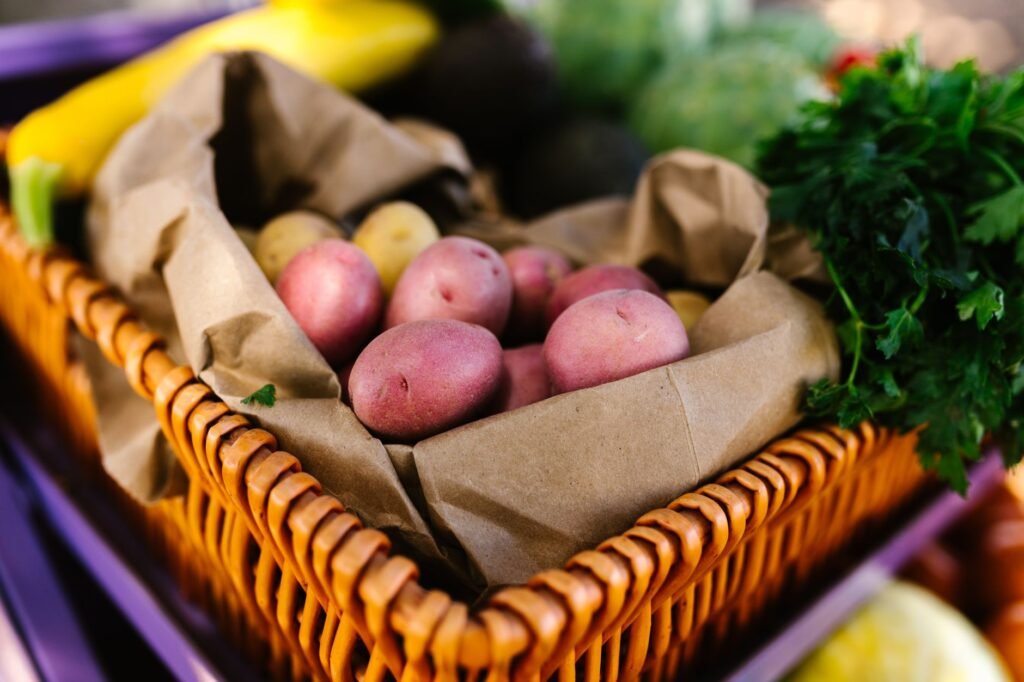
Keep potatoes somewhere cool, dark, dry and breathable, and keep them away from onions. A paper sack, basket or cardboard box in an unheated closet or basement beats both the fridge and the countertop. Light turns the skins green, warmth wakes the sprouts, and trapped moisture rots them from the outside in.
Where in the house actually works
Picture the spot you would pick for a bag of cement: dry, dim, and never warm. An unheated pantry, a basement shelf, the floor of a closet against an exterior wall, or an attached garage that does not freeze. What you want is steady cool air with a little movement through it.
The container matters as much as the room. Potatoes give off moisture, and anything that holds that moisture against the skin starts rot. Paper sacks, open baskets, mesh bags and cardboard boxes with the flaps folded back all let a crop breathe. A sealed plastic bin does the opposite, and you will find out within a week or two.
| Where you put them | What tends to happen |
|---|---|
| Dark cool pantry, paper or mesh | Longest keeping, skins stay firm |
| Counter bowl in a lit kitchen | Early sprouts, green patches on the skin |
| Refrigerator | Starch turns sweet, fries and roasts darken |
| Sealed bin or knotted plastic bag | Condensation, soft spots, sour smell |
| Same crate as onions | Both go over faster than they would apart |
Why the refrigerator is the wrong shelf
Cold does slow sprouting, which is why the fridge feels like the obvious answer. The trade is flavor. At refrigerator temperatures a potato converts part of its starch to sugar, and sugar is what browns in a hot pan. Fries come out dark and oddly sweet. Roasted wedges scorch at the corners before the middle has softened.
Some of that reverses if you move the potatoes back to a cool room for a stretch before cooking, but it is easier to skip the fridge entirely and find a colder corner of the house.
Keep the onions across the room
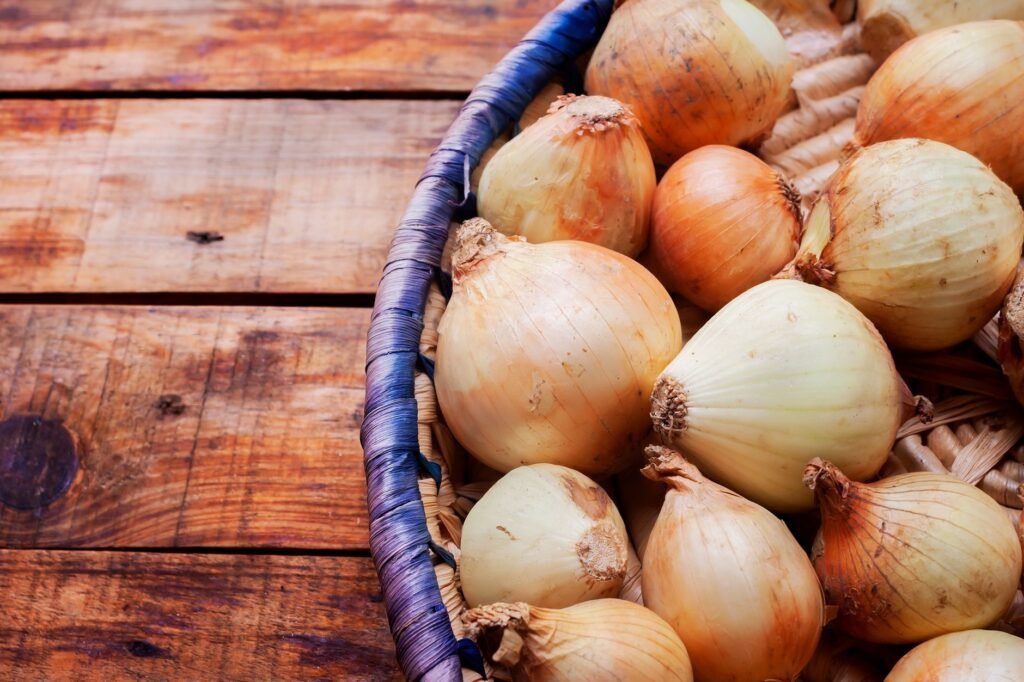
Onions and potatoes are the classic pantry pairing and the classic pantry mistake. Onions release gases as they sit, potatoes react to those gases, and potatoes throw off moisture that onions cannot stand. Put them in one crate and each shortens the other. Two bins on opposite sides of the room fixes it for free.
Habits that cut a sack short
Most spoiled potatoes are not bad luck, they are one of these:
- Leaving them in the store bag with the clear window. That window is a light source sitting against the skins.
- Storing them under the sink, where warm pipes and damp air meet.
- Rinsing the dirt off on the way in, then bagging them while the creases are still wet.
- Ignoring the one soft potato at the bottom. Rot spreads by contact, and it moves quickly.
- Tipping a fresh sack on top of last month’s. The old ones stay buried and take the new ones with them.
- Parking the bin next to the fridge or the oven, where warm exhaust blows across it all day.
How to tell one has turned
Green under the skin means light got to it. Green tissue tastes bitter, and the usual advice is to peel well past it or set that potato aside if the color runs deep. Soft, weeping, or smelling sour means it is finished, and it should leave the bin before it touches the rest.
Wrinkled and a little bendy is different. That potato is dehydrated rather than spoiled, and it will still mash or roast, it just will not look pretty raw. Firm with a few knobby sprouts is fine after you rub them off.