
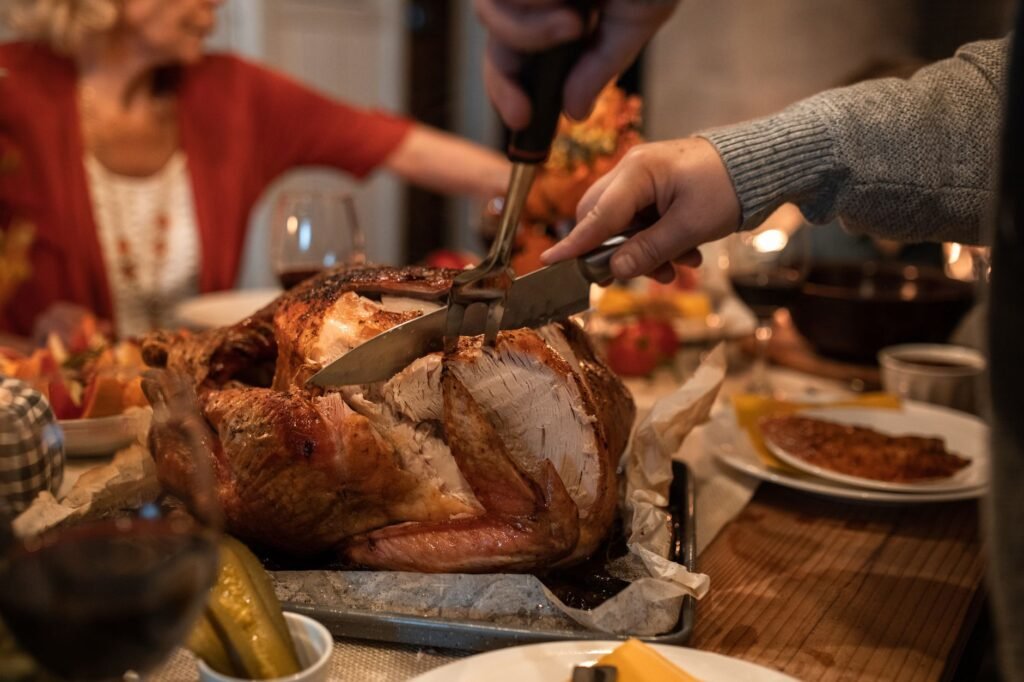
Cooked turkey keeps three to four days refrigerated, and raw turkey only one to two days before it needs to be cooked or frozen. The part most people miss with a whole bird is cooling. An intact carcass holds heat for hours, so carving the meat off is what genuinely starts that clock.
Carve first, refrigerate second
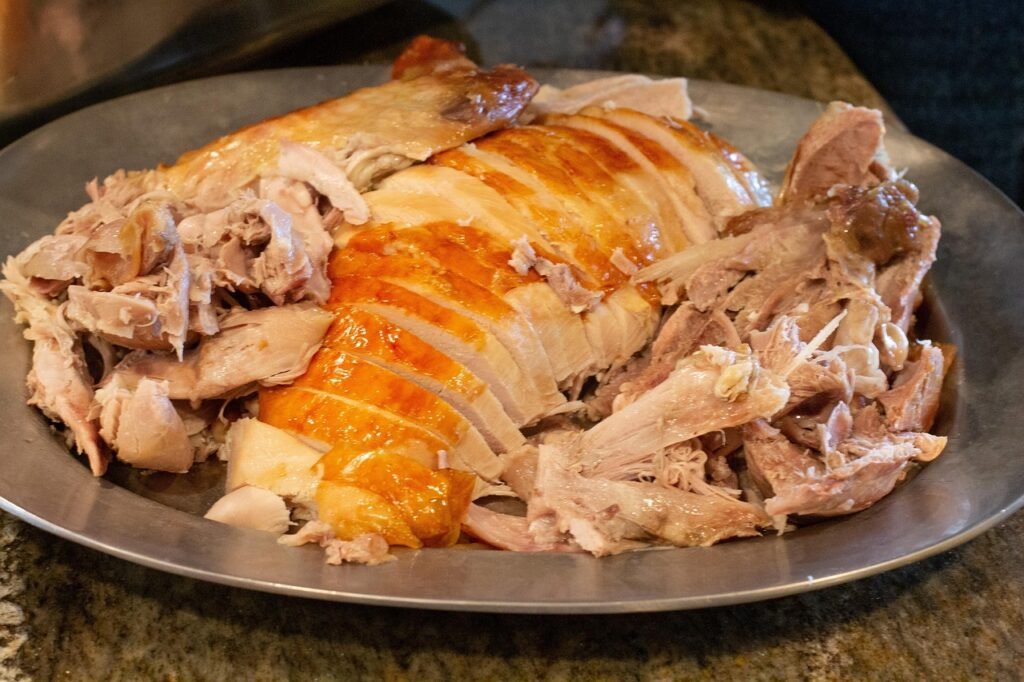
A roasted bird is a large, dense, insulated object. Push the whole thing into the refrigerator on its platter and the breast interior can stay warm well past the point anyone would guess, because the carcass traps heat the way a stone traps it. Stripping the meat into thin piles in shallow containers turns one slow cooling mass into several fast ones.
That is also why the leg joints and the stuffing cavity deserve attention. Deep pockets surrounded by meat are the last places to reach refrigerator temperature. Pull the stuffing out into its own dish, separate the thighs and drumsticks, and give the carcass its own bag for stock duty later.
How long turkey keeps in each form
| Form | Refrigerated | Frozen, for quality |
|---|---|---|
| Raw whole bird, thawed | One to two days | About a year |
| Raw ground turkey | One to two days | Three to four months |
| Cooked sliced meat | Three to four days | Two to six months |
| Gravy and pan drippings | One to two days | Two to three months |
| Stuffing cooked separately | Three to four days | One month |
| Deli sliced turkey, opened | Three to five days | One to two months |
Gravy is the short one on that list for a reason. It is thin, low in acid and loaded with dissolved protein, closer in character to a broth than to the meat it came from. The USDA cold storage chart on FoodSafety.gov lists these categories separately, and treating gravy like sliced meat is a common slip.
Reading a bird that has been in there a while
- Smell before anything else. Good cold turkey barely smells at all. Sour, sulfurous, or faintly sweet notes mean the batch is finished.
- Touch a slice. Cold roast meat should feel firm and slightly dry. A sticky or slippery coating is the standard stop signal.
- Ignore the pink. Pink near the bone in a fully cooked bird is a pigment and smoke reaction, not a freshness reading, and it tells you nothing about age.
- Watch the liquid. Pooled juice that has gone cloudy and ropy at the bottom of the container is a clearer signal than the meat itself.
What to do before day four arrives
Decide on the second day, not the fourth. Portion whatever will not realistically be eaten into meal sized bags, press the air out, label them, and freeze. White meat dries badly on reheating, so freeze breast slices with a spoonful of stock or gravy in the bag, which gives the meat something to reabsorb.
The carcass earns its keep as stock, but simmer it the same day or bag and freeze the bones until you have time. Once that stock is made it becomes a broth with a short refrigerated life of its own, so chill it fast in a shallow pan and freeze what you will not use within a few days.