
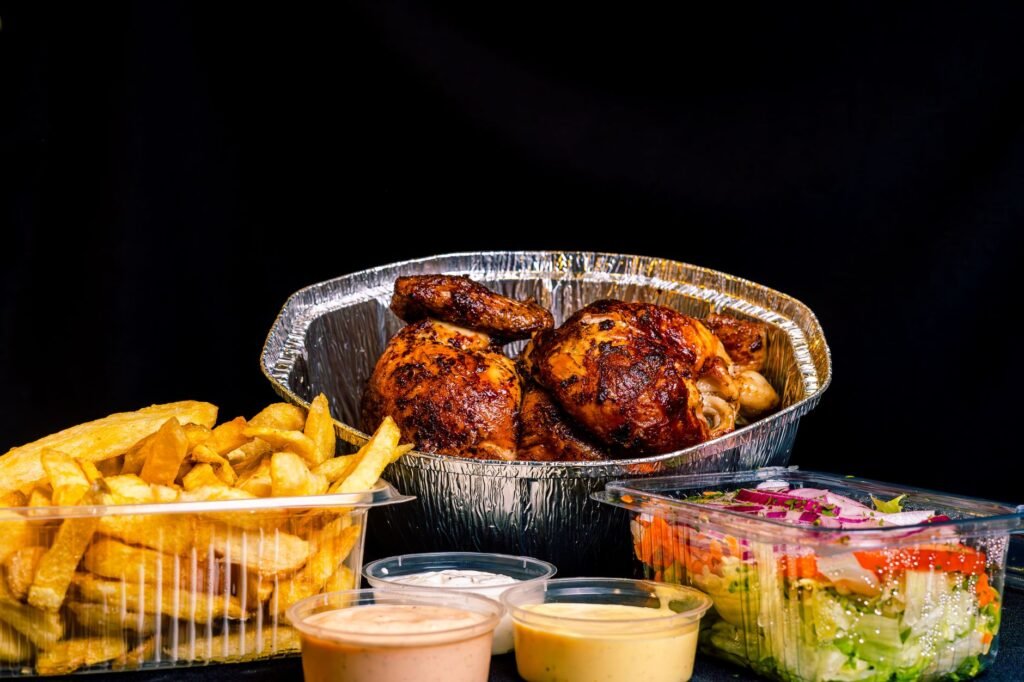
Yes, and the one thing that matters most is pulling the meat off the bones first. Bones take up freezer space, they slow down cooling, and they make the meat harder to portion later. Strip the carcass while the bird is still slightly warm, then bag the meat and the bones separately.
Strip the bird while it is still warm
A warm chicken comes apart in your hands. Wait until it has been in the fridge overnight and the fat has set, and you end up scraping at it with a knife, shredding the breast into confetti and leaving good meat behind on the back and thighs. Give the bird twenty minutes or so after it comes home, then work while it is warm enough to handle comfortably.
Work over a tray so the juices collect somewhere useful. Those juices are worth keeping. Spoon them into the bags with the meat and they refreeze as a thin glaze that protects the surface from freezer burn and adds moisture back during reheating.
Do not let the bird sit out for hours while you do something else. Get it stripped, cooled and into the freezer within about two hours of leaving the store, which keeps it out of the temperature range where bacteria multiply fastest.
How to portion and pack the meat
- Separate the white meat from the dark. They behave differently in the freezer and they suit different dishes, so mixing them costs you options.
- Tear the meat into pieces rather than slicing it. Torn edges hold sauce better and slices dry out faster.
- Divide it into one or two cup portions, which is roughly what a single recipe calls for.
- Add a spoonful of pan juices or plain broth to each portion, especially the breast meat.
- Press the bags flat, squeeze out the air, and freeze them lying down so they stack like files once solid.
What happens to the skin and the dark meat
The skin is a loss. Its crispness comes from dried, rendered surface, and the moment it goes into a sealed bag with any humidity it softens, then turns faintly rubbery after freezing. Eat the skin the day you buy the chicken or leave it off the tray. It will not come back.
| Part | How it freezes | Best use later |
|---|---|---|
| Thigh and drumstick | Very well, the fat keeps it moist | Tacos, curry, fried rice |
| Breast | Fine, but dries out if packed bare | Sandwiches, salads, casseroles |
| Wings | Poorly, mostly skin and small bones | Eat now or add to stock |
| Carcass | Perfectly | Stock, straight from frozen |
Best quality window and how to bring it back
Cooked chicken tastes best within about four months. That number is about quality, not safety. Bacteria stay dormant as long as the meat is frozen solid, and what fades over time is moisture and flavor.
Reheat gently. A low oven, a covered dish and a splash of liquid will take thawed chicken back to something close to fresh in fifteen minutes. High microwave power does the opposite, seizing the proteins and squeezing out whatever moisture survived. If you must microwave, use half power and stop while the meat is still barely warm in the middle.
The carcass bag is the quiet win here. Drop the frozen bones straight into a pot with an onion, a carrot and cold water, simmer for a couple of hours, and a supermarket chicken has paid for itself twice.