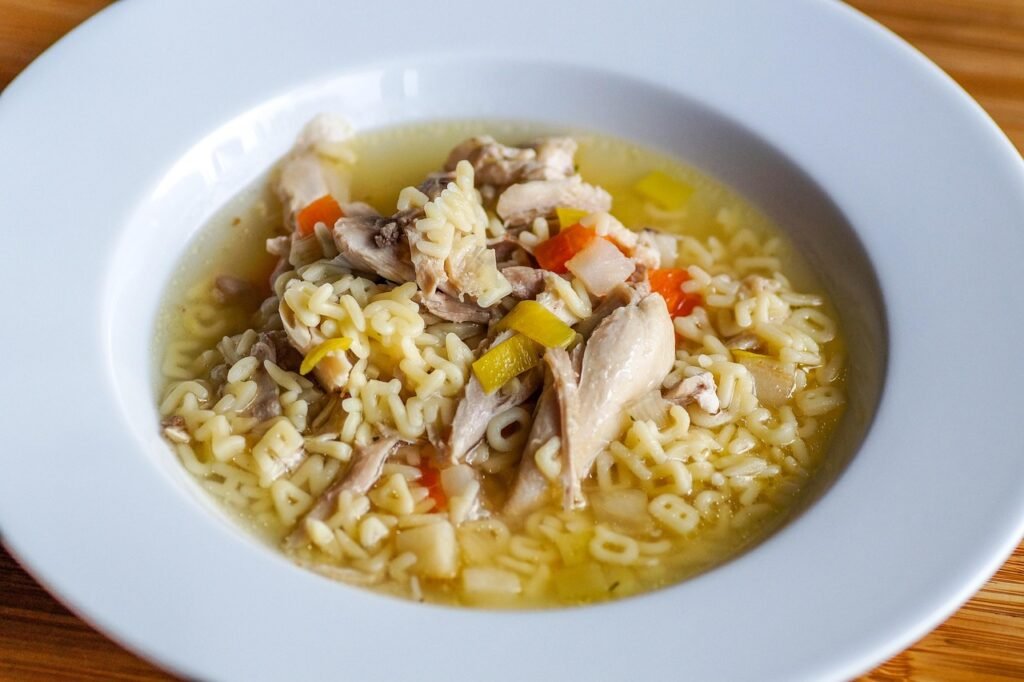
To make chicken soup, simmer bone-in chicken in water with onion, carrot and celery until the meat is tender, then shred the meat, return it to the strained broth and season. Cook noodles or rice separately and add them to bowls. The whole thing takes one pot and very little hands-on time.
What goes into a basic pot of chicken soup
Good soup starts with bones and skin. They give the broth body and flavor that boneless breasts alone can’t match. Thighs, drumsticks, a cut-up whole chicken or leftover roast chicken carcass all work.
| Ingredient | What it does | Swap if you need to |
|---|---|---|
| Bone-in chicken pieces | Meat plus body and richness from bones and skin | A leftover roast chicken carcass with some meat on it |
| Onion | Sweet, savory base | Leeks or shallots |
| Carrots | Sweetness and color | Parsnips |
| Celery | Fresh, slightly bitter backbone | Fennel or a pinch of celery seed |
| Garlic, bay leaf, peppercorns | Depth in the broth | Fresh thyme or parsley stems |
| Salt | Brings every other flavor forward | Add gradually and taste at the end |
Simmering the chicken, step by step
- Put the chicken in a large pot with a halved onion, a couple of carrots, a couple of celery ribs, a few garlic cloves, a bay leaf and some peppercorns.
- Cover with cold water by about an inch and add a little salt.
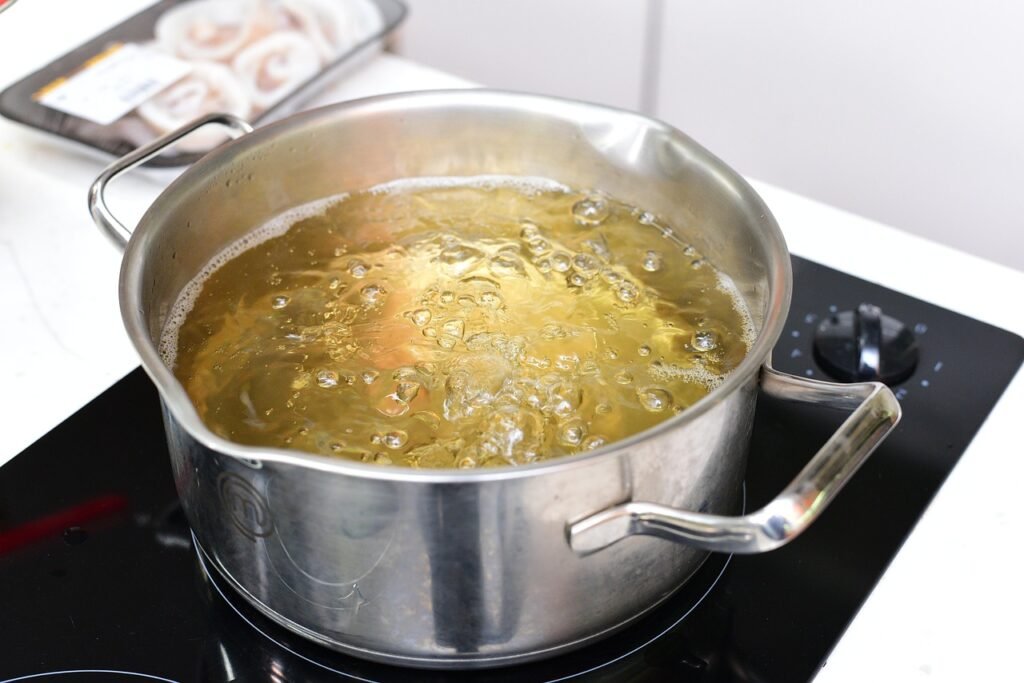
- Heat the pot until the water just reaches a boil, then lower the heat so the surface barely bubbles. A hard boil makes cloudy, greasy broth.
- Skim off the gray foam that rises in the first stretch of cooking.
- Simmer until the meat pulls easily from the bone. Confirm the thickest piece has reached 165 degrees Fahrenheit on a food thermometer, the safe minimum for poultry.
- Lift out the chicken, strain the broth, and discard the tired vegetables.
- Shred the meat, dropping the skin and bones. Skim fat off the broth or leave a little for flavor.
- Add freshly diced carrots, celery and onion to the broth and simmer until tender, then return the meat and season with salt, pepper and a squeeze of lemon if you like.
Why the noodles should cook in their own pot
Noodles and rice keep drinking broth long after the burner is off. Cook them in the soup and by the next day you have a thick stew of swollen, soft pasta and far less liquid. Boiling them separately in salted water and adding a scoop to each bowl keeps the broth clear and the leftovers tasting like soup.
The same idea helps with fresh herbs. Stir chopped parsley or dill into bowls at the end so it stays bright rather than turning drab in the pot.
Making the broth taste richer
If your soup tastes flat, salt is usually the missing piece, so stir it into the pot in small pinches, tasting after each. Browning the chicken pieces in the pot before adding water adds a roasted flavor. A few chicken wings or feet thrown in with the other pieces make the broth more gelatinous, which gives it that silky feel on the spoon. Roasted carrots and onions, or a parmesan rind simmered in the broth, deepen it further.
Cooling a big batch of chicken soup safely
A full stockpot holds heat for a long time, and that warm middle stretch is where bacteria multiply. The soup safety rules from University of Nebraska Extension cover four points. Soup should sit out for two hours at most, cool in shallow containers two inches deep or shallower, get eaten within 3 to 4 days of refrigeration or go into the freezer, and come back up to at least 165 degrees Fahrenheit when reheated.
To speed things up, lower the stockpot into a sink filled with ice and cold water, stirring the soup for a few minutes before dividing it into containers. Freeze broth and meat without noodles, since pasta turns mushy when thawed.
When you reheat a portion, warm it on the stove until it is steaming hot all the way through, and check with a thermometer if you have one. Cook a fresh handful of noodles while it heats, and the leftover bowl will taste almost as good as the first one. Once fat has chilled on top of stored soup, it lifts off in one easy layer if you want a lighter broth.
Frequently asked questions
Can I use boneless chicken breast for chicken soup?
Yes, but the broth will be thinner and less flavorful than one made with bones and skin. Boneless breasts also dry out if simmered too long. Poach them gently until they reach 165 degrees Fahrenheit, shred them, and use a good store-bought or homemade stock to make up for the missing bones.
How do I fix chicken soup that tastes bland?
Add salt gradually and taste after each addition, since under-salting is the most common cause. A squeeze of lemon, a splash of soy sauce or fresh herbs at the end also lift the flavor. Next time, brown the chicken first and use more bone-in pieces for a richer broth.
Can you put raw chicken directly into soup?
Yes. Raw chicken simmered in the broth cooks through and flavors the liquid at the same time, which is how most homemade chicken soup is made. Make sure the thickest piece reaches 165 degrees Fahrenheit on a food thermometer before you shred it and serve the soup.
Can you freeze chicken noodle soup?
Yes, but freeze the broth, chicken and vegetables without the noodles, which turn mushy when thawed. Cool the soup quickly, pack it in airtight containers, and use it within 2 to 3 months for the best quality. Thaw it in the refrigerator, reheat it to 165 degrees Fahrenheit, and cook a fresh batch of noodles.
What goes well with chicken noodle soup?
Bread is the classic side, from crusty rolls and buttered toast to biscuits or a grilled cheese sandwich for dipping. Crackers add crunch, and a green salad or sliced fruit keeps the meal light. For a heartier dinner, pair a bowl with half a sandwich, such as turkey, ham and cheese, or tuna salad.