
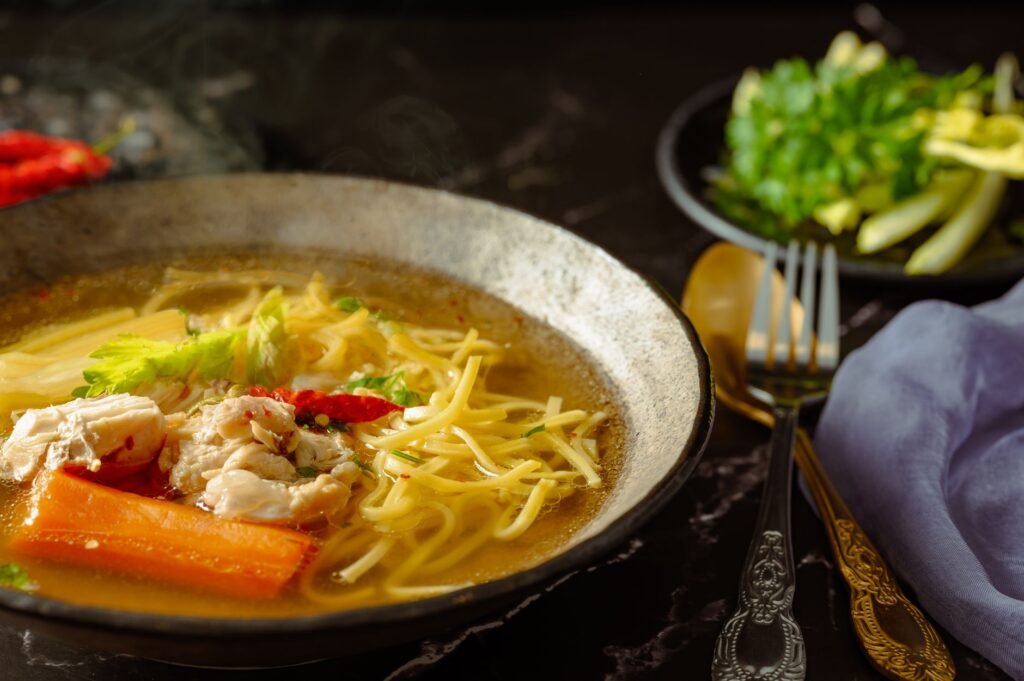
An opened carton of chicken broth keeps three to four days in the refrigerator, and homemade stock sits in the same narrow window. Broth is low in acid, rich in dissolved protein and almost entirely water, which describes a near ideal growing medium, so it has one of the shortest lives in the whole fridge.
Why broth fades faster than the chicken it came from
Simmering a carcass pulls protein, gelatin and minerals into the water and leaves you with a liquid that has almost no defenses. There is no acidity to suppress anything, salt levels are usually modest, and water activity is as high as it gets in a kitchen. Solid foods at least force organisms to work through structure. A liquid offers no such resistance and circulates everything evenly.
Gelatin makes it worse in one specific way. A good stock sets to a jelly when cold, and that gel insulates its own interior, which is why a deep container of stock chills far more slowly than the same volume of water.
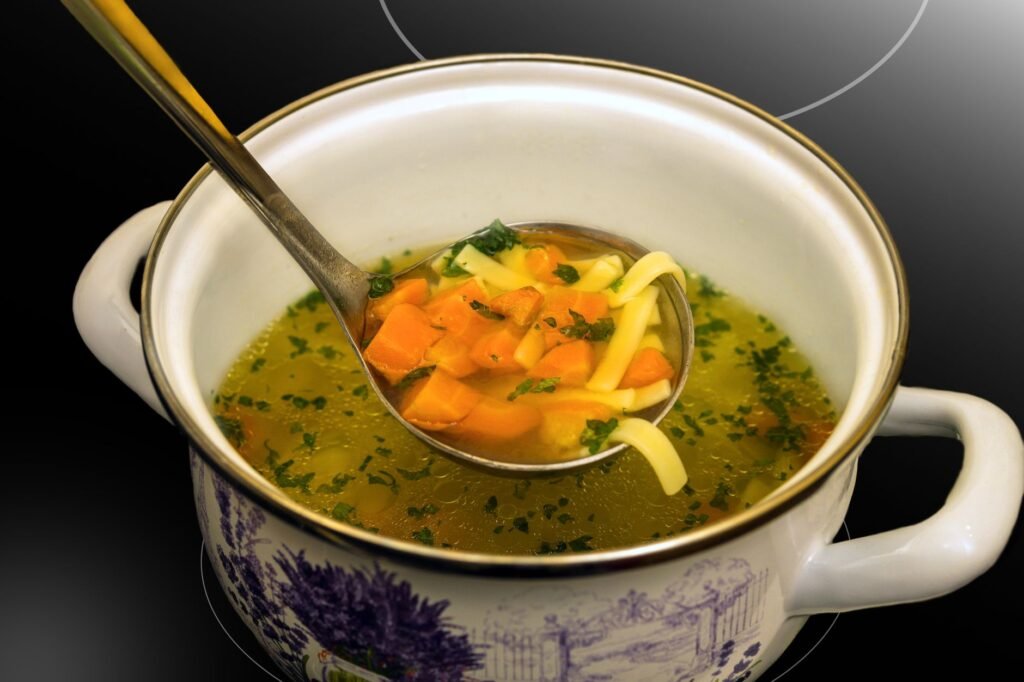
Chill it fast or it never really gets cold
- Strain the solids out first. Bones and vegetable scraps hold heat and add nothing once the flavor is extracted.
- Split the batch across wide, shallow pans instead of leaving it in the stockpot.
- Set those pans in a sink of ice water and stir occasionally so the warm center keeps moving to the edges.
- Refrigerate once it is no longer warm to the touch, uncovered at first, then lidded.
- Freeze anything beyond a few days of cooking use, in cubes or flat bags for quick thawing.
The two hour rule applies here exactly as it does to solid leftovers, and a gallon stockpot cooling on a counter will blow past it. FoodSafety.gov covers the cooling step alongside its storage chart.
Windows by type of broth
| Type | Refrigerated | Notes |
|---|---|---|
| Unopened shelf carton or can | Pantry, printed date | Sealed and commercially processed |
| Opened carton | Three to four days | Reseal and keep it cold, not in the door |
| Homemade stock | Three to four days | Freeze the remainder in portions |
| Frozen broth | Months for quality | Flavor flattens before safety does |
| Bouillon cubes or paste | Pantry or fridge per label | Salt and drying do the preserving |
| Finished soup with broth base | Three to four days | Solids do not extend the base |
How to tell broth has turned
Sour is the giveaway. Fresh chicken broth smells savory and faintly roasted, and broth that has gone over smells tangy, yeasty or sharp in a way you notice from a foot away. Trust that reading over the calendar, because a container that was never chilled properly can fail early.
Then look for gas and haze. Tiny bubbles rising in a jar that nobody carbonated, a fizz when the lid comes off, or a lid that has domed outward all mean fermentation is underway. Cloudiness on its own is not conclusive, since a hard boiled stock emulsifies and clouds naturally, but cloudy plus sour plus bubbles is a complete answer.
Slime is the last stage and the easiest to spot. If the liquid strings or feels ropy when you tilt the jar, pour it out without further deliberation. Rinse the container with hot soapy water afterward rather than refilling it, because whatever grew there had a good run.