

Cooked spaghetti keeps three to four days in the refrigerator, whether it is plain or already tossed with sauce. What changes across those days is texture rather than safety. Cooked starch slowly recrystallizes as it chills, so day three noodles turn firm and chalky even when everything was handled correctly.
Plain noodles and sauced noodles age differently
Boiling forces water into starch granules and swells them, which is what makes a noodle tender. Chilling reverses part of that. The starch molecules drift back into an ordered arrangement and push the water back out, leaving the strands stiffer and drier by the day. A bare container of noodles shows this fastest because there is nothing holding moisture against them.
Sauce changes the experience without changing the calendar. Tomato keeps the strands lubricated and adds some acidity, cream and butter coat them, and a meat sauce brings its own moisture. The noodles stay softer, but they also keep drinking the sauce, so a bowl that was perfect on Monday can look dry and overdressed by Wednesday while still being fine to eat.
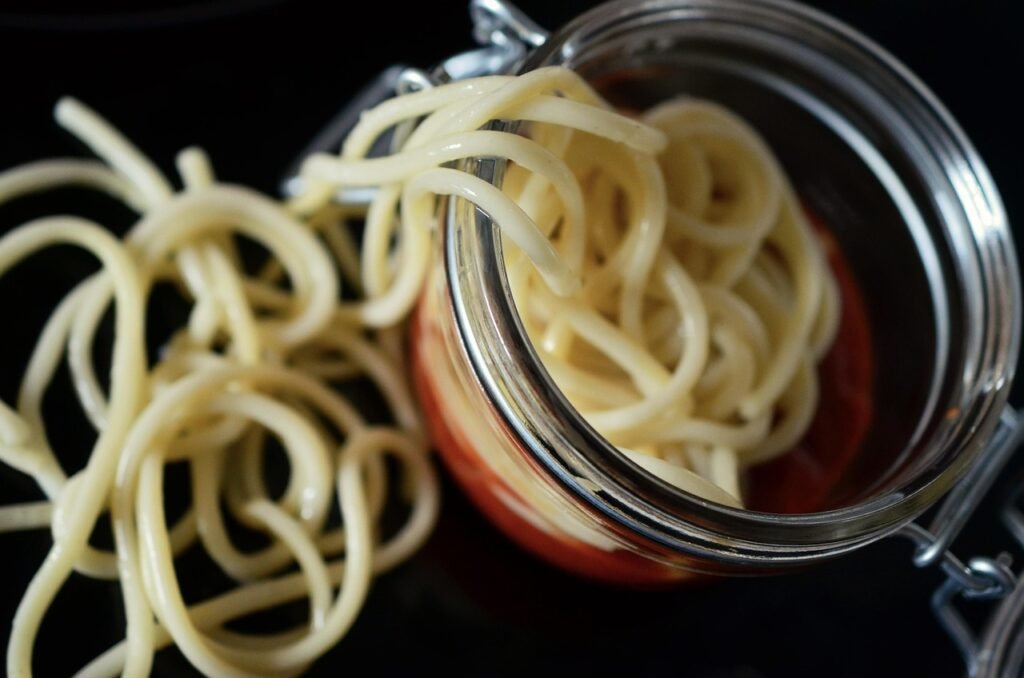
Get it cold quickly, then keep it covered
Cooked starches belong in the refrigerator within two hours of coming off the stove, and a big pot of pasta insulates itself well enough to stay warm far longer than that on a counter. Drain it, spread it out, and give the steam somewhere to go before the lid closes.
- Drain thoroughly so the container is not sitting in leftover cooking water.
- Use a wide container rather than a deep one. Depth is what keeps the center warm.
- Toss plain noodles with a light coat of oil so they cool separated rather than welding into a single brick.
- Cover once the steam stops, and label the container with the date it was cooked.
Windows by how the pasta is stored
| State | How long | Limiting factor |
|---|---|---|
| Dry boxed pasta, unopened | Pantry, printed date | Almost no moisture present |
| Fresh refrigerated pasta, sealed | Printed date | Eggs and high moisture |
| Cooked plain noodles | Three to four days | Drying and stiffening |
| Cooked with tomato sauce | Three to four days | Absorption, then quality |
| Cooked with cream or cheese sauce | Three to four days | Dairy, and sauce splitting |
| Baked pasta, frozen | Months for quality | Freezer burn and texture |
These ranges track the refrigerated leftover guidance published on FoodSafety.gov, which is the reference worth checking for a specific dish rather than trusting a rule of thumb.
Stop signs, and reheating that revives the rest
The sensory checks are quick. A slick or tacky film on the strands, a sour or fermented smell when the lid lifts, a grayish sheen, or any fuzzy growth in the sauce all end it. Sauce separating into water and solids is usually only cosmetic, so stir it and smell it before deciding.
For pasta still inside its window, moisture and gentle heat undo most of the stiffening. Add a splash of water, broth or extra sauce, cover the dish, and warm it slowly on the stove or in short microwave bursts with a stir between them. Dry high heat does the opposite and finishes the job the refrigerator started. A quick dunk of plain noodles in boiling water for a few seconds also works, and it is the trick restaurants have used for decades.