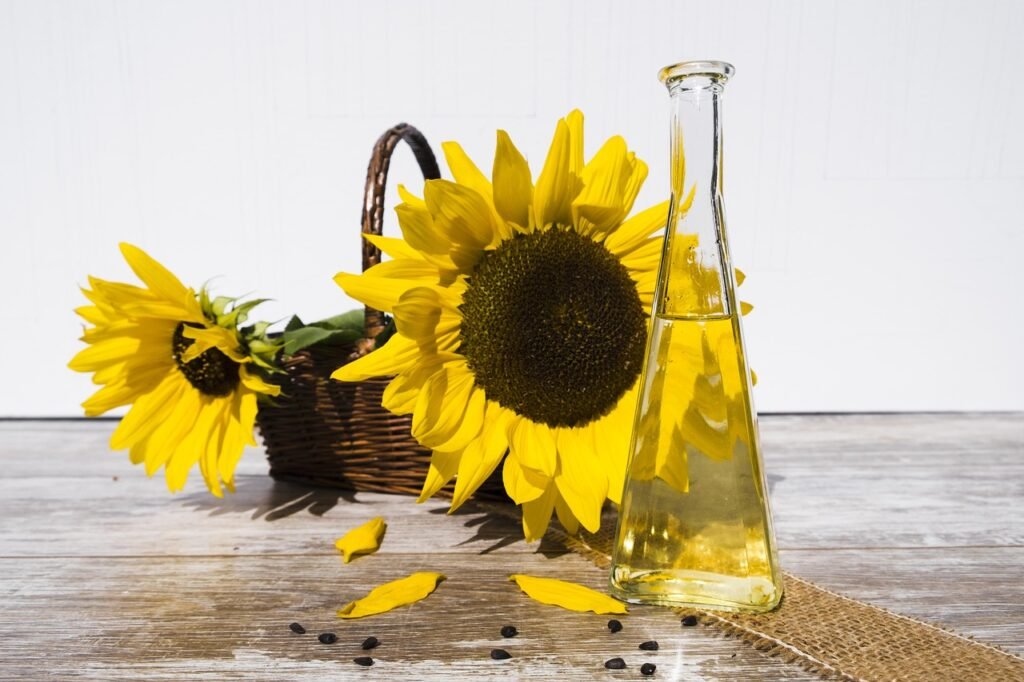
Yes, you can use sunflower oil instead of vegetable oil in the same amount for baking, frying, sautéing and salad dressings. Both are liquid and mild, so recipes behave the same way. The one thing to check is which kind of sunflower oil you have, because high-oleic bottles stand up better to long frying.
What a bottle labeled vegetable oil really contains
Vegetable oil is a catch-all name rather than a single ingredient. A bottle sold under that label can hold soybean, canola, corn or a blend, and the ingredient line on the back tells you which plant it came from. Recipe writers call for vegetable oil because they want something neutral in flavor, liquid at room temperature and able to handle ordinary cooking heat.
Refined sunflower oil ticks all three boxes. That’s why swaps in either direction rarely change how a dish turns out, and you don’t need to adjust quantities, oven temperatures or cooking times.
The picture changes when a recipe names a different oil for its flavor, such as olive oil in a vinaigrette or toasted sesame oil in a stir fry. Sunflower oil still works mechanically there, but the dish will taste milder. Recipes that ask for vegetable oil don’t have that problem, because the oil was chosen to stay in the background.
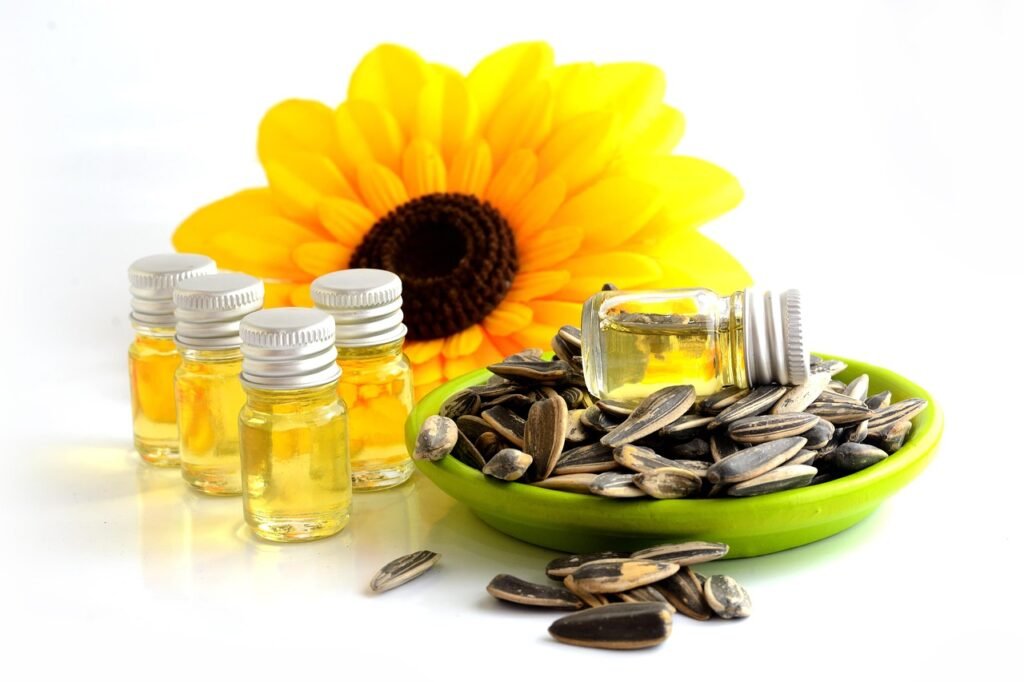
Two kinds of sunflower oil and how they differ
Sunflower oil comes from different sunflower types, and the fat profile changes a lot between them. The National Sunflower Association lists these figures.
| Type | Monounsaturated (oleic) | Polyunsaturated (linoleic) | Saturated | Where you see it |
|---|---|---|---|---|
| Linoleic sunflower oil | 20% | 69% | 11% | Grocery shelves, home cooking and salad oil |
| High-oleic sunflower oil | 82% | 9% | 9% | Frying, baking and packaged foods |
The association describes linoleic sunflower oil as having a light, clean taste and a high smoke point, and high-oleic oil as very neutral and highly stable without hydrogenation. Labels usually say high oleic when that’s what’s inside, so a bottle without that phrase is probably the linoleic kind.
Baking with sunflower oil in place of vegetable oil
For cakes, muffins, quick breads, pancakes and boxed mixes, measure sunflower oil exactly as you would vegetable oil. Its mild taste disappears into the batter, and because it stays liquid like other seed oils, the crumb comes out just as moist. Either type works here, since baking doesn’t expose the oil to the long, repeated heating that separates them.
Unrefined or cold-pressed sunflower oil is the exception. It tastes noticeably nutty and seedy, which suits some breads and salads but can stand out in a vanilla cake.
Greasing pans works the same way. Brush a thin layer of sunflower oil over the pan, or mix it with a little flour for a fluted tube pan, and cakes release as they would with vegetable oil.
Frying and searing with sunflower oil
Pan frying, stir frying and searing are all fine with refined sunflower oil. For deep frying, especially if you plan to strain and reuse the oil, high-oleic sunflower oil is the better pick. Oils rich in polyunsaturated fat break down faster under sustained heat, which shows up as darkening, foaming and off smells sooner. Linoleic sunflower oil can still handle a single batch of fries; replace it rather than reusing it several times.
- Check the label for refined and, for deep frying, high oleic.
- Heat the oil gradually and use a thermometer to hold the temperature your recipe calls for.
- Stop using any oil that smokes heavily at normal frying heat, smells sharp or looks dark and thick.
When sunflower oil is the wrong substitute
Food allergies are the main reason to pause. Seed allergies, including to sunflower, exist, so tell guests what oil you used, and read labels if anyone at the table avoids sunflower seeds. Flavor is the second issue, as noted with unrefined oil. Freshness is the third. Seed oils go rancid with time, heat and light, and a bottle that smells like paint or old nuts will taste that way in food. Store opened oil in a cool, dark cupboard and sniff it before a big bake.
Frequently asked questions
Can I use sunflower oil instead of canola oil?
Yes. Refined sunflower oil and canola oil are both neutral, liquid oils that trade places evenly in baking, sauteing and dressings. For deep frying, pick high-oleic sunflower oil if you have the choice, since it handles long, repeated heating better than the regular linoleic type.
Does sunflower oil change the taste of baked goods?
Refined sunflower oil has a light, clean flavor that is hard to detect in cakes, muffins or brownies. Unrefined or cold-pressed sunflower oil is different; it tastes nutty and seedy and can show through in delicate recipes, so save it for breads or salads.
How can you tell if sunflower oil has gone bad?
Smell it. Fresh oil smells faint and clean, while rancid oil smells sharp, bitter, like crayons, paint or stale nuts. A thicker, stickier feel or a darker color are further warnings. Rancid oil spoils the flavor of food, so replace the bottle rather than cooking with it.
Is sunflower oil a seed oil?
Yes. The National Sunflower Association notes that sunflower oil is produced from oil type sunflower seeds, so it belongs with canola, soybean and the other oils commonly grouped as seed oils. The label covers very different fat profiles, though, and high oleic and regular linoleic sunflower oils differ sharply, as the figures in this guide show.
Can you use olive oil instead of vegetable oil?
Yes, in the same amount. The North American Olive Oil Association says olive oil can replace vegetable oil one for one in any recipe. The difference is flavor. Regular and light tasting olive oils stay fairly neutral, while extra virgin olive oil tastes stronger and can show through in mild cakes and muffins.