
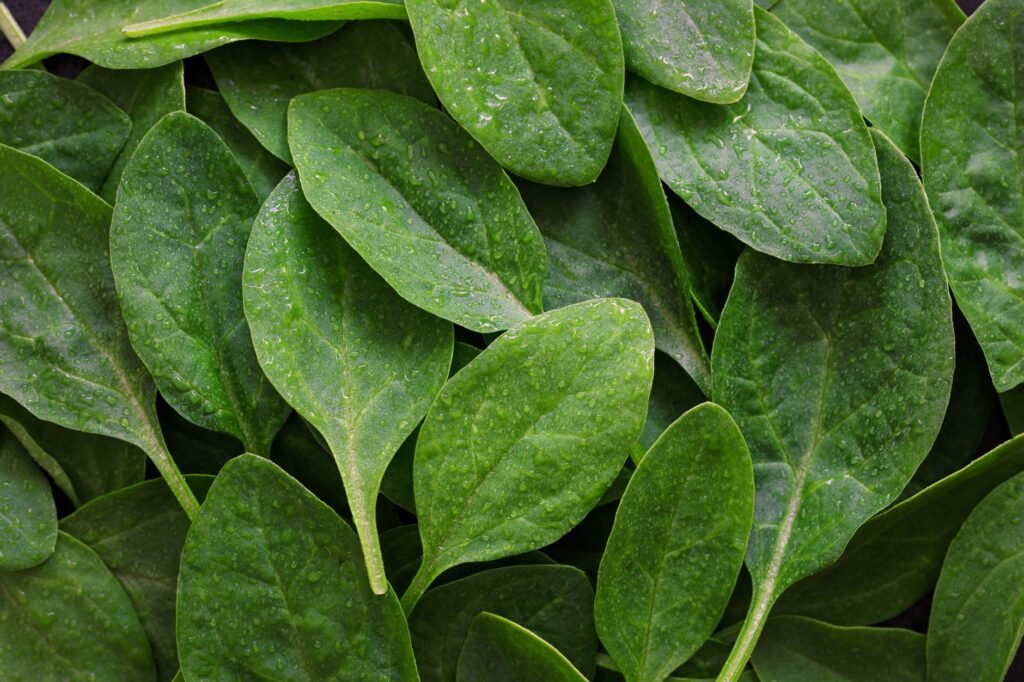
Heat a little olive oil in a wide skillet over medium-high heat, cook sliced garlic until fragrant, then add dry spinach a few handfuls at a time and toss until the leaves just collapse. Season with salt as it finishes, tip off any liquid, and serve right away while it’s still bright green.
Getting the spinach leaves dry before cooking
Water clinging to the leaves is what turns sautéed spinach into boiled spinach. A pan can only hold so much heat, and every drop of water soaks some of it up as steam. Wash loose spinach in a big bowl of cold water, lift the leaves out so grit stays at the bottom, and spin them dry in a salad spinner. A couple of clean kitchen towels work if you don’t own one.
Look at the stems while you’re at it. Bagged baby spinach usually has thin, tender stems you can leave on. Mature spinach sold in bunches often has thicker stems that stay stringy after cooking, so pinch them off at the base of each leaf.
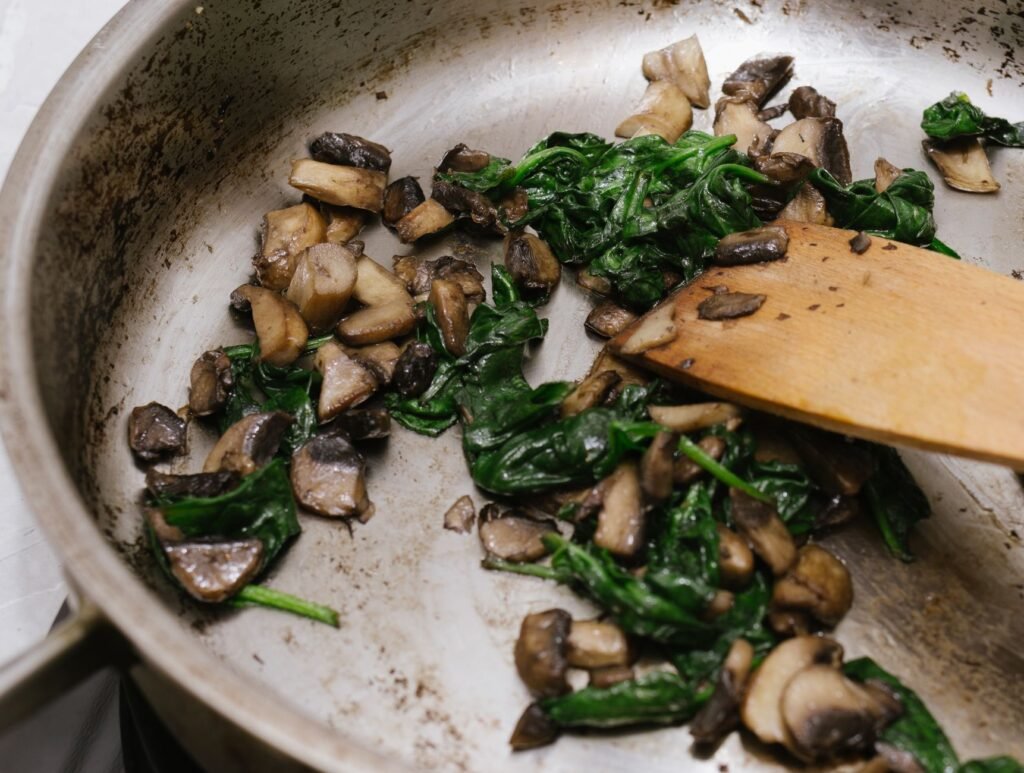
The batch method for sautéed spinach
- Pick your widest skillet or a large pot. More surface area means faster evaporation.
- Set it over medium-high heat and add a tablespoon or two of olive oil.
- Add thinly sliced garlic and stir until it smells toasty and just starts to turn golden. Burnt garlic tastes bitter, so pull the pan off the heat briefly if it’s browning fast.
- Add as much spinach as fits, then use tongs to turn the wilted leaves from the bottom to the top. Tongs grab loose leaves better than a spatula.
- Add the next few handfuls as room opens up.
- Once nearly all the spinach has darkened and softened but still looks glossy, pull the skillet off the burner.
- Season with salt and pepper, and tilt the pan to leave any liquid behind as you plate.
Expect a dramatic shrink. A pile of raw leaves that fills the skillet becomes a modest side dish, so plan on a full bag or bunch for two people.
Flavor combinations for a skillet of spinach
| Style | Add with the oil | Finish with |
|---|---|---|
| Classic garlic | Sliced garlic | Lemon wedge at the table |
| A little heat | Garlic and red pepper flakes | Grated parmesan |
| Creamy side | Butter and minced shallot | Pinch of nutmeg and a spoon of cream |
| Sesame | Neutral oil and grated ginger | Soy sauce and toasted sesame seeds |
| Smoky | Diced bacon, cooked first, with its fat | A splash of cider vinegar |
Sautéed spinach also folds well into scrambled eggs, pasta, grain bowls and quesadillas, so a double batch rarely goes to waste.
Why sautéed spinach turns watery, gray or bitter
Crowding causes most watery results. When too many wet leaves hit the pan at once, the temperature drops and they stew in their own liquid. Working in handfuls keeps the heat up.
Overcooking is the other common problem. Spinach goes from vivid and silky to dull, dark and slippery within a short stretch, so pull it the moment the last leaves wilt; the heat of the pan keeps cooking it a little. Acid also dulls the green, which is why lemon juice and vinegar work best added at the table rather than in the skillet. A bitter or metallic edge often comes from scorched garlic or from spinach that sat too long, and a small pat of butter or a little cheese softens it.
Cooking frozen spinach in a skillet
Frozen chopped spinach works for sautéed dishes, though the texture is softer than fresh. Thaw it, then wring the spinach as dry as possible by pressing it in a fine strainer or twisting it in a clean towel. After that, it only needs to warm through in the garlic oil, a few minutes of stirring. Frozen spinach also shines stirred into sauces, soups and dips, where its softer texture isn’t a drawback. Leftover sautéed spinach should go into the fridge promptly in a covered container; the cold storage chart at FoodSafety.gov lists how long cooked vegetables keep.
Frequently asked questions
Should you cover spinach while sautéing it?
No. A lid traps steam, which makes the spinach wet and limp instead of glossy. Leave the pan open so moisture escapes. If a huge pile will not fit, you can cover it briefly to wilt the first batch down, then uncover and finish the rest over higher heat.
Can you saute spinach without oil?
You can wilt spinach in a hot nonstick pan with a spoonful of water or broth instead of oil. The result tastes more like steamed spinach, since fat is what carries the garlic flavor. Stir constantly and season at the end to keep it from tasting flat.
Is sauteed spinach healthier than raw spinach?
Each form has its own strengths, and both count toward your vegetables. Cooking shrinks the leaves, so you eat more spinach in one serving, while raw leaves keep nutrients that heat breaks down. If you have a health condition that limits certain foods, ask your doctor about how much spinach fits.
How long does sautéed spinach last in the fridge?
About 3 to 4 days. USDA's Food Safety and Inspection Service says to refrigerate cooked leftovers within 2 hours and use them within 3 to 4 days, or freeze them for longer storage. Keep the spinach in a covered container and reheat it to 165°F before eating it.
How long does spinach take to cook on the stove?
Only a few minutes. Oklahoma State University Extension wilts fresh spinach in a hot, oiled skillet for 2 to 4 minutes, adding the leaves in batches. Take the pan off the heat as soon as the last leaves collapse, because the heat left in the pan keeps softening them.