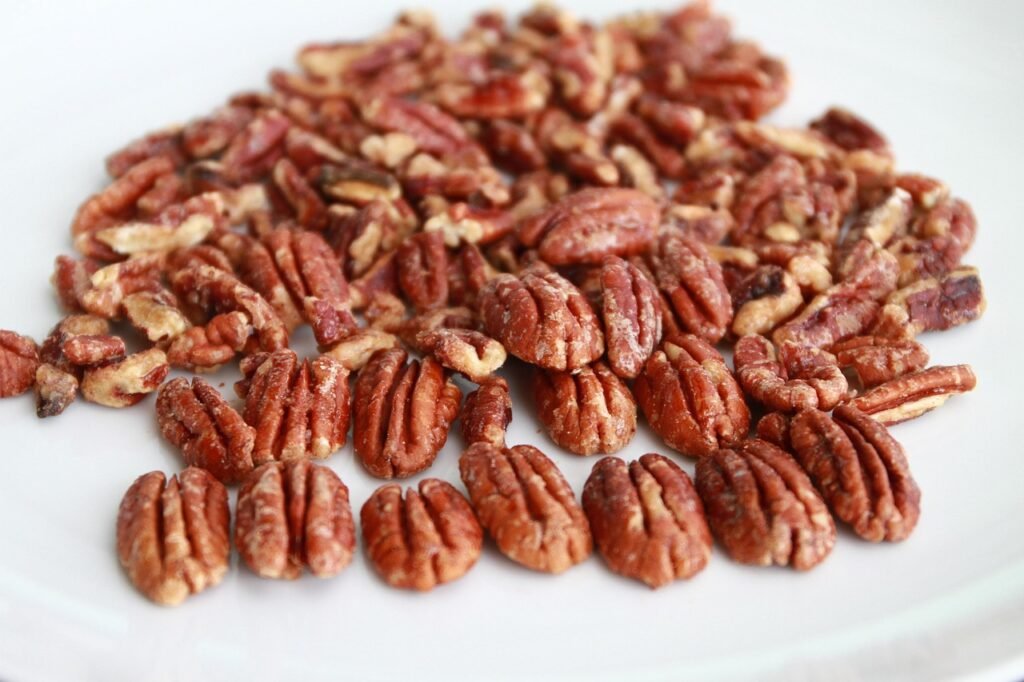
Spread nuts in a single layer on a rimmed baking sheet and toast them at 350°F for 5 to 10 minutes, stirring once or twice, until golden and fragrant. For a small handful, toasting in a dry skillet set to medium heat is faster. Pull them as soon as they smell toasty, because they keep cooking on the hot pan.
Oven toasting at 350°F for even color
The oven is the most forgiving method for a cup or more of nuts, since dry heat surrounds every piece and you can stir without juggling a hot pan. Nebraska Extension gives the basic method.
- Heat the oven to 350°F.
- Spread the nuts in one layer on an ungreased rimmed baking sheet or shallow pan. Crowded nuts steam and brown unevenly.
- Bake for 5 to 10 minutes, stirring or shaking the pan once or twice.
- Start checking early. When they smell nutty and look golden, move them to a cool plate or tray.
- Let them cool before chopping or using, since warm nuts are softer and turn oily when cut.
With every batch, set the timer for the shorter time and check the nuts when it rings. Nuts go from golden to scorched fast, and it is easy to get distracted by the next step of a recipe.
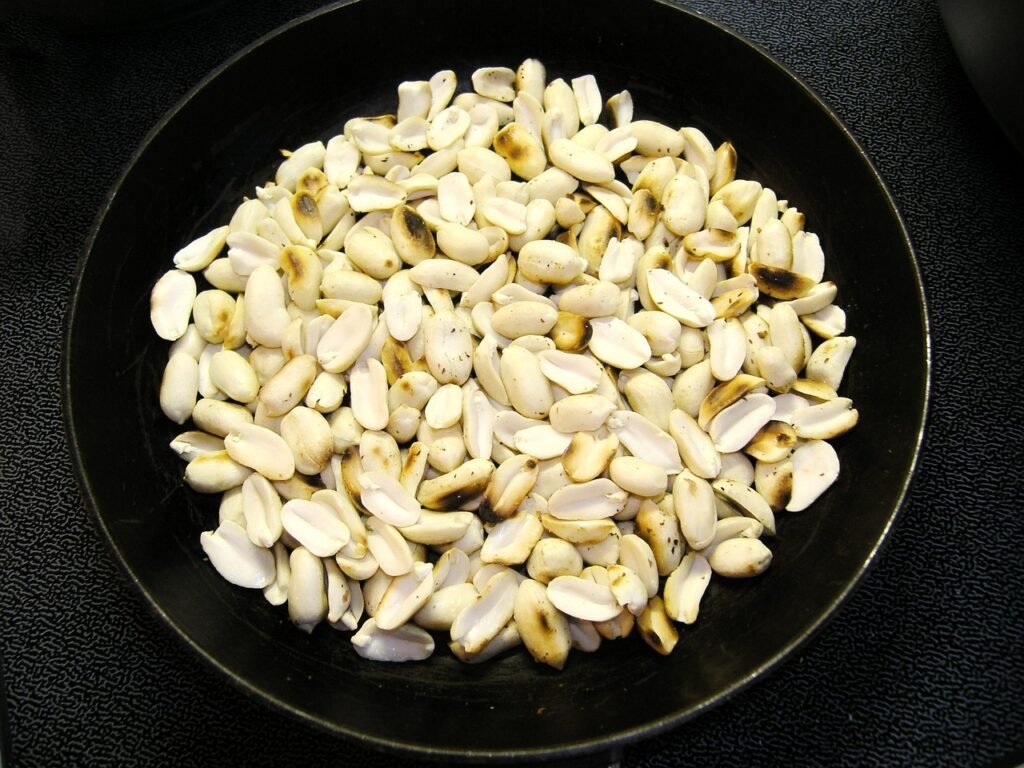
Oven, skillet or microwave compared
| Method | Best for | Heat and time | Watch out for |
|---|---|---|---|
| Oven | A cup or more | 350°F for 5 to 10 minutes, stirring once or twice | Dark edges on the rim of the pan |
| Skillet | A handful for salads or oatmeal | Dry, heavy pan over medium heat, tossing often | Scorched spots if you stop stirring |
| Microwave | A tablespoon to 1/2 cup | High for 1 minute, stir, then 1 minute more, then short bursts | Browning that starts inside before the outside shows it |
Nebraska Extension’s microwave method adds about 1/2 teaspoon of fat per 1/2 cup of nuts and notes that small, thin nuts finish around 2 minutes while larger ones take 3 to 4 minutes total. Microwaves vary a lot, so stir and taste as you go.
How the size of the nut changes the timing
Small and thin pieces toast fastest. Pine nuts, sliced or slivered almonds and chopped walnuts sit at the short end of any time range, and pine nuts in particular brown in what feels like seconds once they start. Keep them in a skillet only if you plan to stand there.
Whole almonds and hazelnuts are dense and take longer to heat through, so they usually need the long end of the range. Pecans, walnuts and macadamias are rich in oil, which helps them brown and also makes them burn quickly, so stir those more often.
Toast one kind of nut per pan when you can. A mixed tray means the smallest pieces burn while the biggest are still pale.
Telling toasted from burned by smell and color
Your nose is the best timer. Raw nuts smell faintly of nothing, while toasted nuts give off a warm, sweet aroma that fills the kitchen. The moment you notice that smell, check the pan.
Color can fool you, especially with nuts that have dark skins such as walnuts and hazelnuts. Snap one in half. The inside should be light golden. If the center is brown, the batch is close to overdone, and a bitter or acrid smell means some are already burned. Picking out a few dark pieces can rescue the rest.
Always move toasted nuts off the hot pan right away. Left on the metal, they keep cooking for a few minutes, which is often what tips a good batch into a bitter one.
Keeping toasted nuts crisp for later
Let nuts cool completely before storing them, since trapped warmth creates moisture and softens them. Nebraska Extension suggests an airtight container in the refrigerator for 1 to 2 weeks, or an airtight freezer container for 1 to 3 months.
Toasting a larger batch saves time for salads, baking and breakfast bowls. If frozen nuts taste a little soft, returning them to a warm oven or dry skillet for a few minutes restores some crunch. Throw out any that smell like paint or old oil, which is a sign they have gone rancid.
Frequently asked questions
Do you need oil to toast nuts?
No. Nuts contain plenty of their own oil, so they toast well on a dry pan in the oven or skillet. A small amount of fat is optional in the microwave method, and some cooks add a little butter or oil when they want salt or spices to stick to the nuts.
Should nuts be toasted before adding them to baked goods?
It is optional. Toasting deepens flavor and crunch, and nuts inside cakes or muffins do not brown much on their own. For toppings that sit on the surface, such as streusel, you can often skip it because they toast while the item bakes.
How do I know if toasted nuts are burned?
Burned nuts smell acrid or bitter rather than sweet, and the inside turns dark brown instead of light golden. Break one open to check. If only a few pieces are dark, pick them out, since one bitter nut can spoil a bite of an otherwise good dish.
How do you toast pine nuts?
Use a dry, heavy skillet over medium heat and keep the nuts moving, stirring or tossing them often, until they turn golden and smell toasty. Pine nuts brown fast once they start, so stay at the stove. For a larger batch, bake them at 350°F and check early. Move them to a cool plate right away.
How do you roast macadamia nuts?
Spread them in a single layer on a rimmed baking sheet and roast at 350°F for 5 to 10 minutes, stirring once or twice. Macadamias are rich in oil, so they brown quickly once they start. Pull them when the inside turns light golden and they smell nutty, and let them cool before storing.