To make homemade granola, toss rolled oats with a little oil and honey or maple syrup, spread it on a baking sheet and bake at 300°F, stirring every 15 to 20 minutes until golden. Let it cool completely on the pan so it crisps, then add dried fruit and store it airtight.
A basic granola recipe to start from
This version follows a simple recipe from Iowa State University Extension, and it’s a good base because the ratios are easy to remember and scale.
| Ingredient | Amount | Job it does |
|---|---|---|
| Rolled oats (old-fashioned or quick) | 2 cups | The body of the granola |
| Mix-ins such as nuts, seeds or coconut | 1/2 cup | Crunch and flavor |
| Canola or vegetable oil | 2 tablespoons | Helps the oats toast evenly |
| Honey or maple syrup | 1/2 cup | Sweetness and binding |
| Water | 1/4 cup | Spreads the syrup through the oats |
| Vanilla or cinnamon (optional) | 1 teaspoon | Extra flavor |
Old-fashioned rolled oats give the classic chewy-crisp texture. Quick oats work but bake into a finer, sandier mix.
Mixing and baking the batch
- Heat the oven to 300°F and line a rimmed baking sheet with parchment.
- Stir the oats and mix-ins together in a large bowl.
- Stir in the oil and honey until every flake is coated, then add the water and keep stirring until it’s absorbed.
- Spread the mixture in an even layer on the pan.
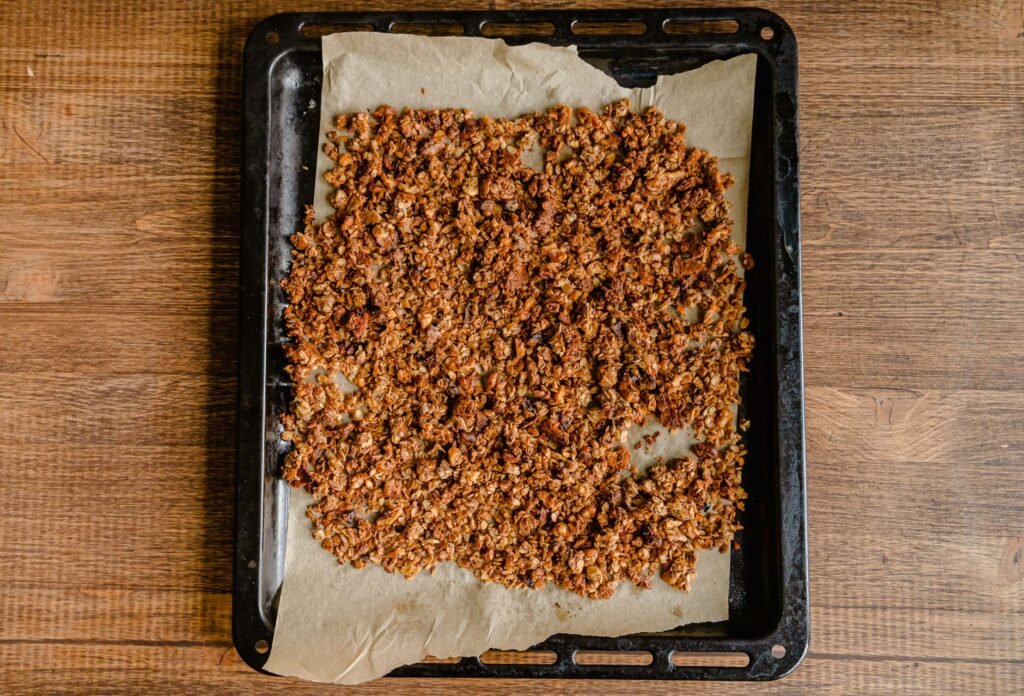
- Bake for 45 minutes to 1 hour, stirring and breaking up clumps every 15 to 20 minutes, until golden brown.
- Let it cool completely on the baking sheet before moving it.
Ovens vary, so watch the edges of the pan during the last stretch. They brown first, and honey can go from golden to burnt quickly. A light-colored metal sheet browns more gently than a dark one, and rotating the pan halfway through evens out hot spots. The granola should smell toasty, not sharp, when it’s ready.
Why homemade granola turns out soft or burnt
Soft granola usually comes from pulling it too early, packing it away while still warm, or adding more syrup and water than the oats can dry out. If you scale the recipe up, scale every ingredient together and spread the batch over more pans. Granola feels slightly tacky when hot and firms up as it cools, so judge doneness by color, not by touch. A crowded pan steams instead of toasting; use two sheets if the oats are piled deep.
Burnt spots come from high heat or too much sugar at the pan’s edges. The low 300°F temperature is there for a reason, and stirring moves the outer oats toward the cooler middle.
Getting bigger granola clusters
If you like chunky granola, change the stirring. Press the mixture firmly into the pan, then stir less during the final part of the bake so the syrup can set. After it cools, break it into pieces by hand. A spoonful of extra honey or a beaten egg white stirred in before baking helps pieces hold together, though the texture turns more brittle.
Clusters are also where granola starts turning into bars, which need more binder and a pressed pan. Those have their own method on our site.
Add-ins, timing and storing the finished granola
Nuts, seeds and coconut can bake with the oats. Dried fruit should go in after baking, because it hardens and can scorch in the oven. Chocolate chips wait until the granola is completely cool, or they melt into streaks.
You can also change the flavor without touching the method. Swap honey for maple syrup, add a pinch of salt to sharpen the sweetness, or stir in cinnamon, ginger or a little orange zest with the oil. For a nut-free batch, use sunflower or pumpkin seeds as the mix-in instead of nuts, and check the labels on your oats and seeds if allergies are a concern.
Store the cooled granola in an airtight container at room temperature. Humidity is the enemy of crunch, so keep it sealed and away from the stove. If a batch goes limp, a few minutes back in a low oven will usually crisp it again.
Frequently asked questions
Can I make granola without oil?
You can, but the oats toast less evenly and turn out drier and less crisp. Some cooks replace part of the oil with applesauce or extra syrup, which gives a chewier result. If you cut the oil, stir more often during baking, since the oats can scorch in spots.
Is homemade granola healthier than store-bought?
It can be, because you control the sugar, oil and portion of nuts. Granola is still calorie dense either way. Compare the nutrition labels of a store brand with your own ingredient amounts, and treat granola as a topping rather than a full bowl if you are watching sugar.
Can I use steel-cut oats for granola?
Steel-cut oats stay hard and gritty when baked this way, because they are chopped groats rather than flattened flakes. Stick with old-fashioned rolled oats for the classic texture, or quick oats for a finer granola. Save steel-cut oats for porridge cooked in liquid.
Is granola gluten free?
Only if you use oats labeled gluten free. Regular oats often come into contact with wheat, barley or rye, which contain gluten. Read the labels on your mix-ins too, since crisp rice cereals and some flavorings can contain malt, a barley ingredient.
Can dogs eat granola?
It's best not to share it. Many granolas contain ingredients the ASPCA warns about for pets, including raisins, chocolate, macadamia nuts and xylitol, and other nuts are high in fat that can cause vomiting and diarrhea. If your dog eats granola with any of those, call your veterinarian or a pet poison control line.