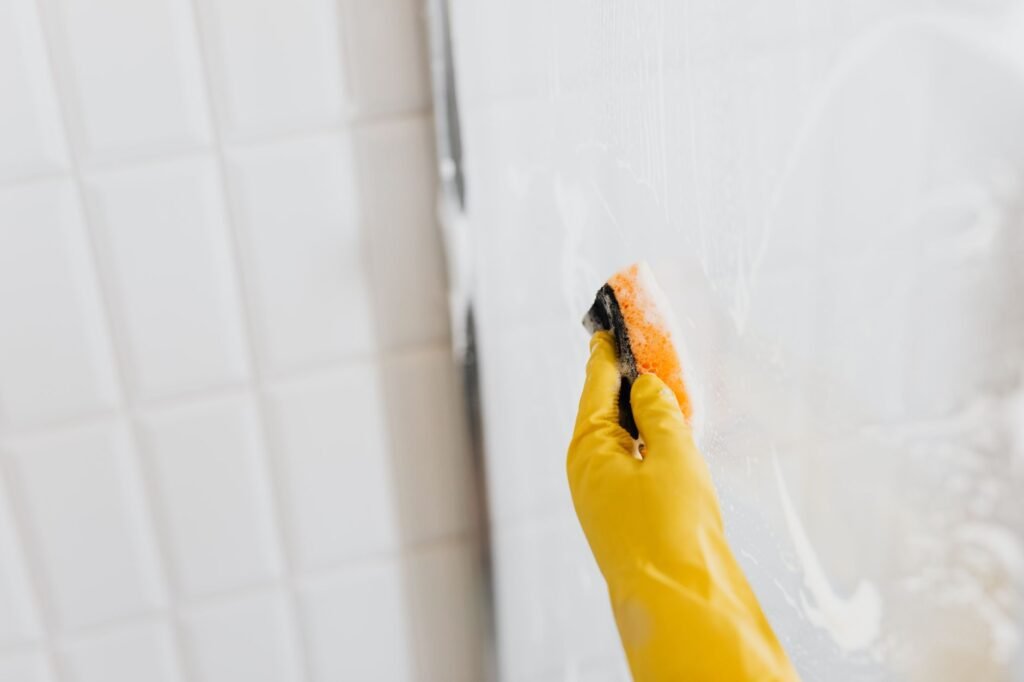
Clean a shower by working from the top down, spraying the walls with a cleaner suited to the surface, letting it sit, then scrubbing and rinsing before you move to the glass, fixtures and floor. Finish by clearing the drain and drying the glass so soap scum and water spots don’t return as quickly.
Match the cleaner to your shower surface
The biggest mistake is using one product everywhere. Acidic cleaners that dissolve hard water film on glass can etch natural stone, and scrubby pads that are fine on glazed tile can scratch acrylic.
| Surface | Works well | Avoid |
|---|---|---|
| Glazed ceramic or porcelain tile | Bathroom cleaner, diluted dish soap, a nylon brush | Steel wool on the glaze |
| Natural stone (marble, travertine) | A cleaner labeled safe for stone | Vinegar, lemon and other acids |
| Fiberglass or acrylic | Mild liquid cleaner, soft sponge | Abrasive powders and scouring pads |
| Glass doors | Soap scum remover or diluted vinegar, then a squeegee | Razor scrapers on coated glass |
| Chrome fixtures | Mild soap, soft cloth | Harsh abrasives |
If you’re not sure what your walls are made of, try each cleaner on a hidden corner of the shower first and check the maker’s care sheet. Gather your tools before you start, too. A long-handled brush saves your back on high tile, a non-scratch sponge covers most surfaces, and rubber gloves protect your hands from cleaners that sit on the skin during a long scrub.

The top-down shower cleaning routine
- Clear out bottles, razors and mats, and open a window or run the exhaust fan.
- Let the shower run hot for about a minute to loosen grime and warm the surfaces.
- Spray the walls, starting high, and leave the cleaner on for the time its label gives. Contact time does much of the work that elbow grease would otherwise do.
- Scrub in sections with a brush or non-scratch sponge, then rinse each section from the top.
- Do the glass, fixtures and shelves.
- Finish with the floor or tub base, then the drain.
Use one product at a time and rinse between them. Some cleaning chemicals react badly when mixed, so read the precautionary statements on each label before you combine steps.
Getting grout lines clean again
Grout is porous, so it holds onto soap residue and the dark spots that grow in damp corners. Spray grout cleaner along the lines or pack them with baking soda stirred into a paste with water, wait a few minutes, then scrub the joints with a stiff narrow brush. An old toothbrush reaches corners. Rinse well and dry the lines with a towel.
Dark spots in the silicone caulk around the tub or corners are a different case. They often grow beneath the surface of the caulk, so scrubbing may only lighten them. If they come back quickly, cutting out the old bead and applying fresh caulk is the lasting fix.
If stains remain after two rounds, the grout may be damaged rather than dirty. Sealing clean grout once it’s fully dry makes the next cleaning easier, and cracked or crumbling grout usually needs regrouting.
Glass doors, fixtures and the drain
Cloudy glass is usually a mix of soap scum and mineral deposits. Spray it, let it sit, wipe with a non-scratch pad, then rinse and squeegee from top to bottom. Wipe the handle and trim with a soft cloth. White crusty spots around the faucet and spout are mineral deposits from hard water, and they usually loosen after a cleaner made for limescale has had a few minutes to work.
At the drain, lift or unscrew the cover and pull out hair with gloved fingers or a plastic drain snake, then flush with hot water. A clogged shower head, a moldy curtain liner and a leaking valve cartridge are separate jobs, so each gets its own guide on our site.
Keeping soap scum from building back up
A quick daily habit beats a monthly battle. Squeegee the glass and walls after the last shower of the day, run the fan until the room dries, and leave the door or curtain open so air moves. Switching from bar soap to liquid body wash can leave less residue on the walls. A light weekly wipe of the tile keeps the deep clean down to once a month or so.
Frequently asked questions
Can I clean a shower with vinegar?
Diluted white vinegar helps with hard water film on glass, glazed tile and chrome. Skip it on marble, travertine or other natural stone, because the acid can etch the surface. Rinse well afterward, and never combine vinegar with other cleaners in the same bucket or spray bottle.
How do I clean a shower that has not been cleaned in months?
Plan on two rounds. Spray everything, let the cleaner sit for its full label time, scrub, and rinse. Then repeat on whatever still looks dull. Heavy buildup responds better to a second application than to harder scrubbing, which risks scratching acrylic or dulling tile glaze.
How often should a shower be cleaned?
A weekly wipe of the walls and glass keeps most showers manageable, with a deeper scrub of grout, drain and fixtures every few weeks. Showers used by several people a day, or in homes with hard water, usually need attention more often than a guest bathroom that sits idle.
How do I clean mold in my shower?
Open a window or run the fan, put on gloves, and scrub mold off tile, glass and grout with detergent and water, then rinse and dry the surface completely, as the EPA advises. If you use bleach, never mix it with ammonia or other cleaners. Mold growing inside silicone caulk usually comes back, so replace that caulk.
How do I clean a shower floor?
Clear the floor, spray it with a cleaner suited to its surface, and leave it for the contact time on the label. Scrub textured spots and grout lines with a nylon brush on tile, but use a soft sponge on fiberglass or acrylic, since scrubby pads can scratch them. Rinse toward the drain and dry the floor.