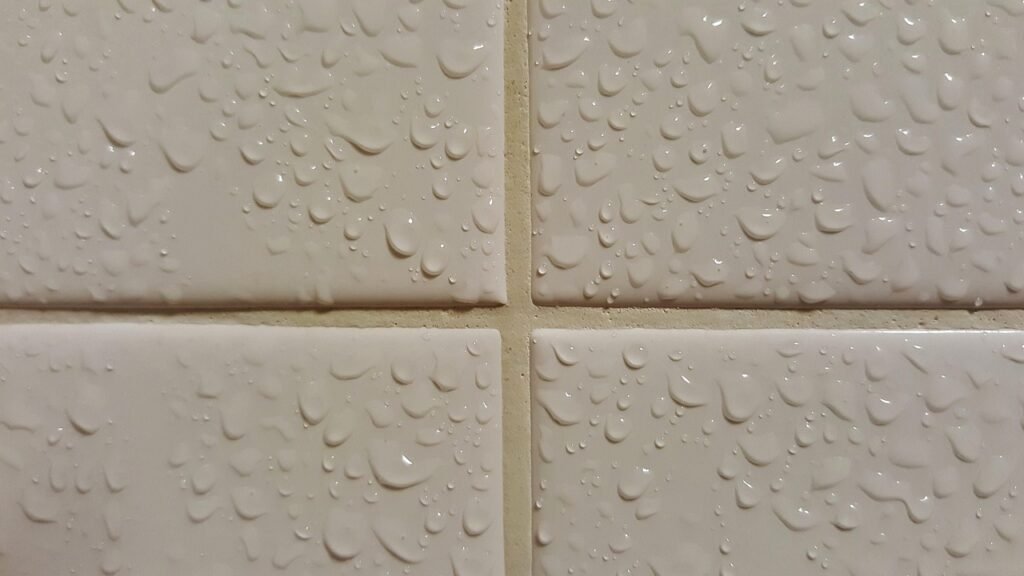
Work out which film you have first. Soap scum is greasy and needs an alkaline degreaser, hard water scale is chalky and needs a mild acid. Using one on the other accomplishes very little, which is why most people conclude their bathroom cleaner is useless when the chemistry was simply pointed the wrong way.
Scum and scale need opposite chemistry
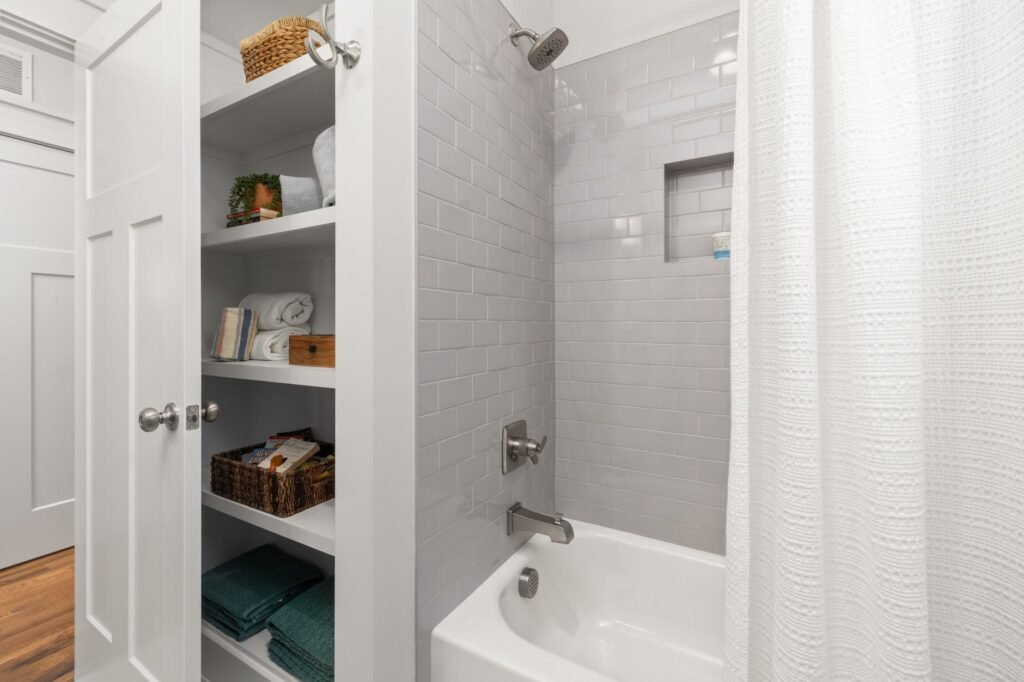
Two different films build up on a shower wall and they look similar from a distance. Soap scum forms when the fatty acids in bar soap meet calcium and magnesium in hard water, producing an insoluble salt that feels waxy under a fingernail and often looks slightly yellow. Limescale is mineral left behind when water evaporates, it feels chalky and gritty, and it usually shows up as white crust near the shower head and along the bottom track.
Scum is a fat, so it dissolves in alkaline cleaners, the same family as a kitchen degreaser or a paste of baking soda. Scale is a mineral carbonate, so it dissolves in acid, which is why descaling products list citric or acetic or phosphoric acid on the label. Run a finger over the wall before you buy anything. Waxy means alkaline, gritty means acid, and most real bathrooms have both in different places.
The one thing never to do is combine products hoping to cover both. An acid and an alkali simply neutralize each other into salty water, and worse, chlorine bleach mixed with an acidic descaler releases chlorine gas. One product at a time, rinsed fully in between.
Grout is the soft part, not the tile
A glazed ceramic or porcelain tile is essentially fired glass on its face. It shrugs off almost everything short of hydrofluoric acid and heavy abrasives. The grout between the tiles is the vulnerable material, because standard cement grout is porous and alkaline, and acid dissolves the cement binder a little every time it is used.
That explains the common complaint that grout lines get wider, rougher and dirtier the harder somebody cleans them. Weekly acid scrubbing eats the surface of the grout, leaving more pore structure exposed, which then holds more grime. If you need acid for scale, keep it on the tile face, rinse promptly, and use an alkaline product or an oxygen bleach paste for the grout lines themselves.
The order that avoids streaks
- Ventilate and warm the room. Run hot water for a minute first. Warm surfaces let cleaners work faster, and an open window or fan matters with any strong product.
- Dry brush or rinse loose debris off the walls and floor so the cleaner is working on film rather than hair and grit.
- Apply the right product and wait. Dwell time is doing the work, not your arm. The label will state how long, and a wall that dries out mid job has to be reapplied.
- Agitate with a nylon brush, soft for stone, firmer for glazed porcelain. Work grout lines along their length rather than across.
- Rinse from the top down with plenty of clean water, since leftover cleaner is what leaves a dull film once it dries.
- Squeegee or towel the walls dry. Removing the water is what stops the next layer forming.
Matching the film to the fix
| What you see | What it is | What removes it | What makes it worse |
|---|---|---|---|
| Waxy yellow film | Soap scum, a fatty salt | Alkaline degreaser or baking soda paste | Acid, which barely touches fat |
| White chalky crust | Limescale minerals | Mild acid descaler, dwell then rinse | Scraping, which scratches glaze |
| Dark speckles in grout | Mildew in the pore structure | Oxygen bleach paste, long dwell | Acid, which opens the pores further |
| Orange staining | Iron in the water supply | A rust specific remover on ceramic only | Chlorine bleach, which sets it |
| Dull patches on stone | Etching, the surface is eaten away | Professional refinishing | Any further acid contact |
Natural stone changes all the rules
Marble, travertine and limestone are calcium carbonate, which means they are chemically the same material as the limescale you are trying to remove. An acid descaler cannot tell the difference. It dissolves the stone surface right along with the deposit and leaves a permanently dull etch mark that no amount of further cleaning fixes, because the polish itself is gone.
Stone needs a cleaner labeled pH neutral and safe for natural stone, plus a soft brush and periodic resealing. Slate and granite are more forgiving than marble but still benefit from the same approach. When in doubt, test any product on a hidden tile near the floor or behind the door and wait a day before committing to a whole wall.