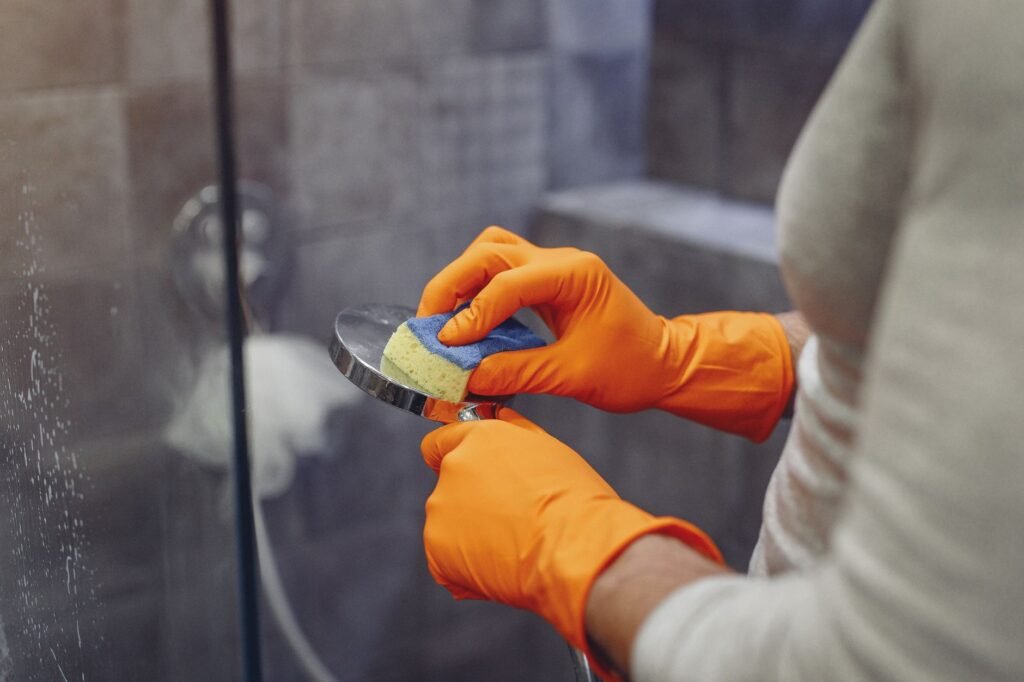
To clean a shower head, soak it in a mix of equal parts white vinegar and water for about 30 minutes, then scrub the spray face with a soft toothbrush and rinse. If the head won’t come off, tie a bag of the same mixture around it. Rub the rubber nozzles with your finger to pop out stubborn flakes.
What is clogging the nozzles
The chalky white or tan crust around the holes is mineral scale. Hard water carries dissolved minerals, mostly calcium and magnesium, and each time water evaporates on the spray face it leaves a little behind. Over months the deposits narrow the holes until the spray goes sideways, splits into needles or slows to a weak drizzle.
Soap scum and the occasional pink or black film can build up on the outside too. Vinegar works on scale because it is a mild acid that dissolves the minerals, which is why a soak beats scrubbing alone.
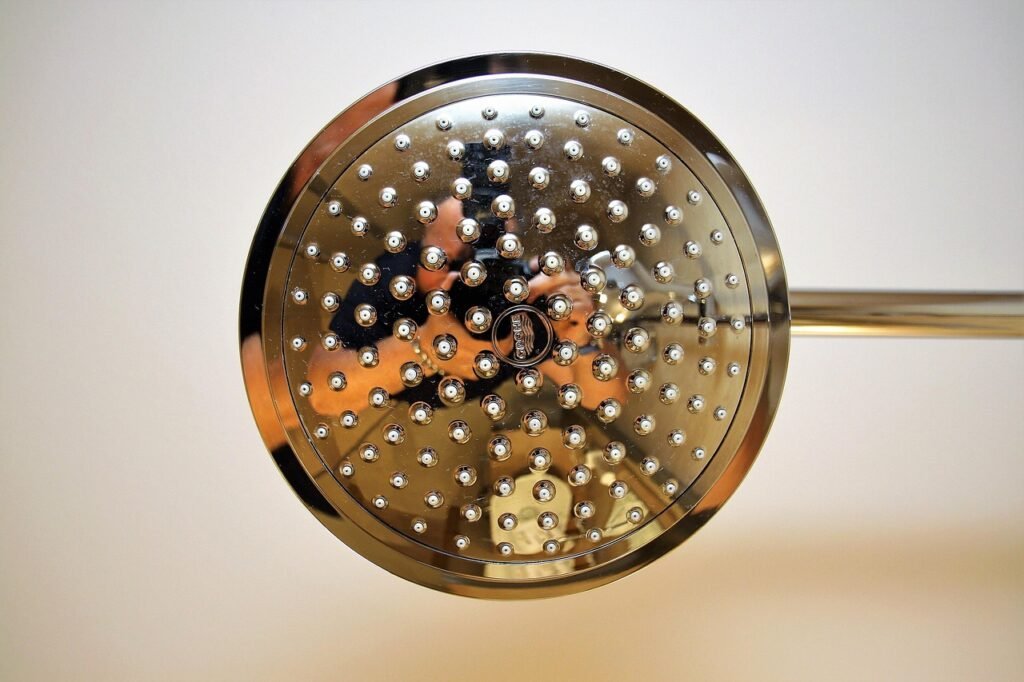
Soaking a removable shower head in vinegar
Taking the head off gives you the most thorough clean and lets you reach the screen inside the connection.
- Wrap a cloth around the shower arm and hold it steady so it doesn’t twist inside the wall.
- Turn the nut where the head meets the arm counterclockwise to loosen it. Use an adjustable wrench with a rag over the jaws if it’s too tight by hand.
- Rub a thumb over the rubber nozzles to knock out loose scale.
- Fill a bowl with a 50/50 mix of distilled white vinegar and water, enough to cover the face of the head.
- Soak for 30 minutes, then gently scrub the spray face with a soft cloth or old toothbrush. Repeat the soak if deposits remain.
- Rinse well under running water and dry with a soft cloth.
Delta’s shower head cleaning guide gives that same 50/50 ratio and 30 minute soak, and warns against abrasive cleaners, bleach and harsh acids, which can damage the finish and may void the warranty. Use white vinegar, not apple cider or other kinds.
The bag method for a head you cannot remove
Fixed heads and old fittings that refuse to budge can be cleaned in place. Pour the vinegar and water mix into a sturdy plastic bag, lift it up around the head until the nozzles are submerged, and tie it to the shower arm with a rubber band or a twist tie. Leave it for the same 30 minutes, take the bag off, scrub the face, and run the shower on hot for a minute to flush out loosened grit.
If you have a specialty finish such as brushed nickel, oil rubbed bronze or matte black, check the maker’s care page before you soak. Finish tolerance varies between brands, and a short, diluted soak is the safer place to start.
The screen hidden inside the connecting nut
When a clean head still sprays weakly, look inside the nut you unscrewed. Many heads have a small rubber washer and a fine mesh screen there, and grit from the pipes collects on it. Pry the screen out carefully with a small flat tool, rinse it and brush it under the tap, and let it sit in the vinegar mix if scale has formed on the mesh. Don’t lose either piece, and make sure both go back in the same way.
Before reattaching, brush old debris off the threads on the shower arm. Wrap fresh plumber’s tape clockwise around the threads if the head needs it, then screw the head back on hand tight and run the water to check for drips.
Keeping hard water scale from building back up
| Habit | How often | Why |
|---|---|---|
| Rub the rubber nozzles with a finger | Whenever you notice stray jets | Pops out scale before it hardens |
| Wipe the face with a damp, nonabrasive sponge | During your regular bathroom clean | Removes film while it is soft |
| Buff the head dry | After cleaning | Less water left to evaporate and leave spots |
| Repeat the vinegar soak | When the spray starts to weaken | Dissolves scale in the holes |
If your whole bathroom fights scale, a water test from your local utility or a home test kit will tell you how hard your water is and whether a softener or filter makes sense for your house.
Frequently asked questions
Can I use bleach or a scale remover on a shower head?
Delta advises against bleach, harsh acids and abrasive cleaners on its shower heads because they can damage the finish. Commercial scale removers vary, so read the shower head maker's care instructions before using one. Diluted white vinegar is the gentle option most manufacturers accept.
Why is my shower pressure still low after cleaning the head?
Check the screen and washer inside the connecting nut first, since trapped grit there restricts flow. Many heads also contain a flow restrictor that limits water use by design. If other fixtures in the house are weak too, the cause is likely in the plumbing or supply, not the shower head.
Is it safe to leave a shower head soaking in vinegar overnight?
It is safer not to. Long acid soaks can dull some finishes and are hard on rubber parts. Delta's guide uses repeated 30 minute soaks with gentle scrubbing in between, which clears most buildup. If your head has a colored or brushed finish, follow its maker's cleaning guide.
How do you clean a shower head without vinegar?
Mild soap, water and your fingers handle light buildup. Delta says a damp, non-abrasive sponge with water or a little mild soap is fine for regular cleaning, and rubbing the flexible rubber nozzles pops out loose scale. For crust that will not budge, check the maker's care guide before trying another descaler.
How do you replace a shower head?
Unscrew the old head counterclockwise while steadying the shower arm, and brush old tape and scale off the threads. Use plumber's tape only if the new head's instructions ask for it. Delta says most of its heads need none and should be turned on clockwise by hand until secure, without pliers or a wrench.