
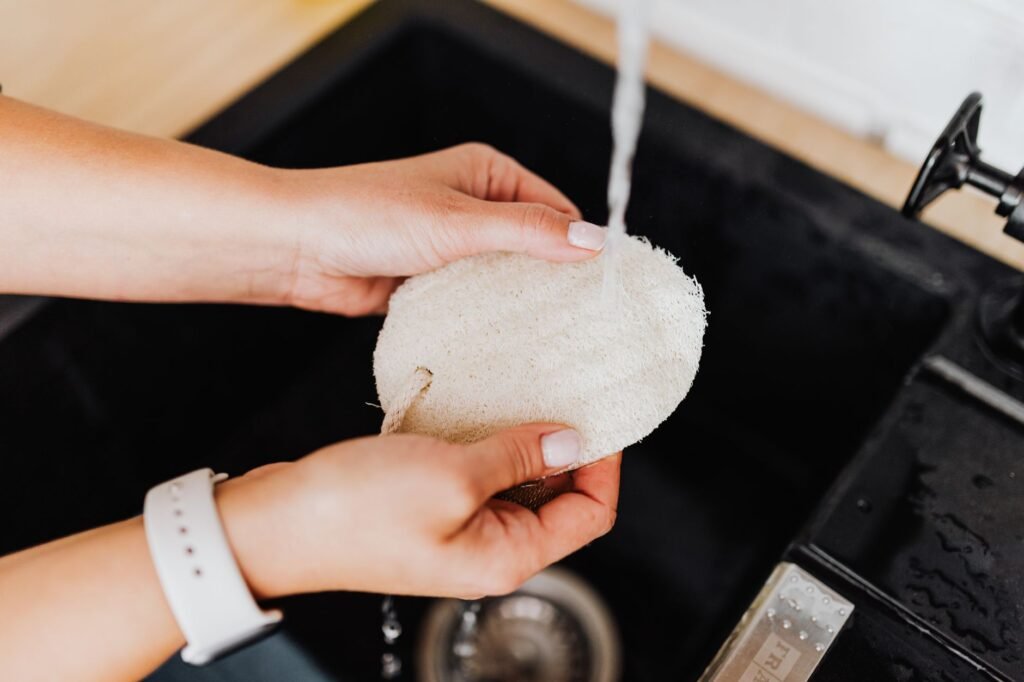
Rinse your loofah well after every shower, squeeze it out, and hang it somewhere it can dry fully, ideally outside the shower. Once a week, soak it in a diluted bleach solution for about 5 minutes and rinse thoroughly, or run it through the dishwasher. That is the routine Cleveland Clinic recommends.
Why a damp loofah turns into a home for bacteria
A loofah works because its tangle of fibers or mesh grabs dead skin as you scrub. That same tangle holds on to those skin cells, soap and water long after you step out. In a warm bathroom it may never dry out between showers.
This has been studied. A 1994 paper in the Journal of Clinical Microbiology described loofah sponges as reservoirs and vehicles for bacteria that can be passed to human skin. You don’t need to panic about your shower, but the finding explains why drying and regular cleaning count for more than how hard you scrub.
Natural loofahs are the dried insides of a gourd, full of plant fiber. Plastic poufs are nylon mesh. The plastic kind dries faster, but both collect the same film.
The rinse and dry routine after every shower
- Rinse the loofah under running water until no soap suds come out when you squeeze it.
- Squeeze and shake out as much water as you can. A few firm shakes remove more than you might expect.
- Hang it by its cord on a hook where air moves, such as a towel bar outside the shower or a hook near a window.
- Keep it off the shower floor and out of the corner caddy, where water pools around it.
Cleveland Clinic points out that the shower itself is probably not the best place to leave it, because the air stays humid for so long. A spot by the door or a fan dries it far faster.
Weekly deep clean for natural gourds and plastic poufs
Once a week, give it a proper clean. The two options Cleveland Clinic lists are a short bleach soak and the dishwasher.
| Method | Natural loofah | Plastic pouf | Notes |
|---|---|---|---|
| Diluted bleach soak, about 5 minutes | Yes | Yes | Dilute as the bleach label directs, rinse until no smell remains |
| Dishwasher | Yes | Yes, keep it clear of the heating element | Run it alone or with a load and let it dry fully afterward |
| Soap and hot tap water only | Removes soap | Removes soap | Fine between deep cleans, not a replacement for them |
Wear gloves for the bleach soak, open a window, and never mix bleach with other cleaners. Rinse very thoroughly, since leftover bleach on a sponge you rub on your skin can irritate it. After either method, dry the loofah completely before using it again.
Signs a loofah has done its time
Cleaning doesn’t make a loofah last forever. Cleveland Clinic suggests replacing a natural loofah every three to four weeks, while plastic ones can go about two months.
Throw it out sooner if you see any mold on it or if it smells mildewy or musty even after a wash. Other hints include a natural loofah that stays soggy and soft instead of springing back, fibers breaking off in your hand, or a plastic pouf whose mesh has matted into a flat clump.
Put a reminder on your phone or write the date on the tag when you open a new one. Most people keep a loofah far longer than they realize.
Parts of the body to scrub with something else
Cleveland Clinic advises against using a loofah on your face or genital area. It also suggests skipping it for a couple of days after you shave, since bacteria can enter the skin through tiny nicks or cuts. A soft washcloth, which you can throw in the laundry after each use, is the easier option for those areas.
Stop using a loofah on any patch of skin that is broken, rashy or irritated. If a red, sore or bumpy area doesn’t settle after you stop, or it spreads, get it checked by a doctor.
Frequently asked questions
Can you put a loofah in the washing machine?
The recommended weekly options are a short soak in diluted bleach or a run through the dishwasher. A washing machine can tangle the cord and trap the loofah in wet laundry. If you try it, put it in a mesh laundry bag and dry it completely afterward, preferably in open air.
Is a natural loofah or a plastic pouf more hygienic?
Neither is free of bacteria. Plastic poufs dry faster and last longer, about two months versus three to four weeks for a natural loofah under Cleveland Clinic guidance. A natural loofah is plant fiber and compostable. Either one stays cleaner if you rinse, hang and deep clean it regularly.
Can you boil a natural loofah to clean it?
Boiling is sometimes suggested for natural gourd loofahs, but it is not one of the methods Cleveland Clinic lists. The weekly diluted bleach soak or a dishwasher cycle is the better choice. For a plastic pouf, follow any care directions on its packaging instead.
How do you use shower gel without a loofah?
Use your hands or a soft washcloth. Squeeze a small amount of gel into wet palms or onto a damp cloth, rub it into a lather, wash from the neck down and rinse well. Unlike a loofah, a washcloth can go into the laundry after each use, which keeps it cleaner between showers.
What is a loofah?
A natural loofah is the dried, fibrous inside of a luffa gourd, the fruit of an annual vine in the cucumber family. NC State Extension describes peeling the mature gourd and removing its seeds to leave the scrubbing sponge. Many plastic shower poufs are also called loofahs, but they are nylon mesh.