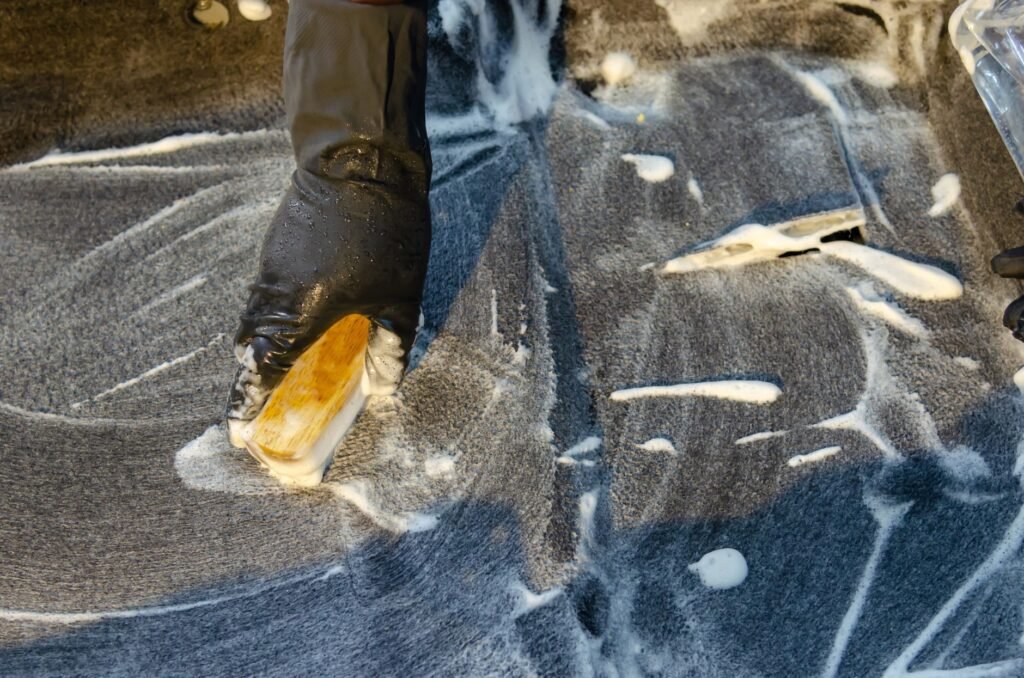
For everyday dirt, scrub grout with a paste of baking soda and water using a stiff nylon brush, then rinse and dry. Save diluted chlorine bleach for mildew in showers, never mix it with other cleaners, and seal the grout once it is clean so the next round is easier.
Match the grout cleaner to the kind of dirt
The best tile grout cleaner is the mildest one that lifts the stain in front of you. Grout is porous, so harsh products soak in along with the dirt, and repeated heavy scrubbing slowly wears it down. Start at the gentle end of this list and move down only if the stain stays put.
| What you see | Start with | Notes |
|---|---|---|
| Gray film from foot traffic or cooking | Baking soda paste | Mild abrasion, easy to rinse |
| Greasy kitchen backsplash grout | Warm water with dish soap, then baking soda | Cut the grease first or the paste smears |
| Deep all over discoloration | Oxygen bleach powder mixed per its label | Check the label for colored grout |
| Black or pink spots in a shower | Diluted chlorine bleach | Ventilate, gloves on, test a hidden spot |
| Stains that survive all of the above | Grout colorant or regrouting | Cleaning cannot fix stained or crumbling grout |
If your tile is natural stone such as marble, read the stone or sealer maker’s care guidance before using any bleach or acidic product, since stone surfaces can be more sensitive than glazed ceramic.
The baking soda routine for dingy floor and backsplash grout
- Sweep or vacuum floors so loose grit does not turn into sandpaper under the brush.
- Stir baking soda with a little warm water until it forms a spreadable paste.
- Work the paste into the grout lines using a narrow grout brush or a worn toothbrush.
- Let it sit for several minutes, then scrub along each line with firm, short strokes.
- Wipe with a damp microfiber cloth, rinsing the cloth often so you are not spreading dirt back in.
- Dry the area with a towel so water does not wick back into the clean grout.
Skip wire brushes. They can scratch glazed tile and gouge soft grout, which leaves rough spots that trap even more dirt next time.
Mildew spots in shower grout need a bleach solution
Dark speckles in a shower are usually mold or mildew, and baking soda will only move them around. The instructions on the Clorox grout cleaning page call for diluting 1/3 cup of its disinfecting bleach with 1 gallon of water, leaving that solution on the stained grout for 10 minutes, then scrubbing with a nylon brush and rinsing thoroughly. Keep the bathroom ventilated with the window open or the vent fan running the whole time, and wear gloves.
Never combine bleach with ammonia, vinegar or other cleaners. The EPA warns that mixing chlorine bleach with products containing ammonia can produce toxic fumes. Rinse away one product completely before trying another, and on colored grout, test the solution somewhere hidden first.
Grout that stays dark after a good scrub
Sometimes the stain is not on the surface. Old grout that was never sealed can absorb color deep into its pores, and no cleaner will pull it all back out. In that case a grout colorant, which coats the lines, or regrouting the worst sections will do more than another round of scrubbing.
Check for cracks and crumbling while you are down there. Gaps in shower grout let water behind the tile, and mold that keeps coming back in the same spot can be a sign of moisture underneath. The EPA says you can usually handle a moldy area smaller than about 10 square feet yourself, while larger areas or water damage call for its remediation guidance or an experienced contractor.
Sealing clean grout so it stays that way
Once the grout is clean and fully dry, a penetrating grout sealer makes it much harder for dirt and water to soak in. Clorox notes that sealing helps prevent mold by creating a protective barrier. Follow the sealer’s label for drying time before the shower or floor goes back into use, and for how often it should be reapplied.
Between deep cleans, a quick weekly wipe does most of the work. Clorox suggests cleaning grout every one to two weeks, and squeegeeing shower walls after use keeps moisture from sitting in the lines long enough for mildew to take hold.
Frequently asked questions
Can I use vinegar to clean grout?
Vinegar is a common home remedy, but it is acidic, so check your grout and tile maker's guidance first, especially on natural stone. Never use it alongside bleach, since mixing the two can release dangerous fumes. A baking soda paste is the safer first step for most grout.
Is a steam cleaner good for grout?
Many people use steam cleaners with a narrow grout nozzle to loosen dirt without chemicals. Check the tile and grout maker's care instructions before you start, and wipe up the loosened grime right away. Steam alone may not remove old stains that have soaked deep into unsealed grout.
How do I keep white grout from turning gray again?
Seal it after a deep clean, wipe up spills quickly, and use a pH neutral floor cleaner rather than dirty mop water. Rinsing the mop often helps more than people expect, since gray grout is usually dirt from the floor that settled into the lines.
What is grout?
Grout is the material packed into the joints between tiles. Cement-based grout is porous, which is why it soaks up dirt and benefits from a sealer. Epoxy grout is another option, and the grout maker LATICRETE describes it as nonporous and highly stain resistant, with no need for periodic sealing.
How do you clean floor tile grout without scrubbing?
You can cut the scrubbing down, though rarely to zero. Work an oxygen bleach solution, mixed as its label directs, into the grout lines and let it sit so it loosens the dirt. OxiClean's directions allow 5 to 30 minutes before a cool water rinse. Deeply stained grout will still need a brush.