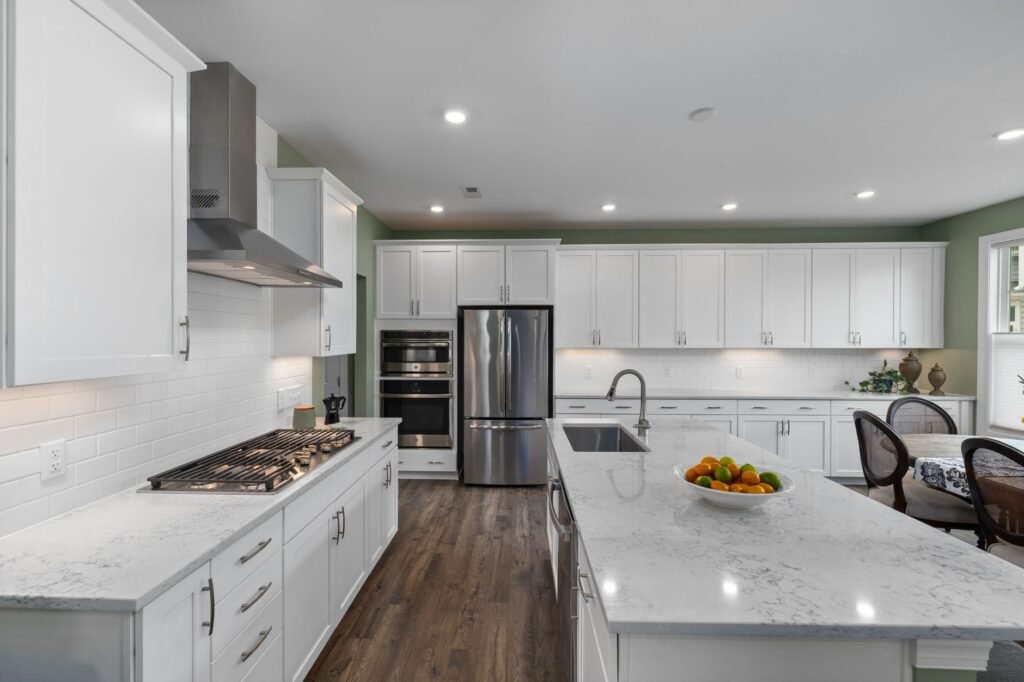
Deep clean a kitchen from the top down, starting with the range hood and high surfaces and finishing with the floor, so dust and crumbs fall onto areas you have not cleaned yet. Empty each appliance before cleaning it, and plan a few hours or split the job across a weekend.
Work through the kitchen in this order
Gravity decides the sequence. Anything you scrub near the ceiling will drop grime on the counters, and anything on the counters ends up on the floor. Gather dish soap, baking soda, microfiber cloths, a nonscratch scrubber and a degreaser before you start so you are not hunting for supplies with wet hands.
- Light fixtures, the tops of cabinets and the range hood.
- Cabinet fronts, handles and the backsplash.
- The refrigerator, inside and out.
- The oven, stovetop and microwave.
- Small appliances, then the counters themselves.
- The dishwasher, the sink and the drain.
- Baseboards, then sweeping and mopping the floor.
Cabinet boxes and doors each have their own finish quirks, so give them a gentle wipe here and a separate session if they are coated in old grease.
Degreasing the range hood filter and stovetop
The hood filter catches airborne grease every time you cook, and a clogged one pulls less smoke out of the room. Most metal mesh filters pop out with a tab or latch. Soak it in the hottest tap water you can get with a good squeeze of dish soap and a spoonful of baking soda, then brush it gently and rinse. Your range manual will say whether the filter can go in the dishwasher and how charcoal filters, which are replaced rather than washed, fit in.
While the filter soaks, lift off burner grates and caps and let them soak too. Wipe the cooktop with warm soapy water, then work baked on spots with a baking soda paste and a nonscratch pad. Glass and ceramic cooktops can scratch, so check the manual before reaching for a scraper.
Emptying and resetting the refrigerator
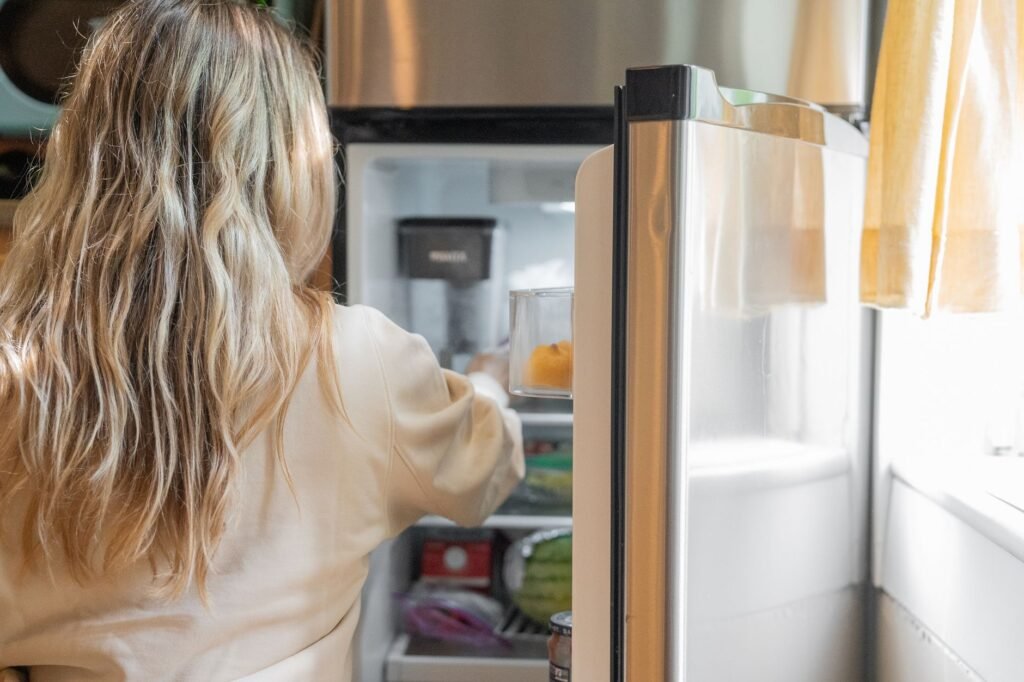
Take everything out, toss anything expired or forgotten, and keep perishables in a cooler while you work. Pull out removable shelves and drawers and wash them in warm soapy water, letting cold glass warm up first so it does not crack under hot water. Wipe the interior walls and door seals, and dry everything before restocking.
Before you close the door, check the temperature. The FDA recommends keeping the refrigerator at or below 40 degrees F and the freezer at 0 degrees F, and an inexpensive appliance thermometer gives you the surest check on both numbers. On many models the dial inside sets cooling power rather than showing an exact temperature.
Inside the oven, microwave and dishwasher
For the microwave, fill a microwave safe bowl with water and a few lemon slices and heat it until the window steams up. Let the steam work behind the shut door a few minutes before you wipe the softened splatters away. For the oven, follow the manual. If your model has a self cleaning cycle, it will explain how to prepare the oven and what to remove first, and it is a good idea to ventilate the kitchen while the cycle runs. For manual cleaning, a baking soda paste left on the oven floor for several hours loosens most baked on spills.
Many dishwashers have a removable filter at the bottom of the tub that collects food scraps. Your owner’s manual shows how to twist it out and rinse it. Check the spray arms for clogged holes and wipe the door gasket, where gunk tends to collect unnoticed.
Sink, drain and the cloths you clean with
Scrub the sink basin with a baking soda paste, paying attention to the rim around the drain and the base of the faucet. Clear the drain stopper or basket of debris. If you have a garbage disposal, never put your hand inside it, and use the long handled brush or tongs instead.
Finish the counters, wipe the baseboards, then sweep and mop the floor last. Once the room is done, wash or replace the cloths and sponges you used, since they now hold the dirt you just removed. This is also a good moment to tackle smaller projects, such as sorting drawers or sharpening knives, while the room is empty and clean.
Frequently asked questions
How often should a kitchen be deep cleaned?
There is no official schedule. Many households do a full top to bottom clean a few times a year and handle counters, the sink and spills daily. Cook often, fry a lot or have pets, and you will likely need it more often. Let visible grease and odors be your signal.
What is the fastest way to clean greasy cabinet tops?
Lay a damp cloth with warm water and dish soap over the sticky area for a few minutes to soften the grease, then wipe it off and dry. Some people line the tops of cabinets with paper afterward so the next cleaning is a matter of swapping the liner.
Can baking soda and vinegar clean the whole kitchen?
They handle a lot of light cleaning, but they are not disinfectants and they cancel each other out when mixed. Use soap and water for grease, baking soda for gentle scrubbing, and a registered disinfectant on surfaces that touched raw meat, following its label directions.
How should you clean kitchen counters?
Wash them with hot, soapy water, which the CDC recommends for countertops after preparing each food item, then rinse and wipe them dry. Natural stone, quartz and laminate have their own care rules, so read your countertop's care guide before reaching for anything stronger than dish soap.
How do you clean and sanitize a kitchen?
Clean first, then sanitize. Wash counters, handles and the sink with hot, soapy water to lift grease and food, since the EPA advises pre-cleaning visibly dirty surfaces. Then apply a registered sanitizer or disinfectant to anything that touched raw meat, keeping the surface wet for the full contact time listed on the label.