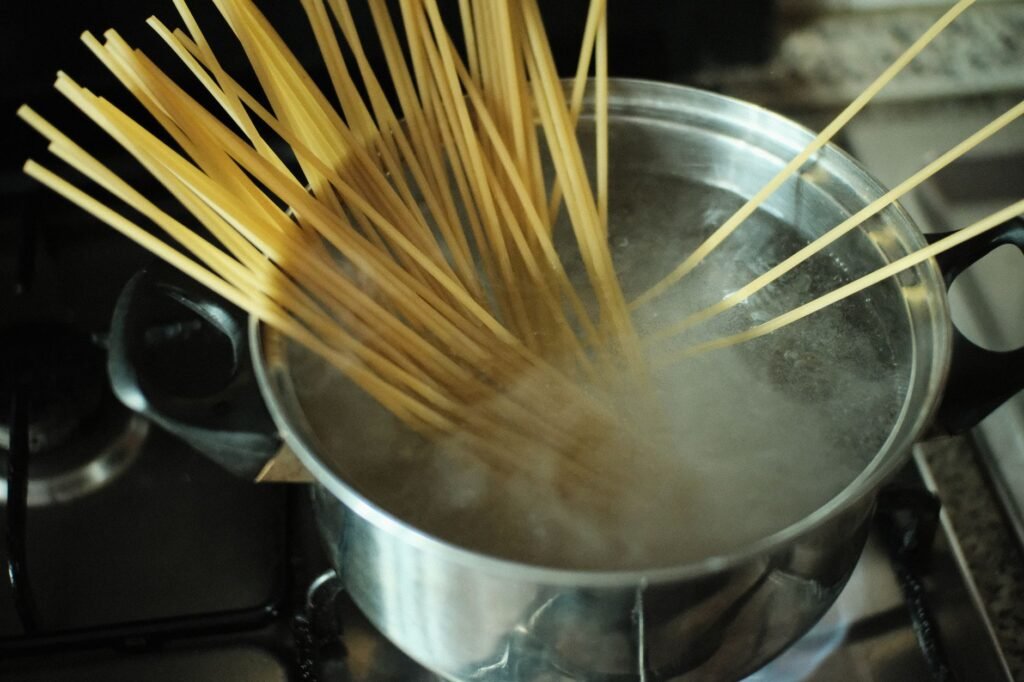
Bring a large pot of water to a rolling boil, salt it, add the pasta and stir, then cook it uncovered until it is tender but still slightly firm when you bite it. Start tasting a minute or two before the package time, save a mug of the cooking water, and drain right away.
How much water and salt a pound of pasta needs
Plenty of water keeps the temperature from crashing when the pasta goes in and gives the pieces room to move so they do not clump. The cooking directions Ronzoni prints for its dried pasta scale like this.
| Servings | Dried pasta | Water | Salt |
|---|---|---|---|
| 2 | 1/4 box (1/4 pound) | 1 quart | 1 teaspoon |
| 4 | 1/2 box (1/2 pound) | 2 quarts | 2 teaspoons |
| 8 | 1 box (1 pound) | 4 quarts | 1 tablespoon |
The salt is there for flavor, and the maker lists it as optional. Pasta absorbs some of the water as it cooks, so seasoning the pot is the only chance to season the noodle itself.
Boiling dried pasta step by step
- Fill a pot that holds the water with a few inches to spare, cover it, and bring it to a rapid boil over high heat.
- Add the salt, then the pasta. Stir right away, since the first minute is when pieces stick together.
- Let the water return to a rapid boil, then take off the lid and adjust the heat so it bubbles steadily without foaming over.
- Stir every couple of minutes, reaching the bottom of the pot where pieces like to settle.
- Scoop out a mug of the starchy cooking water before draining if you plan to sauce the pasta.
- Drain into a colander as soon as the pasta is done and get it into the sauce quickly.
Long strands that do not fit the pot will soften at the bottom within a minute or so, and you can then press them under with a spoon rather than breaking them.
Testing for al dente instead of trusting the clock
Package times are a range, not an order. Ronzoni’s elbows, for example, list 8 minutes for al dente, 9 for firm and 10 for tender, and other shapes and brands will differ. Your stove, your pot and your altitude all nudge the real time a little.
Fish out a piece a minute or two before the earliest time and bite it. Al dente pasta is cooked through but still has a slight resistance in the center. If you plan to finish the pasta in a hot sauce for a minute or two, pull it at the firmer end of the range, because it keeps cooking in the pan. For baked dishes like lasagna or a casserole, undercook it a little more for the same reason.
Rinsing, oil in the water, and other habits to drop
Do not rinse pasta meant to be served hot. Ronzoni recommends rinsing only for cold pasta salads, where you want to stop the cooking, and notes that rinsing hot pasta cools it down. The starch left on the surface of unrinsed pasta is what helps sauce cling to it.
Oil in the cooking water tends to float on top and does little to stop sticking, which is handled by enough water and early stirring. Oil earns its place after cooking. If you are storing cooked pasta without sauce for later, the maker suggests tossing it with a small amount of olive oil, covering it and refrigerating it.
Cooking fresh or homemade pasta
Fresh pasta, whether bought refrigerated or made at home from flour and eggs rolled thin and cut, cooks far faster than dried because it has not been dried out. Follow the package or recipe time and start tasting early, since thin fresh noodles can go from underdone to soft quickly.
Use the same generous pot of salted, boiling water, but keep the boil a touch gentler so delicate ribbons and filled shapes like ravioli do not tear. Lift filled pasta out with a slotted spoon rather than dumping it into a colander, and sauce it right away.
Frequently asked questions
Should I cover the pot while pasta cooks?
Cover the pot while the water heats, since that gets it to a boil faster. Once the pasta is in, cook it uncovered, as the maker's directions say. A lid traps foam and can make the pot boil over, and it also makes stirring and checking the pasta harder.
Why does my pasta stick together?
Sticking usually comes from too little water, water that was not at a full boil when the pasta went in, or skipping the stir in the first minute or two. Use about 4 quarts of water per pound, wait for a rolling boil, and stir right after adding the pasta.
How much dried pasta should I cook per person?
The Ronzoni directions treat a 1 pound box as 8 servings, which works out to about 2 ounces of dried pasta per serving. Hungry eaters or pasta served as the whole meal may call for more, so check the serving size on your own package.
How do you cook pasta in the microwave?
Boil the water first, then cook short pasta in it uncovered. Ronzoni's directions heat the usual stovetop amount of water in a 3-quart microwave-safe bowl on high until boiling, then cook one serving on high for 7 to 9 minutes, until tender. The company says long strands such as spaghetti do not cook well.
How long does angel hair pasta take to cook?
Only a few minutes. Ronzoni's angel hair directions list 2 minutes for al dente, 3 for firm and 4 for tender, compared with 8 minutes for al dente elbows. Stir it as soon as it goes into the boiling water so the thin strands do not clump, start tasting early and drain as soon as it is done.