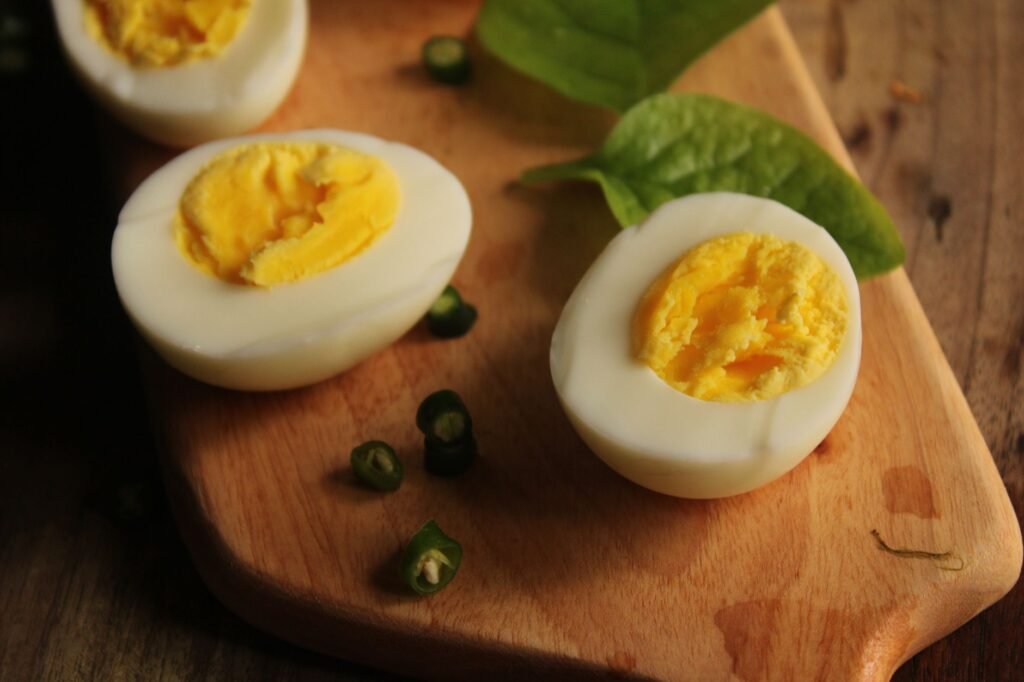
For firm yolks, cover large eggs with cold water by an inch, bring it just to a boil, take the pan off the heat, cover it and let the eggs stand about 12 minutes. For a jammy yolk, lower eggs into already boiling water, turn the heat to medium-low and cook about 7 1/2 minutes, then chill in ice water.
Egg timing chart by yolk doneness
The times below come from the American Egg Board’s published methods, and each one ends with a trip into cold water to stop the cooking.
| Yolk you want | How to start | Time |
|---|---|---|
| Jammy, soft set center | Lower eggs into boiling water, reduce to medium-low | 7 1/2 minutes, or 7 minutes if only 3 or 4 eggs are in the pot |
| Firm, steamed | Eggs into a covered pan over 1/2 to 1 inch of boiling water | 12 minutes for large, 13 for extra large |
| Firm, hot water stand | Cold water start, off the heat once it boils, covered | 9 minutes medium, 12 large, 15 extra large |
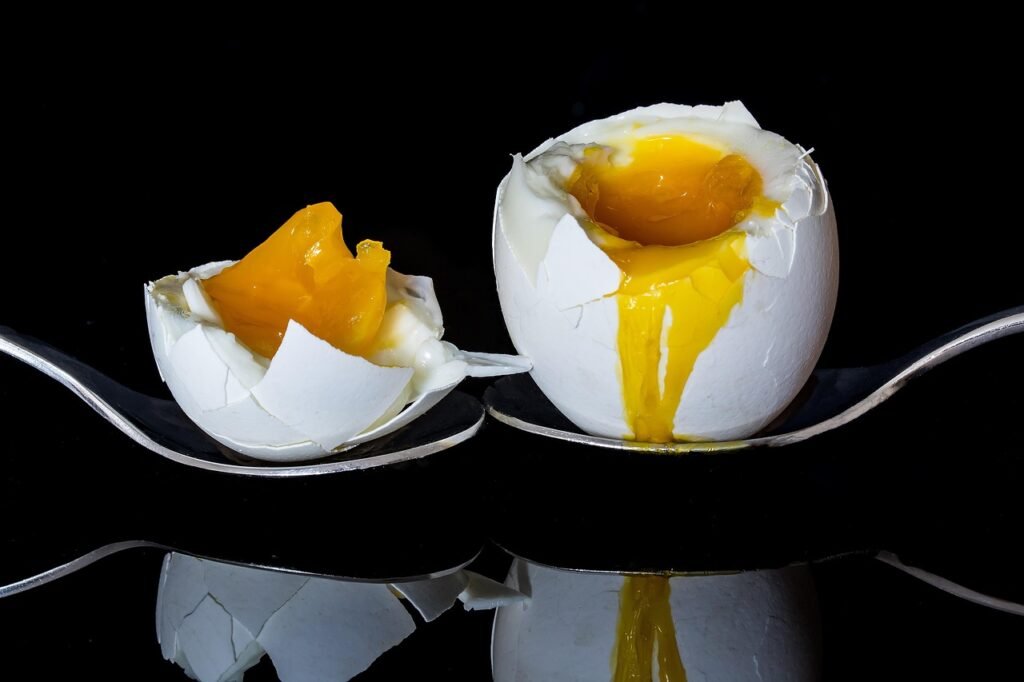
| Runny | Lower eggs into boiling water | Shorter than the jammy time, so crack a test egg |
Egg size, altitude and how many eggs crowd the pot all shift the result a little. Cook one test egg the first time you try a method in your own kitchen, then adjust the next batch by a minute in either direction.
The cold water start for firm yolks
This is the gentlest route to a fully set egg. The eggs never sit in a rolling boil for long, which keeps the whites tender and cuts down on cracked shells.
- Arrange the eggs in one layer across the bottom of a saucepan.
- Add cold water to cover them by 1 inch.
- Heat over high heat just until the water boils.
- Take the pan off the burner and cover it.
- Let the eggs stand 12 minutes for large eggs, 9 for medium or 15 for extra large.
- Drain the eggs and chill them under cold running water or in an ice water bath, then refrigerate.
Dropping eggs into boiling water for a jammy yolk
Starting with boiling water gives you tighter control over timing, which is what a soft center needs. Bring a large pot of water to a boil, lower the eggs in gently with a spoon so they do not crack on the bottom, then reduce the heat to medium-low and start your timer. The Egg Board’s jammy recipe calls for 7 1/2 minutes, trimmed to 7 minutes when you cook only 3 or 4 eggs.
Have a bowl of ice water ready before the timer goes off. Move the eggs into it right away and leave them about 5 minutes. Skipping the ice bath lets leftover heat keep firming the yolk.
Peeling boiled eggs without tearing the white
Very fresh eggs are the hardest to peel cleanly. The Egg Board suggests buying eggs 7 to 10 days before you plan to cook them, which gives the inner membranes time to separate from the shell. Chilling the eggs quickly after cooking helps too, since the egg contracts slightly away from the shell.
To peel, tap the egg all over on the counter until the shell is crackled, roll it gently between your palms, and start at the wide end where the air pocket sits. Holding it under cold running water helps the shell slip off in larger pieces.
Runny yolks, safe storage and who should skip them
A soft or jammy egg is a food safety tradeoff. The Egg Board notes that soft boiled eggs may not get hot enough to be considered food safe, while hard boiled eggs easily pass 160 degrees Fahrenheit inside. Pregnant women, older adults and anyone with a weakened immune system can use pasteurized shell eggs if they want a runny yolk.
If you are cooking for a crowd that includes anyone in those groups, the firm yolk methods above are the simpler choice. Refrigerate cooked eggs promptly once they have cooled. In the shell, hard boiled eggs keep up to one week in the refrigerator. Once peeled, eat them the same day.
Frequently asked questions
Can I steam eggs instead of boiling them?
Yes. The American Egg Board's easy peel method sets eggs in a steamer insert, or directly in the pan, over 1/2 to 1 inch of boiling water with the lid on. Large eggs take 12 minutes and extra large take 13. Drain them under cold running water before peeling.
Should I add salt or vinegar to the water?
It is optional. The American Egg Board's jammy egg recipe adds a splash of white vinegar to the boiling water, and some cooks like salt, but neither replaces good timing and a quick chill. Older eggs and an ice bath do more for easy peeling than anything in the pot.
How can I tell if a boiled egg is done without cracking it?
You cannot judge the yolk reliably from the outside, which is why timing is the dependable method. The first time you use a new pot or a new size of egg, cook one extra as a test, cool it in ice water and cut it open, then adjust the next batch by a minute.
How long are hard boiled eggs good for?
In the shell, hard boiled eggs keep up to one week in the refrigerator, according to the American Egg Board. Refrigerate them promptly once they cool, and store them in their original carton so they don't absorb fridge odors. Once peeled, eat them the same day.