

Freeze the yolks, not the whites. A cooked egg white turns rubbery and weeps water after thawing, because freezing tightens the protein network and squeezes liquid out of it. Cooked yolks have enough fat to survive, and they thaw into a crumbly texture that works well as a topping.
What happens to a cooked white in the freezer
An egg white is close to ninety percent water and almost all of the rest is protein, with essentially no fat. Boiling has already taken those proteins and locked them into a mesh, which is what turns a runny white solid. The mesh is holding the water in place rather than binding it chemically.
Freezing breaks that arrangement. Ice crystals form in the gaps, push the protein strands closer together, and the strands respond by bonding more tightly to each other. When the ice melts there is nowhere for the water to go back to, so it sits in the container as a puddle while the white itself has contracted into something tough and faintly squeaky.
No technique reverses this. Slower freezing, smaller pieces and better packaging all reduce the damage slightly and none of them fix it. The white is the part to eat this week.
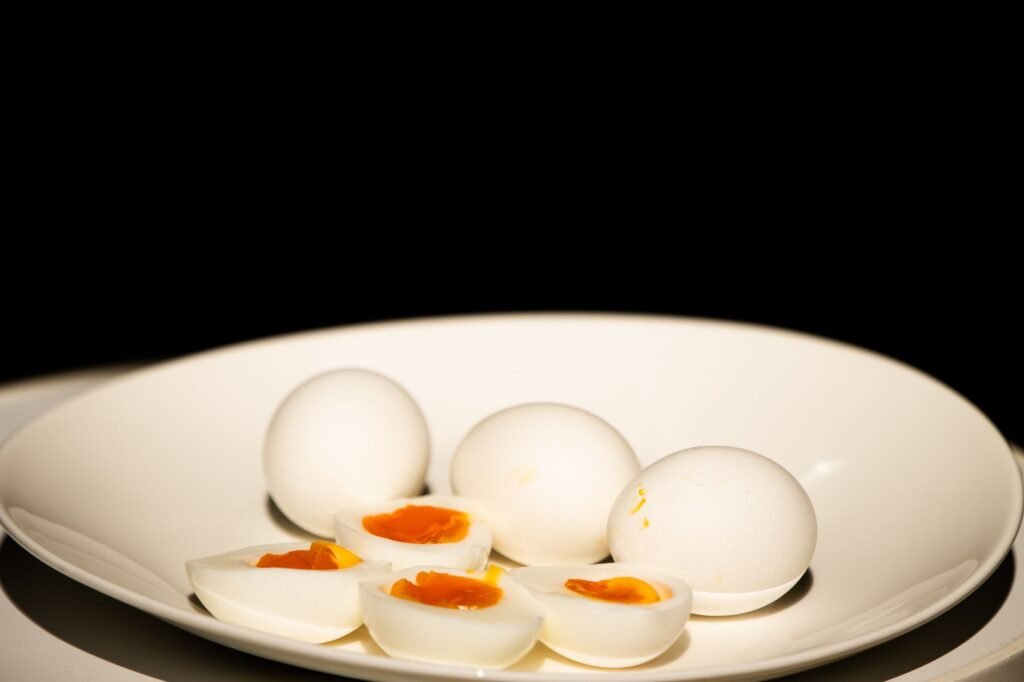
How to freeze cooked yolks
- Cook the eggs until the yolks are fully set, then cool them completely. A soft yolk will not lift out in one piece.
- Peel and halve the eggs, and tip the yolks out into a small container.
- Keep them whole rather than mashing them. Whole yolks hold their texture better and you can always crumble them later.
- Arrange them in a single layer with a little space between, not stacked, so they stay separate.
- Press a piece of parchment directly onto the surface, seal the lid, and label it with the date and the number of yolks.
Yolks come through this well because they are roughly a third fat. Fat does not form crystals the way water does, and it cushions the proteins that are there. The result is drier and more crumbly than a fresh yolk, which happens to be exactly what a garnish wants.
Raw eggs are a different story
Everything above is about eggs that were cooked first. Raw eggs behave almost the opposite way, which surprises people who assume the freezer treats them the same.
| Form | Freezes well | What to know |
|---|---|---|
| Cooked white | No | Rubbery and watery, no fix |
| Cooked yolk | Yes | Crumbly, best grated or mashed |
| Raw white | Yes | Freezes almost perfectly, whips fine later |
| Raw yolk | Only with help | Gels into paste unless you stir in a pinch of salt or sugar first |
| Raw whole egg | Yes | Beat it lightly first, never freeze it in the shell |
Raw whites are the star of that list. They freeze and thaw with almost no change and still whip into meringue, which makes them the easy answer whenever a recipe leaves you with spare whites.
How long yolks keep and what to do with them
Cooked yolks are at their best for about three months. Three months is a quality guide, not a safety limit. Frozen food holds bacteria in check indefinitely, and texture and flavor are what change over time.
The crumbly texture is a feature if you aim it correctly. Grate a frozen yolk over steamed asparagus or a green salad and you get the classic mimosa finish. Thawed and mashed, they go into deviled egg filling, potato salad, tartar sauce or a creamy dressing where nobody can tell they took a detour through the freezer.
Thaw them in the fridge overnight, use them within a day, and do not put them back in the freezer once they have softened.