Yes, and jalapenos are about as low effort as freezing gets: no blanching, no peeling, stems on if you like. The flesh softens, so they stop being good for fresh salsa or nacho rings, but heat and flavor survive well and they chop fine once you thaw them briefly.
Whole, sliced, or roasted: pick before you freeze
All three work, and the choice you make now decides how much work you do later. A frozen pepper is hard to seed and awkward to dice, so the shape it goes in as is more or less the shape you get out.
Whole is the quickest. Wash, dry, bag, done. It suits anyone who mostly makes cooked salsa or throws peppers into a pot of chili, where you can fish them out afterward. Sliced or diced costs you fifteen minutes now and saves you every time after that. Roasted is a different ingredient altogether: char the skins under a broiler, steam them in a covered bowl, slip the skins off, and freeze the soft smoky flesh for sauces.
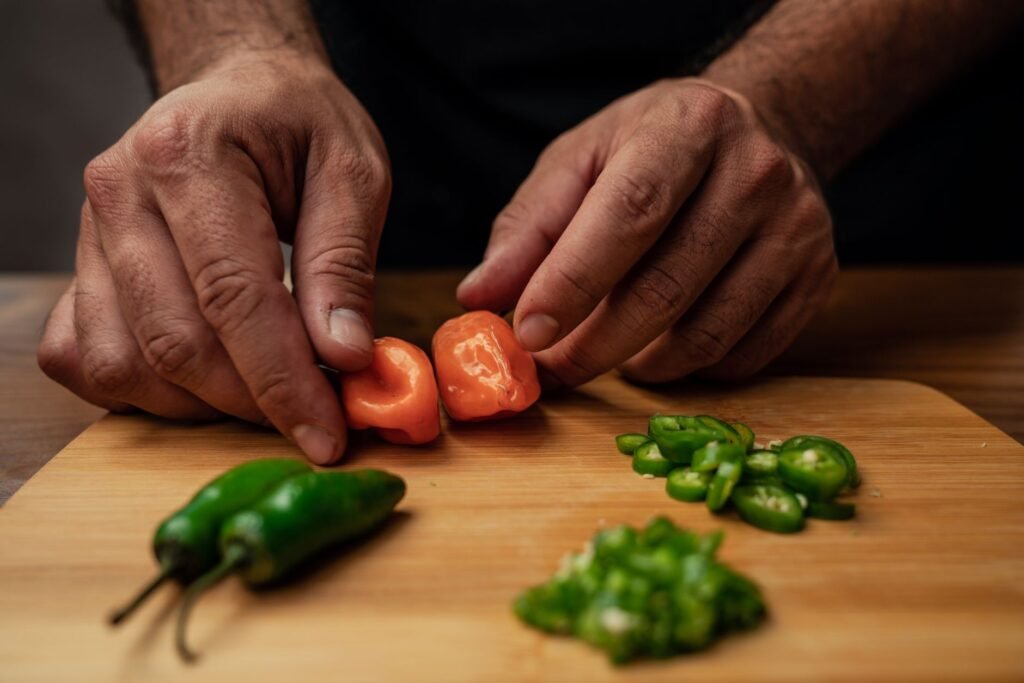
Wear gloves for anything involving cutting, especially a large batch. Capsaicin is an oil and plain water does not remove it from your fingers, which is a lesson that usually gets learned by rubbing an eye two hours later.
The five minute method for a bag of peppers
- Wash the peppers and dry each one properly. Any surface water becomes ice that glues them into a block.
- Decide on whole or cut. If you want mild peppers, strip the pale inner membrane now, since that is where most of the heat sits and it is far easier to reach while the pepper is fresh.
- For rings or dice, spread the pieces on a lined tray and freeze them for an hour so they stay separate.
- Pack them into a freezer bag and squeeze the air out, or use a rigid tub if you want to avoid the smell spreading.
- Label with the date and the heat level if you have mixed mild and fiery peppers, because they all look the same frozen.
Does freezing change the heat?
Capsaicin does not break down in a freezer. It is a sturdy molecule, which is also why cooking, drying and pickling all leave chili heat largely intact. A pepper that was fierce in September will still be fierce in March.
What does change is how quickly that heat reaches the dish. Freezing ruptures the cells that were holding the capsaicin in place, so a thawed pepper releases it into a sauce almost immediately instead of gradually. If you are used to simmering fresh jalapenos into a pot, start with less and taste as you go. The total heat is the same, but it shows up sooner.
The other shift is aroma. Fresh jalapeno has a bright, grassy top note that fades in the freezer, leaving heat and a rounder vegetal flavor behind. Roasting before freezing hides that loss completely, because smoke takes the place of the missing brightness.
Shelf life and what to cook with them
Expect good flavor for roughly six to nine months, with roasted peppers at the longer end because the charring has already changed their character. That range is about eating quality. Freezing keeps bacteria from growing for as long as the peppers stay frozen, and flavor is the part that slips.
Cook them from frozen or give them five minutes on a board if you need to chop. They belong in chili, cornbread, queso, cooked salsa verde, chili oil, bean soups, and any braise that runs long enough for the pepper to melt into the background. Skip them for pickling, since a thawed pepper pickles into a limp ring, and skip them for anything served raw.