
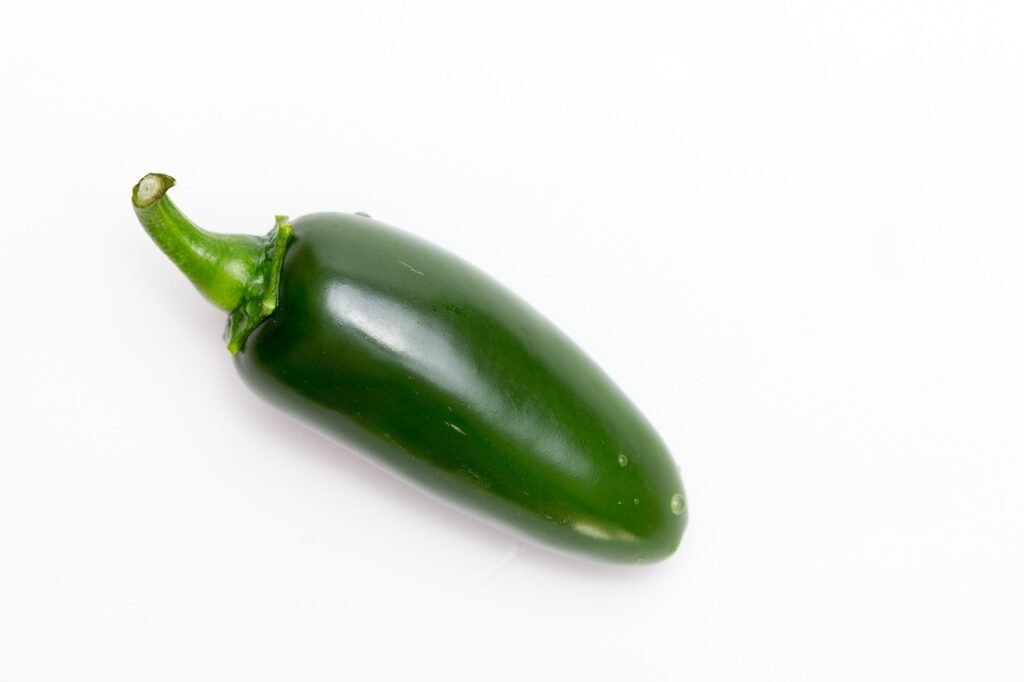
Sort peppers by how thick their walls are before deciding anything else. Thick walled types hold too much water to air dry, so they go in the crisper whole and dry, or into the freezer. Thin walled chiles are the ones that dry well and keep for months once they do.
Wall thickness decides the method
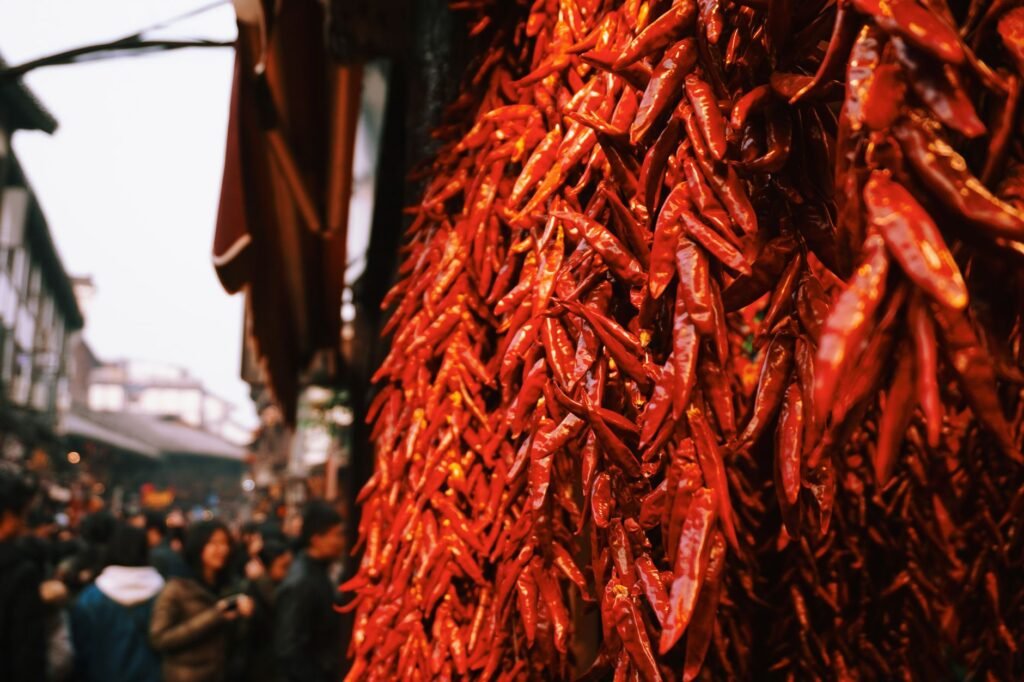
Every pepper is a water balloon with a skin on it, and the only real variable is how much water the wall holds. A bell pepper or a poblano has thick, juicy flesh, which is wonderful to eat and hopeless to air dry. Moisture cannot escape the interior faster than mold can get started at the stem, so a string of thick peppers hung in a kitchen usually rots from the inside while the outside still looks fine.
Thin walled chiles run the other way. A cayenne, a Thai bird, a de arbol or a guajillo has so little flesh that the whole pod dehydrates in a warm airy room before anything can spoil in it. Once fully dry those pods are shelf stable, and a sealed jar kept out of light holds them for many months with the heat intact and only a slow fade in aroma. So the first question is not where in the kitchen a pepper goes. It is which of these two groups it belongs to.
Where each kind belongs
| Pepper | Best home | Rough window |
|---|---|---|
| Bell, poblano, Anaheim | Crisper drawer, whole, unwashed, loose | Around one to two weeks |
| Jalapeno, serrano, Fresno | Crisper drawer or freezer whole | A week or two fresh, months frozen |
| Cayenne, Thai bird, de arbol | Air dried, then a sealed dark jar | Many months dried |
| Habanero, scotch bonnet | Freezer whole, or dried if fully ripe | Short fresh, long frozen |
| Any cut pepper | Airtight box with a paper towel, refrigerated | A few days |
Windows shift with how fresh the pepper was when you bought it, how ripe it is, and how steady your refrigerator runs. A pepper picked that morning at a farm stand outlasts a supermarket one by days.
Air drying chiles without growing mold
- Pick only thin walled pods with no soft spots and no punctures. One damaged pepper spoils the string around it.
- Wipe each pod dry. Do not wash them in water right before hanging.
- Thread a needle with strong thread and pass it through the stems, not the flesh, leaving a gap between every pod.
- Hang the string somewhere warm with air moving past it, out of direct sun, which bleaches color and flavor.
- Check the string every few days and pull anything that darkens or softens at the stem.
- Wait until a pod snaps cleanly instead of bending. Bending means water is still inside.
- Store the dried pods whole in a sealed jar in a dark cupboard, and grind only what you need.
The mistakes that cost people a bag of chiles
The big one is stringing the wrong pepper. Jalapenos look like chiles and behave like bell peppers, and a ristra of them is a science experiment. If you want them preserved, freeze or pickle instead.
Second is capsaicin transfer, which almost nobody plans for. The oil clings to plastic and does not fully wash out, so a container that once held chopped habanero will season everything it touches for a long time afterward. Use glass for hot peppers, keep a dedicated cutting board if you cook with them often, and wash your hands before touching your face.
Third is putting peppers in the same drawer as apples, pears or bananas. Those fruits give off ethylene, which pushes peppers toward ripening and then softening. Fourth is the produce bag knotted at the top. Peppers respire and release moisture, and a sealed bag hands it straight back to them as condensation. Fifth is refrigerating them because they came home warm, when the fridge itself is the thing that pits them.
Wrinkled, pitted, or genuinely done
A wrinkled pepper has only lost water. The flavor is concentrated and it is perfectly good roasted, sauteed or blended into a sauce, just not sliced into a salad.
Sunken glassy pits with watery patches around them are cold damage, and those areas break down quickly, so use that pepper soon. Throw out anything with a slimy stem, fuzzy growth, a collapsed shoulder that leaks when pressed, or a sour smell at the cut. Inside a dry chile, any dusty gray bloom means it went into the jar before it was fully dry.