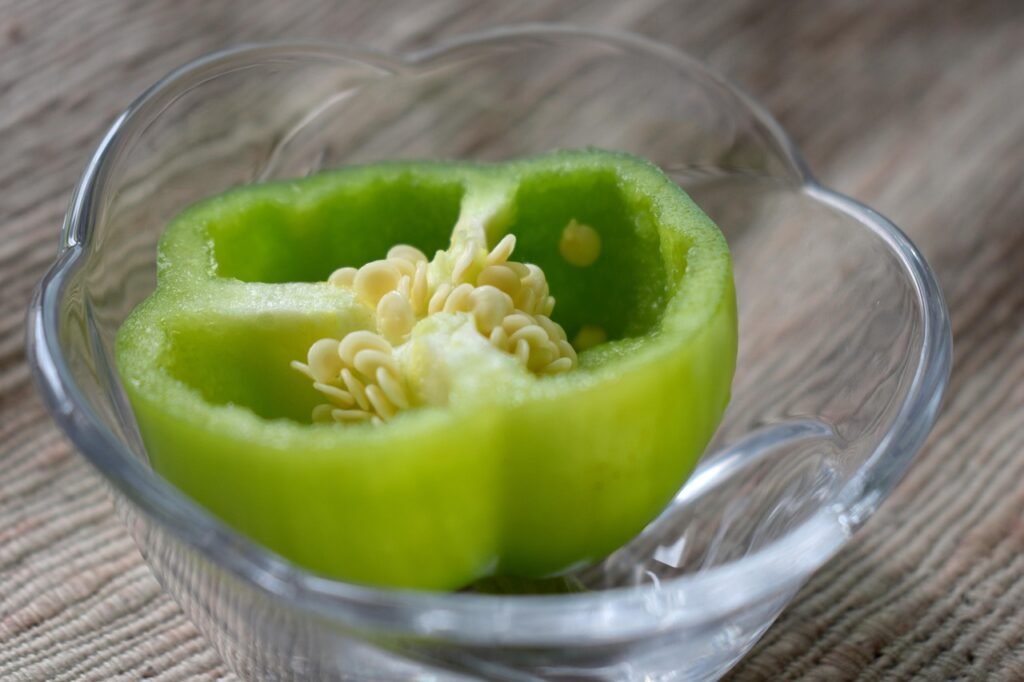
Put whole, unwashed peppers loose in the crisper drawer, where they usually hold one to two weeks. Once a pepper is cut, remove the seeds and membrane, then keep the pieces in an airtight container with a paper towel for a few days. Skin condition is what determines everything here.
A Whole Pepper Is Already Well Packaged
The glossy skin on a bell pepper is a waxy barrier that holds the fruit’s water in and keeps outside moisture off the flesh. Left intact and dry, that barrier does most of the storage work by itself. Your job is mainly to avoid undermining it.
That means dry and it means loose. Peppers sealed in a zip bag sit in the humidity they release, and free water on the shoulders is where soft, sunken dark patches begin. The crisper drawer, which holds moderate humidity without direct cold air blowing across the produce, is the right home for them. A perforated bag is acceptable, but nothing tightly closed.

Cut Peppers Play by Different Rules
Slicing a pepper removes the barrier entirely and exposes wet flesh to the air, so the clock speeds up dramatically. Two moves help. First, cut out and discard the seeds and the white pithy membrane, because those tissues break down and go slimy well before the walls do. Second, store the pieces in an airtight container with a folded paper towel to absorb the moisture they weep.
Cut peppers hold for a few days in that setup, and they lose crunch progressively rather than failing all at once. Sliced strips dry faster than large chunks, so cut bigger pieces if you know they are sitting for a day or two.
Which Method for Which Situation
- Whole, unwashed, loose in the crisper. The default. Firm texture, one to two weeks depending on ripeness and how fresh they were at purchase.
- Cut, deseeded, airtight with a paper towel. A few days, with gradual softening. Best for meal prep you will actually use.
- Sliced and frozen raw on a tray, then bagged. Months. Peppers are one of the few vegetables that freeze without blanching, but they thaw soft, so use them in cooking.
- Roasted, peeled, and packed in oil. Changes the ingredient entirely and keeps refrigerated for a stretch, or frozen for much longer.
- On the counter. Only if you want a green pepper to finish ripening toward red. It softens faster there.
The Habits That Shorten a Pepper’s Life
Washing the whole bag on grocery day tops the list, and the damage does not show for several days, which is why the connection gets missed. Sealing whole peppers in a tied plastic bag is next, for the same moisture reason.
Storing peppers in the same drawer as apples, bananas, or tomatoes speeds their decline, since those fruits give off ethylene and peppers respond by ripening and softening faster than you planned. Keeping cut peppers with the seeds still attached shortens their life by days. Pushing peppers to the coldest corner of the refrigerator, rather than the crisper, brings on the pitted skin of chilling injury. And leaving one bruised or already soft pepper in a pile with the good ones lets rot travel by contact, which is worth a thirty-second sort when you unpack groceries.
Wrinkled, Soft, or Actually Bad
Wrinkled skin and slightly collapsed shoulders mean water loss, not spoilage. A pepper at that stage has lost its raw snap but roasts, sautes, and stuffs perfectly well, so cook it rather than bin it.
A single small soft spot can usually be cut away if the rest of the wall is firm and the interior looks clean. Check the inside, because peppers often rot from the seed core outward while the outside still looks presentable.
The clear stopping signs are a slimy film on the flesh, seeds that have gone brown and mushy, white or gray fuzz around the stem, large water-soaked patches that have darkened, and a sour or fermented smell when you cut into it. Any one of those means the whole pepper goes.