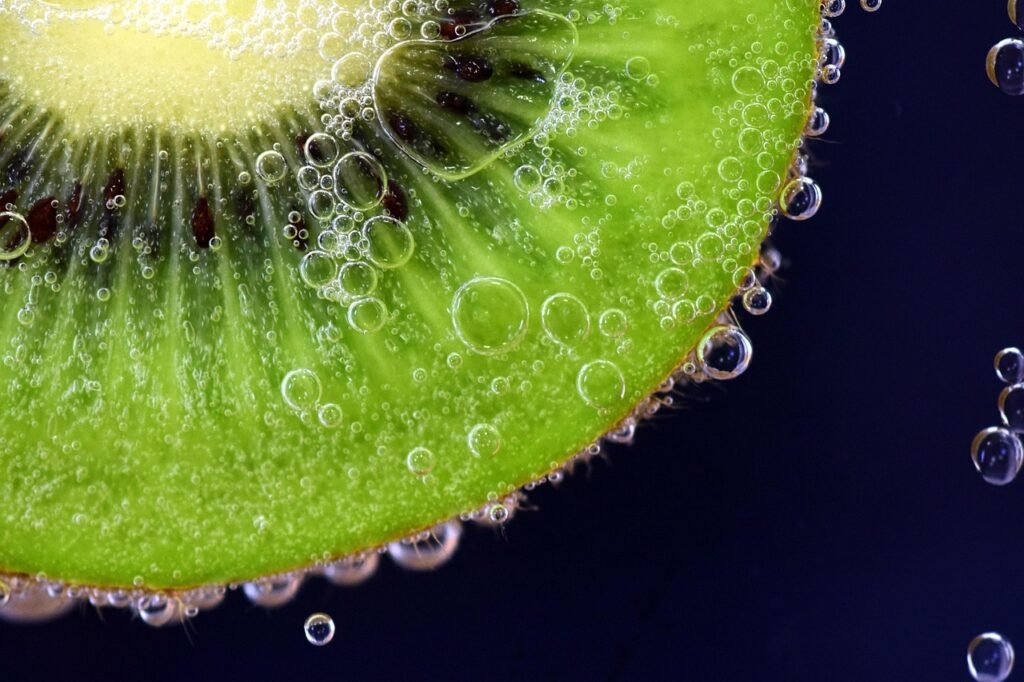
Store firm kiwi on the counter and ripe kiwi in the fridge. A hard kiwi will not soften in cold air, so leave it out until it gives slightly under your thumb. Once it does, move it to the crisper, where it holds for a couple of weeks instead of a couple of days.
Ripe or unripe decides where it goes
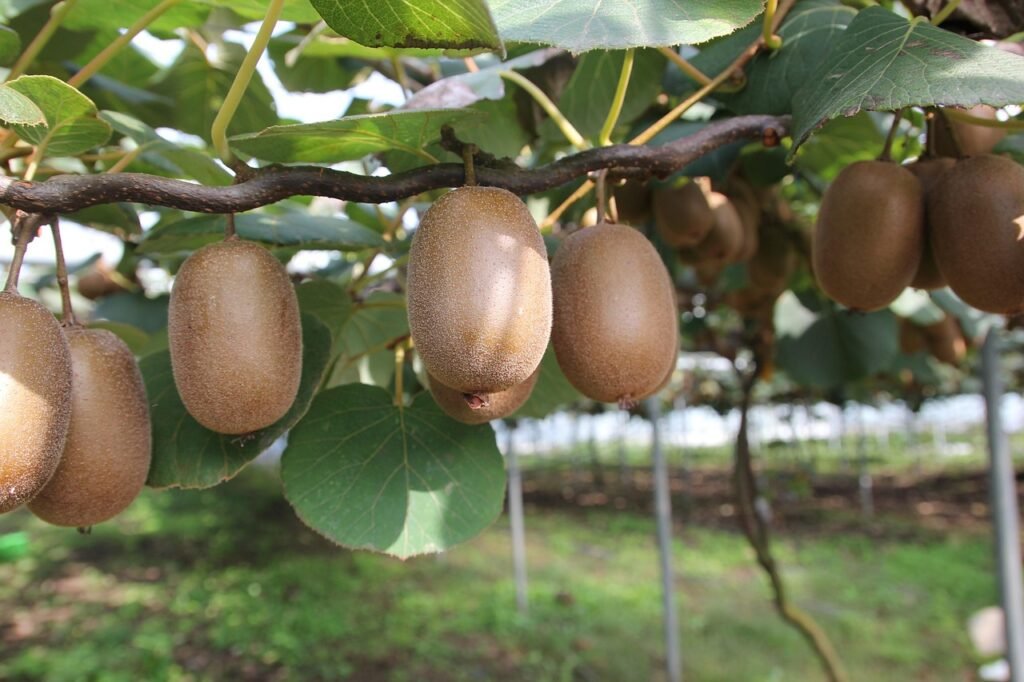
Kiwifruit gets picked hard and finishes ripening after it leaves the vine. The softening runs on ethylene, a gas the fruit produces itself, and cold air shuts that process down almost completely. So the first question is never which shelf. It is whether the fruit is ready yet.
Press gently near the stem end with your thumb rather than in the middle. A ripe kiwi gives the way a ripe avocado does and smells faintly sweet where the stem was. Rock hard means counter. Slight give means fridge. Soft in patches means eat it today.
How to speed it up or slow it down
| Where you put it | What happens | Rough window |
|---|---|---|
| Counter, single layer, out of sun | Softens steadily, aroma develops | A few days to about a week |
| Paper bag with an apple or banana | Ethylene concentrates, ripening jumps | Often one to two days |
| Crisper drawer, still firm | Ripening nearly stops, fruit holds hard | Several weeks |
| Crisper drawer, already ripe | Holds the texture you already have | Roughly one to two weeks |
| Peeled and sliced, closed container | Flesh keeps breaking down and weeps | A day, maybe two |
| Frozen on a tray, then bagged | Soft on thawing, fine for blending | Months, for smoothies only |
Those windows shift with how ripe the fruit was when you bought it and how warm your kitchen runs. A kitchen that sits near a sunny window will push kiwi along much faster than a cool pantry.
The habit that stalls a whole bag
The usual error is unpacking groceries and pushing hard kiwis straight into the crisper, because that is where fruit lives. Cold will not hurt them, but it freezes the schedule. Three weeks on, they come out just as hard as they went in, and the aroma they would have built on the counter never shows up.
The second error is the fruit bowl pile. Kiwi skin is opaque and fuzzy, so it hides bruises perfectly. A kiwi sitting under a heap of oranges can be brown and collapsed on one flank while the outside still looks untouched. Keep them in one layer with a little space, and keep them away from the bananas unless rushing them is the goal.
Cut kiwi behaves differently again. The same enzyme that makes kiwi tingle on your tongue carries on working inside the fruit, so slices go slack and watery within a day even under a tight lid. Cut only what is going on the plate.
How to tell a kiwi is past it
Go by smell first. A good kiwi smells clean and faintly floral at the stem. A fermented, cidery smell means the sugars have started turning, and that fruit is finished no matter how it looks.
- Skin that weeps juice or leaves a wet mark on the counter.
- A sunken, darkened stem end, which is where rot usually starts.
- Flesh that has gone gray or brown rather than bright green or gold.
- Any fuzzy white or gray growth, which spreads to touching fruit quickly.
Shallow wrinkles on their own are not spoilage. They mean the fruit dried out a little, which makes it sweeter, not unsafe. A kiwi that is soft, wrinkled, and still smells sweet is at its best moment for eating straight out of the skin with a spoon.